Thursday, June 30, 2011

Give Me Your Eyes by Brandon Heath

Pope Benedict reflects on his vocation as he celebrates 60 years of priesthood


The following comes from the CNA:

“Thanks to the Lord for the friendship that he has bestowed upon me,” Pope Benedict said to a packed St. Peter’s Basilica as he celebrated his 60th anniversary of becoming a priest, a day that is also the Feast of Saints Peter and Paul.

“Thanks to the people who have formed and accompanied me. And all this includes the prayer that the Lord will one day welcome us in his goodness and invite us to contemplate his joy,” the Pope said.

Pope Benedict was ordained to the priesthood, along with his brother Georg, in the Bavarian town of Freising on June 29, 1951. Georg is with him in Rome today.

Appropriately, the music throughout today’s ceremonies seemed to have a distinctly Germanic feel, with pieces by Mozart, Bach and Handel included.

In his homily, the Pope repeatedly drew upon the words of Christ that were quoted to him by the bishop ordaining him 60 years ago: “I no longer call you servants, but friends.”

“Sixty years on from the day of my priestly ordination, I hear once again deep within me these words of Jesus that were addressed to us new priests at the end of the ordination ceremony by the Archbishop, Cardinal Faulhaber, in his slightly frail yet firm voice.”

“At that moment I knew deep down that these words were no mere formality, nor were they simply a quotation from Scripture. I knew that, at that moment, the Lord himself was speaking to me in a very personal way.”

At today’s Mass, Pope Benedict was wearing red vestments in remembrance of Saints Peter and Paul shedding their blood when they were martyred in Rome during the 1st century. He said that the life of the Christian – and particularly the life of the priest - is one that grows through joys and hardship. He drew upon another analogy of Christ’s – the vine and the branches – noting that for grapes to ripen and produce good wine “sun is needed, but so too is rain, by day and by night.”

“Is this not already an image of human life, and especially of our lives as priests?” asked the Pope as he looked back on his own experiences over the past 60 years.

“We need both sun and rain, festivity and adversity, times of purification and testing, as well as times of joyful journeying with the Gospel.”

“In hindsight,” he said, “we can thank God for both: for the challenges and the joys, for the dark times and the glad times. In both, we can recognize the constant presence of his love, which unfailingly supports and sustains us.”

The Pope said it is a close friendship with Christ that sustains the Christian – priests included – during such moments of darkness.

“What is friendship?” Benedict XVI asked, answering with an ancient Latin maxim.

“Idem velle, idem nolle – wanting the same things, rejecting the same things: this was how it was expressed in antiquity. Friendship is a communion of thinking and willing.”

The Pope then gave advice as to how to deepen that friendship with Jesus.

“The friendship that he bestows upon me can only mean that I too try to know him better; that in the Scriptures, in the Sacraments, in prayer, in the communion of saints, in the people who come to me, sent by him, I try to come to know the Lord himself more and more.”

Today’s papal ceremonies at St. Peter’s also included the bestowal of the pallium upon 41 new metropolitan archbishops from around the world.

The pallium is a white woolen liturgical vestment emblazoned with six black crosses. It symbolizes an archbishop’s pastoral authority and his unity the Pope.

Among the U.S. bishops present were Archbishop Jose Gomez of Los Angeles, Archbishop Paul Coakley of Oklahoma City, Archbishop J. Peter Sartain of Seattle and Archbishop Gustavo Garcia-Siller of San Antonio.

At the end of the Mass the Pope processed out to the applause of the congregation and the strains of the Hallelujah Chorus from Handel’s Messiah.

To read Pope Benedict's full homily, visit: http://www.catholicnewsagency.com/document.php?n=1002

St. John Bosco's First Dream


When St. John Bosco was only 9 years old he had a dream that would prove to be prophetic! It was a dream that recurred frequently in his life and one that he came to understand fully only late in life. One of our young Salesians from India put together this short film of the dream. He did a great job! Enjoy!

Martrys of Rome


The following comes from the American Catholic site:

There were Christians in Rome within a dozen or so years after the death of Jesus, though they were not the converts of the “Apostle of the Gentiles” (Romans 15:20). Paul had not yet visited them at the time he wrote his great letter in a.d. 57-58.
There was a large Jewish population in Rome. Probably as a result of controversy between Jews and Jewish Christians, the Emperor Claudius expelled all Jews from Rome in 49-50 A.D. Suetonius the historian says that the expulsion was due to disturbances in the city “caused by the certain Chrestus” [Christ]. Perhaps many came back after Claudius’s death in 54 A.D. Paul’s letter was addressed to a Church with members from Jewish and Gentile backgrounds.

In July of 64 A.D., more than half of Rome was destroyed by fire. Rumor blamed the tragedy on Nero, who wanted to enlarge his palace. He shifted the blame by accusing the Christians. According to the historian Tacitus, many Christians were put to death because of their “hatred of the human race.” Peter and Paul were probably among the victims.

Threatened by an army revolt and condemned to death by the senate, Nero committed suicide in 68 A.D. at the age of 31.

Wednesday, June 29, 2011

Eye of the Hurricane by Me in Motion

The video the Pope included in his iPad


The pope has launched a new Vatican website with his iPad, which included a video from ROME REPORTS.

Pope Benedict: Celebrating 60 Years of Priesthood


A PRAYER FOR PRIESTS BY CARDINAL O'CONNER:

Lord Jesus, we your people pray to You for our priests. You have given them to us for OUR needs. We pray for them in THEIR needs.

We know that You have made them priests in the likeness of your own priesthood. You have consecrated them, set them aside, annointed them, filled them with the Holy Spirit, appointed them to teach, to preach, to minister, to console, to forgive, and to feed us with Your Body and Blood.

Yet we know, too, that they are one with us and share our human weaknesses. We know too that they are tempted to sin and discouragement as are we, needing to be ministered to, as do we, to be consoled and forgiven, as do we. Indeed, we thank You for choosing them from among us, so that they understand us as we understand them, suffer with us and rejoice with us, worry with us and trust with us, share our beings, our lives, our faith.

We ask that You give them this day the gift You gave Your chosen ones on the way to Emmaus: Your presence in their hearts, Your holiness in their souls, Your joy in their spirits. And let them see You face to face in the breaking of the Eucharistic bread.

We pray to You, O Lord, through Mary the mother of all priests, for Your priests and for ours. Amen.

March, 1995

Feast of SS. Peter and Paul


The following comes from the CNA:

On Tuesday, June 29, the Church will celebrate the feast day of Sts. Peter & Paul. As early as the year 258, there is evidence of an already lengthy tradition of celebrating the solemnities of both Saint Peter and Saint Paul on the same day. Together, the two saints are the founders of the See of Rome, through their preaching, ministry and martyrdom there.

Peter, who was named Simon, was a fisherman of Galilee and was introduced to the Lord Jesus by his brother Andrew, also a fisherman. Jesus gave him the name Cephas (Petrus in Latin), which means ‘Rock,’ because he was to become the rock upon which Christ would build His Church.

Peter was a bold follower of the Lord. He was the first to recognize that Jesus was “the Messiah, the Son of the living God,” and eagerly pledged his fidelity until death. In his boldness, he also made many mistakes, however, such as losing faith when walking on water with Christ and betraying the Lord on the night of His passion.

Yet despite his human weaknesses, Peter was chosen to shepherd God's flock. The Acts of the Apostles illustrates his role as head of the Church after the Resurrection and Ascension of Christ. Peter led the Apostles as the first Pope and ensured that the disciples kept the true faith.

St. Peter spent his last years in Rome, leading the Church through persecution and eventually being martyred in the year 64. He was crucified upside-down at his own request, because he claimed he was not worthy to die as his Lord.

He was buried on Vatican hill, and St. Peter's Basilica is built over his tomb.

St. Paul was the Apostle of the Gentiles. His letters are included in the writings of the New Testament, and through them we learn much about his life and the faith of the early Church.

Before receiving the name Paul, he was Saul, a Jewish pharisee who zealously persecuted Christians in Jerusalem. Scripture records that Saul was present at the martyrdom of St. Stephen.

Saul's conversion took place as he was on his way to Damascus to persecute the Christian community there. As he was traveling along the road, he was suddenly surrounded by a great light from heaven. He was blinded and fell off his horse. He then heard a voice saying to him, “Saul, Saul, why do you persecute me?” He answered: “Who are you, Lord?” Christ said: “I am Jesus, whom you are persecuting.”

Saul continued to Damascus, where he was baptized and his sight was restored. He took the name Paul and spent the remainder of his life preaching the Gospel tirelessly to the Gentiles of the Mediterranean world.

Paul was imprisoned and taken to Rome, where he was beheaded in the year 67.

He is buried in Rome in the Basilica of St. Paul Outside the Walls.

In a sermon in the year 295, St. Augustine of Hippo said of Sts. Peter and Paul: “Both apostles share the same feast day, for these two were one; and even though they suffered on different days, they were as one. Peter went first, and Paul followed. And so we celebrate this day made holy for us by the apostles' blood. Let us embrace what they believed, their life, their labors, their sufferings, their preaching, and their confession of faith.”

Tuesday, June 28, 2011

Waiting Here For You by Christy Nockels

Vatican hopes iPod can bring silence to Rome’s churches

The following comes from the CNA:

The Vatican has introduced a new way of keeping silence in their churches while also informing tourists – the iPod.

Today is the first full day of a trial which sees pilgrims to the basilica of St. John Lateran given the audio-guide with a special app explaining the 1,700-year history of the church, which serves as the Pope’s cathedral.

“I can easily say that in Italy there are no examples of experiences like this in religious contexts, probably not even those in museums,” Jelena Jovanovic said to CNA. Her company, Antenna International, created the handheld device.

The multi-lingual guide offers audio, video, photos and texts to give an interactive experience to pilgrims. It also provides historical re-enactments narrated by actors.

Tourists can now listen to the experience of their fellow pilgrims from centuries past or even a “first-hand” account of the Battle of the Milvian Bridge in 312, when the Emperor Constantine saw a cross in the sky and converted to Christianity.

But the primary purpose of the guide is not entertainment or even education - it’s prayer and silence.

Bishop Luca Brandolini, the head of Pastoral Care for the Diocese of Rome, explained to CNA that “Unfortunately, our basilicas have become more like noisy meeting places at many times.”

“We need to bring back a place and time for silence. So I think this audio-guide will help achieve that.”

The Managing Director of the Opera Romana Pellegrinaggi, the Vatican body that oversees all pilgrim activity in the Diocese of Rome, agrees.

“Those who want to enter into a basilica to pray must be able to pray. So this multimedia guide helps with that,” said Fr. Caesar Atuire.

“Everyone can now do what they have to do without disturbing others.”

There is no charge for the use of the guide, but pilgrims do have to leave a document, such as a passport, as security.

The Vatican will monitor the experiment at St. John Lateran until December. Then officials will decide whether or not to roll the scheme out to other basilicas and churches in the Diocese of Rome.

Saint of the Day: Irenaeus of Lyons


The following comes from Catholic Online:


The writings of St. Irenaeus entitle him to a high place among the fathers of the Church, for they not only laid the foundations of Christian theology but, by exposing and refuting the errors of the gnostics, they delivered the Catholic Faith from the real danger of the doctrines of those heretics.
He was probably born about the year 125, in one of those maritime provinces of Asia Minor where thememory of the apostles was still cherished and where Christians were numerous. He was most influenced bySt. Polycarp who had known the apostles or their immediate disciples
Many Asian priests and missionaries brought the gospel to the pagan Gauls and founded a local church. To this church of Lyon, Irenaeus came to serve as a priest under its first bishop, St. Pothinus, an oriental like himself. In the year 177, Irenaeus was sent to Rome. This mission explains how it was that he was not called upon to share in the martyrdom of St Pothinus during the terrible persecution in Lyons. When he returned to Lyons it was to occupy the vacant bishopric. By this time, the persecution was over. It was the spread of gnosticism in Gaul, and the ravages it was making among the Christians of his diocese, that inspired him to undertake the task of exposing its errors. He produced a treatise in five books in which he sets forth fully the inner doctrines of the various sects, and afterwards contrasts them with the teaching of the Apostles and the text of the Holy Scripture. His work, written in Greek but quickly translated to Latin, was widely circulated and succeeded in dealing a death-blow to gnosticism. At any rate, from that time onwards, it ceased to offer a serious menace to the Catholic faith.
The date of death of St. Irenaeus is not known, but it is believed to be in the year 202. The bodily remains of St. Irenaeus were buried in a crypt under the altar of what was then called the church of St. John, but was later known by the name of St. Irenaeus himself. This tomb or shrine was destroyed by the Calvinists in 1562, and all trace of his relics seems to have perished.

Saint of the day: John Southworth

I am inspired by the stories of the English Martyrs and today is the feast of one o them. St. John Southworth was born in 1592 at Lancashire, England. St. John studied and was ordained at the English College, Douai, France. He returned to England on 13 October 1619 to minister to covert Catholics and was arrested and condemned to death for his faith in Lancashire in 1627; he was held in various prisons, and at one point hearing the final confession of Saint Edmund Arrowsmith just before that martyr was led to the gallows. Through the intercession of Queen Henrietta Maria, he and fifteen other priests were turned over to the French ambassador on 11 April 1630 to be sent into exile in France.

Father John soon returned to England and began working with Saint Henry Morse. They worked tirelessly and fearlessly with the sick during a plague outbreak in 1636. He was arrested again for his faith in Westminster on 28 November 1637. He was held in various prisons until 16 July, 1640 when he was released due to the mitigating circumstances of his good works.

However he was arrested again on 2 December, 1640; he pled guilty to the crime of priesthood, and was condemned to death. After 14 years in prison, during which he worked with any prisoners who showed interest, he was executed by orders of the Commonwealth under Oliver Cromwell. He is one of the Forty Martyrs of England and Wales.

He was hanged, drawn, and quartered on 28 June, 1654 at Tyburn, England; remains purchased by the Spanish ambassador to England, and sent to the English College at Douai, France; they were hidden to prevent destruction during the French Revolution, and were rediscovered in 1927. They and are now housed at Westminster Cathedral, London. Pope Paul VI canonized him in 1970.

Monday, June 27, 2011

Closer by Shawn McDonald

Pope Benedict: The Eucharist is the antidote to modern ills

The following comes from the CNA:

The Eucharist is the medicine which can heal our individualist society, Pope Benedict XVI said in his midday Angelus address on Corpus Christi Sunday.

“In an increasingly individualistic culture in which Western societies are immersed - and which is tending to spread throughout the world - the Eucharist is a kind of ‘antidote’ which operates in the minds and hearts of believers and is continually sowing in them the logic of communion, of service, of sharing - in other words, the logic of the Gospel,” said Pope Benedict to pilgrims in St. Peters Square on June 26.
Catholics believe that the bread and wine offered by Christ at the Last Supper literally became his body and blood - and that this same miracle is repeated by priests at every Mass since. Hence the name of today’s festivity – ‘Corpus Christi’ Sunday or ‘Body of Christ’ Sunday. 

“From the Eucharist,” observed the Pope, “the Risen Christ is truly present among his disciples and working with the power of the Holy Spirit. And in the following generations through the centuries, the Church, despite the limitations and human errors, has continued to be a force for communion throughout the world.”

The Catechism of the Catholic Church describes the Eucharist as the “source and summit” of Christian life. As the Pope bluntly put it today, “without the Eucharist, the Church simply does not exist.”

The Pope noted this belief in the centrality of the Eucharist has manifested itself throughout the history of the Church, beginning with the earliest Christian communities in Jerusalem who shared all possessions in common.

“From what came all this? From the Eucharist that is the Risen Christ, truly present among his disciples and working with the power of the Holy Spirit.”

He then drew upon the example of the fourth century Abitene martyrs from North Africa who chose to die rather than deprive themselves of Sunday Mass in the face of Roman persecution. They proclaimed “Sine Dominico non possumus’ - without the ‘Dominicum’ - without the Sunday Eucharist, we cannot live.” 

Pope Benedict concluded by urging all pilgrims to turn to the Virgin Mary, the mother of Jesus, who was described by Pope John Paul II as the “Woman of the Eucharist.”

“At her school, our lives become fully ‘Eucharistic’, open to God and others, capable of transforming evil into good with the power of love, striving to promote unity, fellowship, brotherhood.”

Saint of the day: Cyril of Alexandria

The following comes from the CNA:

On June 27, Roman Catholics will honor St. Cyril of Alexandria. An Egyptian bishop and theologian, he is best known for his role in the Council of Ephesus, where the Church confirmed that Christ is both God and man in one person. The Eastern churches celebrate St. Cyril of Alexandria on June 9.

Cyril was most likely born in Alexandria, the metropolis of ancient Egypt, between 370 and 380. From his writings, it appears he received a solid literary and theological education. Along with his uncle, Patriarch Theophilus of Alexandria, he played a role in an early fifth-century dispute between the Egyptian and Greek churches. There is evidence he may have been a monk before becoming a bishop.

When Theophilus died in 412, Cyril was chosen to succeed him at the head of the Egyptian Church. He continued his uncle's policy of insisting on Alexandria's preeminence within the Church over Constantinople, despite the political prominence of the imperial capital. The two Eastern churches eventually re-established communion in approximately 418.

Ten years later, however, a theological dispute caused a new break between Alexandria and Constantinople. Cyril's reputation as a theologian, and later Doctor of the Church, arose from his defense of Catholic orthodoxy during this time.

In 428, a monk named Nestorius became the new Patriarch of Constantinople. It became clear that Nestorius was not willing to use the term “Mother of God” (“Theotokos”) to describe the Virgin Mary. Instead, he insisted on the term “Mother of Christ” (“Christotokos”).

During the fourth century, the Greek Church had already held two ecumenical councils to confirm Christ's eternal preexistence as God prior to his incarnation as a man. From this perennial belief, it followed logically that Mary was the mother of God. Veneration of Mary as “Theotokos” confirmed the doctrine of the incarnation, and Christ's status as equal to the God the Father.

Nestorius insisted that he, too, held these doctrines. But to Cyril, and many others, his refusal to acknowledge Mary as the Mother of God seemed to reveal a heretical view of Christ which would split him into two united but distinct persons: one fully human and born of Mary, the other fully divine and not subject to birth or death.

Cyril responded to this heretical tendency first through a series of letters to Nestorius (which are still in existence and studied today), then through an appeal to the Pope, and finally through the summoning of an ecumenical council in 431. Cyril presided over this council, stating that he was “filling the place of the most holy and blessed Archbishop of the Roman Church,” Pope Celestine, who had authorized it.

The council was a tumultuous affair. Patriarch John of Antioch, a friend of Nestorius, came to the city and convened a rival council which sought to condemn and depose Cyril. Tension between the advocates of Cyril and Nestorius erupted into physical violence at times, and both parties sought to convince the emperor in Constantinople to back their position.

During the council, which ran from June 22 to July 31 of the year 431, Cyril brilliantly defended the orthodox belief in Christ as a single eternally divine person who also became incarnate as a man. The council condemned Nestorius, who was deposed as patriarch and later suffered exile. Cyril, however, reconciled with John and many of the other Antiochian theologians who once supported Nestorius.

St. Cyril of Alexandria died on June 27, 444, having been a bishop for nearly 32 years. Long celebrated as a saint, particularly in the Eastern Catholic and Eastern Orthodox churches, he was declared a Doctor of the Church in 1883.

Coach John Wooden on True Success

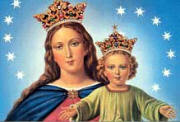
Our Lady of Perpetual Help


Today the Church remembers Our Lady of Perpetual Help. The following comes from the Patron Saints Index:

The picture of Our Lady of Perpetual Succour is painted on wood, with background of gold. It is Byzantine in style and is supposed to have been painted in the thirteenth century. It represents the Mother of God holding the Divine Child while the Archangels Michael and Gabriel present before Him the instruments of His Passion. Over the figures in the picture are some Greek letters which form the abbreviated words Mother of God, Jesus Christ, Archangel Michael, and Archangel Gabriel respectively.

It was brought to Rome towards the end of the fifteenth century by a pious merchant, who, dying there, ordered by his will that the picture should be exposed in a church for public veneration. It was exposed in the church of San Matteo, Via Merulana, between Saint Mary Major and Saint John Lateran. Crowds flocked to this church, and for nearly three hundred years many graces were obtained through the intercession of the Blessed Virgin. The picture was then popularly called the Madonna di San Matteo. The church was served for a time by the Hermits of Saint Augustine, who had sheltered their Irish brethren in their distress.

These Augustinians were still in charge when the French invaded Rome, Italy in 1812 and destroyed the church. The picture disappeared; it remained hidden and neglected for over forty years, but a series of providential circumstances between 1863 and 1865 led to its discovery in an oratory of the Augustinian Fathers at Santa Maria in Posterula. The pope, Pius IX, who as a boy had prayed before the picture in San Matteo, became interested in the discovery and in a letter dated 11 Dececember 1865 to Father General Mauron, C.SS.R., ordered that Our Lady of Perpetual Succour should be again publicly venerated in Via Merulana, and this time at the new church of Saint Alphonsus. The ruins of San Matteo were in the grounds of the Redemptorist Convent. This was but the first favour of the Holy Father towards the picture. He approved of the solemn translation of the picture (26 April 1866), and its coronation by the Vatican Chapter (23 June 1867). He fixed the feast as duplex secundae classis, on the Sunday before the Feast of the Nativity of Saint John the Baptist, and by a decree dated May 1876, approved of a special office and Mass for the Congregation of the Most Holy Redeemer. This favour later on was also granted to others. Learning that the devotion to Our Lady under this title had spread far and wide, Pius IX raised a confraternity of Our Lady of Perpetual Succour and Saint Alphonsus, which had been erected in Rome, to the rank of an arch-confraternity and enriched it with many privileges and indulgences. He was among the first to visit the picture in its new home, and his name is the first in the register of the arch-confraternity.

Two thousand three hundred facsimiles of the Holy Picture have been sent from Saint Alphonsus’s church in Rome to every part of the world. At the present day not only altars, but churches and dioceses (e.g. in England, Leeds and Middlesbrough; in the United States, Savannah) are dedicated to Our Lady of Perpetual Succour. In some places, as in the United States, the title has been translated Our Lady of Perpetual Help.

Sunday, June 26, 2011

Someone Worth Dying For by MIKESCHAIR

Corpus Christi


The following comes from the Women of Faith and Family site:

The Solemnity of Corpus Christi commemorates the institution of the Holy Eucharist, paralleling Maundy Thursday (Holy Thursday) commemorating Our Lord's institution of the Eucharist. Corpus Christ was introduced in the late 13th century to encourage the faithful give special honor to the institution of the Holy Eucharist to the Blessed Sacrament. The official title of this Solemnity was changed in 1970 to The Body and Blood of Christ (Latin: Sollemnitas Sanctissimi Corporis et Sanguinis Christi); and it is still on the Roman Missal’s official Calendar for the universal Church on Thursday after Trinity Sunday; however, where it is not a day of obligation (as in the United States) it is usually celebrated on the Sunday following Trinity Sunday.

Corpus Christi became a mandatory feast in the Roman Church in 1312. But nearly a century earlier, Saint Juliana of Mont Cornillon, promoted a feast to honor the Blessed Sacrament. From early age Juliana, who became an Augustinian nun in Liége, France, in 1206, had a great veneration for the Blessed Sacrament, and longed for a special feast in its honor. She had a vision of the Church under the appearance of the full moon having one dark spot, which signified the absence of such a solemnity. She made known her ideas to the Bishop of Liége, Robert de Thorete, to the Dominican Hugh who later became cardinal legate in the Netherlands, and to Jacques Panaléon, at the time Archdeacon of Liége and who later became Pope Urban IV. Bishop Robert de Thorete ordered that the feast be celebrated in his diocese.

Pope Urban IV later published the Bull Transiturus (September 8, 1264), in which, after having extolled the love of Our Savior as expressed in the Holy Eucharist, ordered the annual celebration of Corpus Christi on the Thursday after Trinity Sunday. More than four decades later, Pope Clement V published a new decree which embodied Urban IV's decree and ordered the adoption of the feast at the General Council of Vienna (1311). Pope John XXII, successor of Clement V, urged this observance.

The processions on Corpus Christi to honor the Holy Eucharist were not mentioned in the decrees, but had become a principal feature of the feast's celebration by the faithfl, and became a tradition throughout Europe. These processions were endowed with indulgences by Popes Martin V and Eugene IV.

Elderly Monk on Prayer


Orthodox Elder Cleopa - On prayer from this_is_ortodoxy on Vimeo.

Saturday, June 25, 2011

Bleed Red by Ronnie Dunn

30 Years of Apparitions at Medjugorje


I found this video at In God's Company 2 and was reminded of this significant anniversary for Medjugorje!

A Miracle for Father Peyton's Cause?


The following comes from the CNA:

A possible miraculous cure attributed to Catholic media pioneer Fr. Patrick Peyton, C.S.C., could advance the beatification cause of the “Rosary Priest” known for his motto “The family that prays together, stays together.”

A tribunal based in the Diocese of Albany has investigated the alleged miracle and will forward its findings to Rome on June 28.

The details of the possible miracle cannot be shared at this point, explained Fr. John Phalen, C.S.C., president of Holy Cross Family Ministries. However, he did report that the case involves a man in his sixties who was admitted to the hospital with “life-threatening, multiple organ failure.”

“His family prayed to Father Peyton and they strongly felt that he was healed through intercessory prayer. The medical community has offered information to support this belief,” Fr. Phalen said.

The man’s family is from the Albany area and was “very well aware” of the famous local priest, said Susan Wallace, director of external relations at Holy Cross Family Ministries.

“We all love Fr. Peyton dearly. There are many people who tell me every day ‘Oh he’s a saint, he doesn’t need all that paperwork,” she told CNA on June 23.

“But it is important for us to move this forward. Any time we make any progress, we celebrate. We’re very, very pleased. We’re excited to be moving forward and meeting these milestones.”

Bishop Howard J. Hubbard of Albany and Dr. Andrea Ambrosi, the postulator of Fr. Peyton’s cause, asked the tribunal to conduct a thorough review of all aspects of the possible miracle. The tribunal findings will be forwarded to the Congregation of the Causes of the Saints in Rome.

Bishop Hubbard will celebrate a closing liturgy for the tribunal at Albany’s St. Vincent de Paul Church at noon on June 28.

Fr. Phalen said Holy Cross Family Ministries, which Fr. Peyton founded, hears frequently from people around the world who believe they were healed by the priest’s intercession.

“Many others simply share stories of being touched by his holiness,” Fr. Phalen explained. “While they may already consider him a saint, we are all pleased to see progress in his cause.”

Wallace said Fr. Peyton’s entire ministry was rooted in the Family Rosary prayed in his home growing up.

“He knew how strong that made his family,” she said, deeming his motto about family prayer to be “still relevant and powerful.”

“There’s a great need for families to come together and pray,” she added.

Fr. Peyton emigrated from Ireland to the United States in 1928 at the age of 19. Ordained to the priesthood in 1941, he founded the Family Rosary apostolate in Albany, New York the following year. He conducted Rosary crusades in 40 countries and drew 28 million attendees.

In 1947 he created Family Theater Productions, which has produced about 600 radio and television programs featuring hundreds of actors and celebrities. More than 10,000 of these programs have been broadcast.

The priest died in 1992 and was declared a Servant of God in 2001.

Holy Cross Family Ministries runs a website about Fr. Peyton and his cause for beatification at http://www.fatherpeyton.org.

The Rosary: Our Weapon

Friday, June 24, 2011

This is Country Music by Brad Paisley

Fr. Robert Barron: on the Holy Spirit in the Life of the Church

Give Up Yer Aul Sins - Birth of John Baptist

Nativity of Saint John the Baptist

Today is the feast of the Nativity of John the Baptist! The following comes from Catholic Online on this great saint:

John the Baptist was the son of Zachary, a priest of the Temple in Jerusalem, and Elizabeth, a kinswoman of Mary who visited her. He was probably born at Ain-Karim southwest of Jerusalem after the Angel Gabriel had told Zachary that his wife would bear a child even though she was an old woman. He lived as a hermit in the desert of Judea until about A.D. 27. When he was thirty, he began to preach on the banks of the Jordan against the evils of the times and called men to penance and baptism "for the Kingdom of Heaven is close at hand". He attracted large crowds, and when Christ came to him, John recognized Him as the Messiah and baptized Him, saying, "It is I who need baptism from You". When Christ left to preach in Galilee, John continued preaching in the Jordan valley. Fearful of his great power with the people, Herod Antipas, Tetrarch of Perea and Galilee, had him arrested and imprisoned at Machaerus Fortress on the Dead Sea when John denounced his adultrous and incestuous marriage with Herodias, wife of his half brother Philip. John was beheaded at the request of Salome, daughter of Herodias, who asked for his head at the instigation of her mother. John inspired many of his followers to follow Christ when he designated Him "the Lamb of God," among them Andrew and John, who came to know Christ through John's preaching. John is presented in the New Testament as the last of the Old Testament prophets and the precursor of the Messiah. His feast day is June 24th and the feast for his beheading is August 29th.

Thursday, June 23, 2011

All Consuming Fire by Jesus Culture

Pope Benedict calls Youth to Purity

The following comes from Zenit.org:

Calling on the example of a saint renowned for his chastity, Benedict XVI today invited young people to esteem evangelical purity.
The Pope mentioned Tuesday's feast of St. Aloysius Gonzaga (1568-1591) in his customary conclusion of the general audience, when he greets youth, the sick and newlyweds.
"May the example and the intercession of St. Aloysius Gonzaga, whose memorial we celebrated yesterday, spur you on, dear young people, to esteem the virtue of evangelical purity," the Holy Father said.
"May he help you, dear sick, to face suffering by finding comfort in Christ Crucified," the Pontiff added, "and may he lead you, dear newlyweds, to an ever more profound love of God and of one another."

Pope Benedict and the Psalms


The following comes from the CNA:

The Book of Psalms can teach people how to pray and is the “prayer book ‘par excellence,’” Pope Benedict XVI said in his June 22 audience with pilgrims in St. Peter’s Square.

“These inspired songs teach us how to speak to God, expressing ourselves and the whole range of our human experience with words that God himself has given us.”

The book of psalms consists of 150 prayers traditionally ascribed to the authorship of King David.

The Pope explained that a whole range of human emotions are found in the Pslams, ranging from “joy and suffering” to the “fullness of life to fear of dying.”

“In these prayers, the Psalms are manifestations of the soul and faith, in which everyone can recognize and communicate the experience of a special closeness to God to which every man is called,” observed the Pope.

The Pope said it was significant that Jewish tradition refers to the Psalter as “Tehillim,” which means “praise” in Hebrew. This makes the Psalms “ultimately a book of praise.”

“Despite the diversity of their literary forms, the Psalms are generally marked by the two interconnected dimensions of humble petition and of praise addressed to a loving God who understands our human frailty,” he said.

But the Psalms are also quite different from the other books of the Old Testament, Pope Benedict noted. Instead of being narratives with a specific meaning or purpose, he explained, they “are given to the believer just as text for prayer.”

In fact, the Pope urged pilgrims to pray using the Psalms, suggesting that in “praying the Psalms we learn to pray. They are a school of prayer.” He explained himself by drawing an analogy with how children learn to express themselves.

A child initially “learns to express their feelings, emotions and needs with words that do not belong to him,” but instead “he learns innately from his parents and those who live around him.” Very quickly “the words become his words” and those feelings, emotions and needs of his are then duly expressed, said the Pope.

He concluded by suggesting that the Psalms ultimately point people towards Jesus.

“Many of the Psalms are attributed to David, the great King of Israel who, as the Lord’s Anointed, prefigured the Messiah. In Jesus Christ and in his paschal mystery the Psalms find their deepest meaning and prophetic fulfillment.”

“Christ himself prayed in their words. As we take up these inspired songs of praise, let us ask the Lord to teach us to pray, with him and in him, to our heavenly Father.”

This was the seventh Wednesday audience delivered by Pope Benedict on the topic of prayer. His previous theme – the lives of the saints – took two years to complete.

Two Things

St. Joseph Cafasso: Priest of the Gallows

Today is the feast of St. Joseph Cafasso. He is a saint very close to the heart of all Salesians. The following comes from the Saints and Angels site:

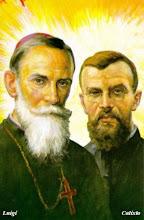
Joseph Cafasso was born at Castelnuovo d'Asti in the Piedmont, Italy, of peasant parents. He studied at the seminary at Turin, and was ordained in 1833. He continued his theological studies at the seminary and university at Turin and then at the Institute of St. Franics, and despite a deformed spine, became a brilliant lecturer in moral theology there. He was a popular teacher, actively opposed Jansenism, and fought state intrusion into Church affairs. He succeeded Luigi Guala as rector of the Institute in 1848 and made a deep impression on his young priest students with his holiness and insistence on discipline and high standards. He was a sought-after confessor and spiritual adviser, and ministered to prisoners, working to improve their terrible conditions. He met Don Bosco in 1827 and the two became close friends. It was through Joseph's encouragement that Bosco decided his vocation was working with boys. Joseph was his adviser, worked closely with him in his foundations, and convinced others to fund and found religious institutes and charitable organizations. Joseph died on June 23 at Turin and was canonized in 1947.

Wednesday, June 22, 2011

Hold Me by Jamie Grace

Saint of the day: Thomas More


The following comes from the Catholic Online site:


St. Thomas More, Martyr (Patron of Lawyers) St. Thomas More was born at London in 1478. After a thorough grounding in religion and the classics, he entered Oxford to study law. Upon leaving the university he embarked on a legal career which took him to Parliament. In 1505, he married his beloved Jane Colt who bore him four children, andwhen she died at a young age, he married a widow, Alice Middleton, to be a mother for his young children. A wit and a reformer, this learned man numbered Bishops and scholars among his friends, and by 1516 wrote his world-famous book "Utopia". He attracted the attention of Henry VIII who appointed him to a succession of high posts and missions, and finally made him Lord Chancellor in 1529. However, he resigned in 1532, at the height of his career and reputation, when Henry persisted in holding his own opinions regarding marriage and the supremacy of the Pope. The rest of his life was spent in writing mostly in defense of the Church. In 1534, with his close friend, St. John Fisher, he refused to render allegiance to the King as the Head of the Church of England and was confined to the Tower. Fifteen months later, and nine days after St. John Fisher's execution, he was tried and convicted of treason. He told the court that he could not go against his conscience and wished his judges that "we may yet hereafter in heaven merrily all meet together to everlasting salvation." And on the scaffold, he told the crowd of spectators that he was dying as "the King's good servant-but God's first." He was beheaded on July 6, 1535. His feast day is June 22nd.

Tuesday, June 21, 2011

The Edge of the Earth

The Edge of the Earth - DOCUMENTARY from Eric Dennis on Vimeo.

Fr. Robert Barron on Athiesm and Apologetic Tradition

The following comes from Real Clear Religion:
The CNN Belief Blog, which has graciously featured a few of my pieces, just celebrated its first anniversary, and for the occasion, its editors reflected on 10 things that they've learned in the course of the year. The one that got my eye was this: that atheists are by far the most fervent commentators on matters religious.

This completely coincides with my own experience as an internet commentator and blogger. Every day, my website and YouTube page are inundated with remarks, usually of a sharply negative or dismissive nature, from atheists, agnostics, and critics of religion.

In fact, some of my YouTube commentaries have been specifically targeted by atheist webmasters, who urge their followers to flood my site with "dislikes" and crude assessments of what I've said. And one of my contributions to the CNN site -- what I took to be a benign article urging Christians to pray for Christopher Hitchens -- excited literally thousands of angry responses from the haters of religion.

What do we make of this? I think we see, first, that atheists have come rather aggressively out of the closet. Following the prompts of Hitchens, Richard Dawkins, Sam Harris, Bill Maher, and many others, they have found the confidence to (excuse the word) evangelize for atheism. They are no longer content to hold on to their conviction as a private opinion; they consider religion dangerous and retrograde, and they want religious people to change their minds.

This fervor has led them, sadly, to employ a good deal of vitriolic rhetoric, but this is a free country and their advocacy for atheism should not, of course, be censored. But it should be a wake-up call to all of my fellow religionists. We have a fight on our hands, and we have to be prepared, intellectually and morally, to get into the arena.

Most of the new atheists employ variations of the classical arguments of Ludwig Feuerbach, Karl Marx, Friedrich Nietzsche, and Sigmund Freud, namely, that religion is a pathetic projection born of suffering, that it is an infantile illusion, that it is de-humanizing, etc.

How well do Christians know the theories of our intellectual enemies? Can we identify their blind-spots and the flaws in their logic? Have we read the great Christian apologists -- G.K. Chesterton, C.S. Lewis, Francis Schaeffer, Ronald Knox, Fulton Sheen -- and can we wield their arguments against those who are coming at us?

In my own Catholic Church, we sadly jettisoned much of our rich apologetic tradition in the years after Vatican II, convinced that it would be better to reach out positively to the culture. Well, at least part of that culture has turned pretty hostile, and it is high time to recover the intellectual weapons that we set aside.

Today's atheists also eagerly use the findings of contemporary science -- especially in evolutionary biology and quantum physics -- to undermine the claims of religion. Are the advocates of the faith ready to meet that challenge? How carefully have we read the scientific critics? And have we bothered to study the works of such deeply religious scientists as Fr. John Polkinghorne, Fr. George Coyne, Fr. Stanley Jaki, and Fr. Georges Le Maitre, colleague of Einstein and the formulator of the Big Bang theory of cosmic origins?

We shouldn't imitate the Internet atheists in their nastiness, but we should certainly imitate them in our willingness to come forward boldly and showing some intellectual teeth. But the fierce and vocal presence of so many atheists on the CNN Belief Blog and so many other religious sites also speaks to what I call the Herod Principle.

The Gospels tell us that Herod Antipas arrested John the Baptist because the prophet had publicly challenged the King. Herod threw John into prison but then, we are told, the King loved secretly to listen to the prophet, who continued to preach from his cell.

St. Augustine formulated an adage that beautifully sums up the essentials of Christian anthropology: "O Lord, you have made us for yourself; therefore our hearts are restless until they rest in you." A basic assumption of Biblical people is that everyone is hard-wired for God in the measure that everyone seeks a fulfillment that cannot be had through any of the goods of this world. Long before Augustine, the psalmist prayed, "only in God is my soul at rest."

My wager, as a person of faith, is that everyone -- at that includes Christopher Hitchens, Bill Maher, and Richard Dawkins -- implicitly wants God and hence remains permanently fascinated by the things of God. Though the fierce atheists of today profess that they would like to eliminate religious speech and religious ideas, secretly they love to listen as people speak of God. This goes a long way, it seems to me, toward explaining their presence in great numbers on religious blogs.

So I say to Christians and other believers: be ready for a good fight, and get some spiritual weapons in your hands. And I say to the atheists: I'll keep talking -- because I know, despite all of your protestations and sputtering, that your hearts are listening.

Saint of the day: Aloysius Gonzaga


The following comes from the Catholic Online site:


St. Aloysius was born in Castiglione, Italy. The first words St. Aloysius spoke were the Holy Names of Jesus and Mary. He was destined for the military by his father (who was in service to Philip II), but by the age of 9 Aloysius had decided on a religious life, and made a vow of perpetual virginity. To safeguard himself from possible temptation, he would keep his eyes persistently downcast in the presence of women. St. Charles Borromeo gave him his first Holy Communion. A kidney disease prevented St. Aloysius from a full social life for a while, so he spent his time in prayer and reading the lives of the saints. Although he was appointed a page in Spain, St. Aloysius kept up his many devotions and austerities, and was quite resolved to become a Jesuit. His family eventually moved back to Italy, where he taught catechism to the poor. When he was 18, he joined the Jesuits, after finally breaking down his father, who had refused his entrance into the order. He served in a hospital during the plague of 1587 in Milan, and died from it at the age of 23, after receiving the last rites from St. Robert Bellarmine. The last word he spoke was the Holy Name of Jesus. St. Robert wrote the Life of St. Aloysius.

Monday, June 20, 2011

The Redeemer by Sanctus Real


Pope Benedict: Love within the Trinity overflows into forgiveness for man

The following comes from the CNA:

The love that exists within the Holy Trinity overflows into love and forgiveness for man, as shown by Christ’s death on the cross. That was the message of Pope Benedict XVI in his Trinity Sunday sermon during his visit to the tiny European state of San Marino June 19.

“So, in the mystery of the cross, there are three Divine Persons,” he told the 25,000 strong congregation at the country’s Serravalle Stadium.

“The Father, who gave his only begotten Son for the salvation of the world, the Son, who carries out the will of the Father to the very end and the Holy Spirit - poured out by Jesus at the moment of his death - who comes to render us participants in divine life, to transform our lives, so that our lives are animated by divine love.”

San Marino is situated in the north-eastern part of the Italian peninsula and is one of just three independent states in the world to be completely surrounded by another country, in this case Italy. It has a population of only 30,000. Pope John Paul II also visited San Marino back in 1982. That visit was for just one day, as is Pope Benedict’s today.

“The Father, Son and Holy Spirit are one, because God is love: the Father gives everything to the Son, the Son receives everything from the Father with gratitude, and the Holy Spirit is like the fruit of this mutual love between the Father and Son,” said the Pope describing the Holy Trinity – the Christian proposition that God is three persons but one divine nature - as the “first and greatest mystery of our faith.”

To illustrate the Holy Trinity’s mercy for man, the Pope drew upon the first Bible passage read at today’s Mass. It recounted the disobedience of the Jewish people who, after being led out of slavery in Egypt by Moses, wanted a golden idol instead of God.

“All seems lost, all friendship broken,” said the Pope.

“Yet, despite having committed the gravest of sins, God, through the intercession of Moses, decides to forgive His people and calls Moses to ascend the mountain once more to receive His law, the Ten Commandments.”

God then describes himself to Moses as “a merciful and gracious God, slow to anger and rich in kindness and fidelity.” In these words, said the Pope, “there can be no clearer revelation” of the Trinity’s benevolence towards man.

“We have a God who renounces the destruction of the sinner and wants to show His love in an even more profound and surprising way right in front of the sinner in order to always offer the possibility of conversion and forgiveness.”

The culmination of this divine offer said the Pope, drawing upon today’s Gospel reading, is the incarnation of God-made-man in the person of Jesus Christ.

“The evangelist John refers to this statement of Jesus: ‘God so loved the world that he gave his only Son, so that everyone who believes in him might not perish but might have eternal life’.”

So while some may presume a God who would “come to judge the world, to destroy evil, to punish those who work in darkness” instead, said the Pope, “He shows He loves the world, He loves man, despite his sinfulness, and sends what is His most precious possession: His only begotten Son.”

San Marino claims to be the oldest surviving sovereign state and constitutional republic in the world. It was founded in the early 4th century by two missionaries, Marino and Leo, who were fleeing anti-Christian persecution in what is now Croatia.

The Pope noted how “Marino and Leo with their faith in God revealed in Jesus Christ, brought new perspectives and values to the local context, resulting in the birth of a culture and a civilization centered on the human person.”
And he urged the people of St. Marino to stay true to the ancient Christian faith of Marion and Leo.

“The temptation has crept in to believe that the wealth of man is not the faith, but his personal and social power, his intelligence, his culture and his ability to manipulate scientific, technological and social realities.”

“Thus, in these lands, the Christian faith and values have begun to be replaced ​​with a presumed wealth, which in the end reveals itself inconsistent and incapable of containing the great promise of truth, goodness, of beauty and justice, which for centuries your ancestors identified with the experience of faith.”

Later on today the Pope will venerate the relics of St. Marino at the local cathedral before travelling back into Italy for a meeting with young people in the nearby town of Pennabili. He’ll then return to the Vatican by helicopter tonight.

Fr. Robert Barron: On Eucharistic Adoration

Sunday, June 19, 2011

Move by MercyMe

Saint of the day: Romuald


The following comes from the Catholic Online site:

St. Romuald was born at Ravenna about the year 956. In spite of an infinite desire for virtue and sanctity, his early life was wasted in the service of the world and its pleasures. Then one day, obliged by his father, Sergius, to be present at a duel fought by him, he beheld him slay his adversary. The crime made such an impression upon him that he determined to expiate it for forty days, as though it were entirely his own. For this purpose he retired to a Benedictine monastery of St. Apollinare, near Ravenna, where he became Abbot. After founding several monasteries, he laid the foundations of the austere Order of Camaldoli in Tuscany. Like all the saints, he fought a lifelong battle against the assaults of devils and men. In the beginning of his spiritual life he was strongly assailed by numerous temptations, which he conquered by vigilance and prayer. More than one attempt was made on his life, but Divine Providence enabled him to escape from the danger. Like many servants of God, he also became the victim of calumny, which he bore in patience and silence. In his old age, he increased his austerities instead of diminishing them. After a long life of merit, he died in the monastery of Castro, which he founded in Marquisate of Ancona. His death occurred on June 19, about the year 1027. His feast day is June 19th.

Trinity Sunday

The voice of St. Elizabeth of the Trinity, Carmelite and Mystic (Via Living Scripture):

I penetrate ever more deeply in this profundity. There is where the solitude resides in which God wants to attract the soul to speak to it, as the prophet sang. In order to understand this word full of mystery, we must not stop so to say, at the superficial. Instead, we need to go deeper into the divine Being through recollection. We must allow ourselves to slide down the slope with a confidence full of love.

Fr. Robert Barron: on the Holy Spirit in the Life of the Church

Saint of the day: Jude Thaddaeus


Today is the Fest of St. Jude Thaddaeus in the Eastern Church. The following comes from the Catholic Online site:

St. Jude, known as Thaddaeus, was a brother of St. James the Less, and a relative of Our Saviour. St. Jude was one of the 12 Apostles of Jesus.

Ancient writers tell us that he preached the Gospel in Judea, Samaria, Idumaea, Syria, Mesopotamia, and Lybia. According to Eusebius, he returned to Jerusalem in the year 62, and assisted at the election of his brother, St. Simeon, as Bishop of Jerusalem.

He is an author of an epistle (letter) to the Churches of the East, particularly the Jewish converts, directed against the heresies of the Simonians, Nicolaites, and Gnostics. This Apostle is said to have suffered martyrdom in Armenia, which was then subject to Persia. The final conversion of the Armenian nation to Christianity did not take place until the third century of our era.

Jude was the one who asked Jesus at the Last Supper why He would not manifest Himself to the whole world after His resurrection. Little else is known of his life. Legend claims that he visited Beirut and Edessa; possibly martyred with St. Simon in Persia.

Jude is invoked in desperate situations because his New Testament letter stresses that the faithful should persevere in the environment of harsh, difficult circumstances, just as their forefathers had done before them. Therefore, he is the patron saint of desperate cases and his feast day is October 28. Saint Jude is not the same person as Judas Iscariot who betrayed Our Lord and despaired because of his great sin and lack of trust in God's mercy.

A Father's Day Prayer


Blessed are You, God and Father of us all, for the gift of our father. Today we honor and thank him for the gift he is in our lives.His love for us is a reflection of Your divine love.Bless him this day with Your strength and Your power that he may continue to be a sign of Your abiding love. May we, who have the honor of bearing his family name, assist him with our obedience, respect and deep affection.Bless him on this special daywith happiness, health, peace and good fortuneso that he who shared of his very lifemay live together with You, his God and heavenly Father, for ever and ever.Amen.

Saturday, June 18, 2011

Hold Me Together by Royal Tailor

A Prayer of St. Teresa of Avila


Let nothing disturb you,
Let nothing frighten you,
All things pass away:
God never changes.
Patience obtains all things.
He who has God
Finds he lacks nothing;
God alone suffices.


-St. Teresa of Avila