Friday, June 17, 2011

Andrew Jackson and Our Lady of Prompt Succor

The following comes from the American Catholic site:

When one thinks of Andrew Jackson, Our Lady of Prompt Succor and the Ursuline nuns do not spring to mind, but they should.


In 1814 the War of 1812 was going badly for the United States. With the abdication of Napoleon, hordes of British veteran troops were sent across the Atlantic to teach the Yankees a lesson. The burning of Washington in August 1814 was part of the lesson, and the American government had intelligence that a mighty British fleet and army were on their way to seize New Orleans. In August 1814 a British fleet established a base, with the consent of the Spanish government, at Pensacola, Florida, and used it to supply Indians hostile to the US. On November 7, 1814, Jackson seized Pensacola, chased the British troops out and destroyed the fortifications. The British fleet sailed off and Jackson marched to New Orleans. Jackson arrived at New Orleans with his rough frontier army of militia and regulars on December 2, 1814. Space in a blog post does not allow me to detail the very interesting moves and counter-moves of the British commander General Edward Pakenham, brother in law of the Duke of Wellington and a peninsular war veteran, and Jackson. Suffice it to say that at the Battle of New Orleans on January 8, 1815, Jackson and his men, heavily out-numbered, handed the British the most lopsided defeat in their history, inflicting a little over 2000 casualties, including the slain General Pakenham, in exchange for 71 American casualties.


The Battle of New Orleans is sometimes called a useless battle because it was fought before news of the treaty of Ghent ending the war, which had been signed on December 24, 1814, reached America. This view is erroneous. The battle was a shot in the arm to American morale after a lack-lustre war, ensured that the British would abide by the terms of the treaty and not attempt to retain a captured New Orleans, and gave the British something to ponder on the few occasions during the nineteenth century when America and Britain again came close to war.


That a force of around 4,000, most of them relatively untrained militia, could hand a British army of 11,000 well-trained veteran regulars such a defeat has long been thought to be a military miracle. Perhaps the term “miracle” is the correct one to use. The night before the battle, at the Ursuline Chapel in the Ursuline Convent in New Orleans, the nuns, joined by many of the faithful in New Orleans, prayed throughout the night for an American victory.
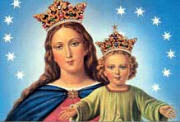
On the morning of January 8, 1815, Mass was said at the altar on which a statue of Our Lady of Succor had been placed. The Prioress of the Convent, Mother Marie Olivier de Vezin made a vow to have an annual Mass of Thanksgiving said if victory was granted to the Americans. At the moment of communion, a courier ran into the chapel announcing the American victory. After the battle Old Hickory came to the convent to thank the nuns for their prayers. “By the blessing of heaven, directing the valor of the troops under my command, one of the most brilliant victories in the annals of war was obtained.” In after years, whenever Jackson visited New Orleans, he always made a point of also visiting the Ursuline Covent. The Mass of Thanksgiving has been faithfully observed each year since 1815 by the Ursulines.

Archbishop Fulton Sheen interviews Pastor Wurmbrand


Fulton Sheen interviews Pastor Wurmbrand from Schwarz Report on Vimeo.

The following comes from Wikipedia:

Richard Wurmbrand (March 24, 1909 – February 17, 2001) was a Romanian Christian minister of Jewish descent. He was a youth during a time of anti-Semitic activity in Romania, but it was later, after becoming a believer in Jesus Christ as Messiah, and daring to publicly say that Communism and Christianity were not compatible, that he experienced imprisonment and torture for his beliefs. After serving five years of a second prison sentence, he was ransomed for $10,000. His colleagues in Romania urged him to leave the country and work for religious freedom from a location less personally dangerous. After spending time in Norway and England, he and his wife Sabina, who had also been imprisoned, emigrated to America and dedicated the rest of their lives to publicizing and helping Christians who are persecuted for their beliefs. He wrote more than 18 books, the most widely known isTortured for Christ. Various of his works have been translated into more than 60 languages. He founded the international organization Voice of the Martyrs, which continues to aid Christians around the world who are persecuted for their faith.

Saint of the day: Albert Chmielowski

The following comes from the Patron Saints Index:

Born to a wealthy aristocratic family, he initially studied agriculture in order to manage the family estate. Involved in politics from his youth, he lost a leg at age 17 when injured while fighting in an insurrection. In Krakow, he became a popular, well-known and well-liked artist. His interest in politics and art made him keenly aware of the human misery around him. A gentle and compassionate soul, he felt called to help those in need. After years of reflection, he understood that this desire was how God was calling him to service and Himself.


Franciscan tertiary, taking the name Albert. He abandoned painting, and began a life of working with and for the poorest of Krakow. In 1887 he founded the Brothers of the Third Order of Saint Francis, Servants of the Poor, known as the Albertines (named for him) or the Gray Brothers (after their rough gray habits). In 1891 he founded the women's congregation of the Order (Gray Sisters). The Albertines organized food and shelter for the poor and homeless.

Albert preached that the great calamity of our time was that so many refused to see and voluntarily relieve the suffering of their miserable brothers and sisters. The "haves" lived away from the "have-nots" in order to ignore them and leave their care to others.

In 1949, Pope John Paul II wrote a well-received play about Albert; the work was filmed in 1997, released as Brother of Our God. Albert was the spiritual teacher of Blessed Maria Bernardina Jablonska.

Fr. Robert Barron: Answering the Skeptics Part 5

Thursday, June 16, 2011

I Lift My Hands by Chris Tomlin

Pope Benedict: Reach out to fallen away Catholics


The following comes from Zenit.org:

The biggest challenge for the Church today, above all in countries with deep Christian roots, is to reintroduce the beauty of Christianity to those who consider it an obstacle to happiness, says Benedict XVI. 
The Pope said this Monday at the Basilica of St. John Lateran when he addressed the opening session of Rome's 2011 Diocesan Convention, which is under way through Thursday.
The diocesan convention concludes the pastoral year of the Diocese of Rome. The theme of the meeting is "The Joy of Nurturing Faith in the Church of Rome -- Christian Initiation."
In his address, the Holy Father reflected that drawing close to those who have fallen away from the faith has become "especially urgent today," and that the Church needs "a new evangelization addressed to all those who, although they have heard talk of the faith, no longer appreciate, no longer know the beauty of Christianity; on the contrary, at times they even view it as an obstacle to achieving happiness."
In the cathedral of the Diocese of Rome, which was filled to capacity, Benedict XVI quoted a letter addressed personally to him from theologian Hans Urs von Balthasar (1905-1988): "Faith must never be presupposed but proposed."
"This is just how it is," the Pope stated. "Faith is not kept by itself in the world, it is not automatically passed on to the human heart, but must always be proclaimed."
The Holy Father added that if "the proclamation of faith is to be effective it must stem in turn from a heart that believes and loves, a heart that adores Christ and believes in the power of the Holy Spirit!"
"If people forget God," he continued, "it is partly because the Person of Jesus is often reduced to that of the figure of a wise man and his divinity weakened, if not denied."
Benedict XVI noted that thinking of Christ with only "human ideas" is an "obstacle to understanding the radical newness of Christianity."
"Therefore," he stated, "may there be a growing commitment to a renewed season of evangelization, which is not only the task of some of the members of the Church but rather of them all."
The Pope said that mission of evangelization that the Church must carry out is "to proclaim the newness of the Gospel," to "show the beauty and reasonableness of faith," and to "carry God's light to the people of our time, with courage, with conviction, with joy."
"There are many people who have not encountered the Lord," the Holy Father added. "Special pastoral care should be dedicated to them."
"Beside the children and young people of Christian families who ask to begin the process of Christian initiation," he continued, "there are adults who have not received baptism or who have drifted away from the faith and from the Church. This pastoral attention is especially urgent today and asks us to commit ourselves with confidence, sustained by the certainty that God's grace works in the human heart today too."

Blessed Elizabeth of the Trinity: Prayer to the Trinity


O my God, Trinity whom I adore; help me to forget myself entirely that I may be established in You as still and as peaceful as if my soul were already in eternity. May nothing trouble my peace or make me leave You, O my Unchanging One, but may each minute carry me further into the depths of Your mystery. Give peace to my soul; make it Your heaven, Your beloved dwelling and Your resting place. May I never leave You there alone but be wholly present, my faith wholly vigilant, wholly adoring, and wholly surrendered to Your creative Action.

O my beloved Christ, crucified by love, I wish to be a bride for Your Heart; I wish to cover You with glory; I wish to love You...even unto death! But I feel my weakness, and I ask You to "clothe me with Yourself," to identify my soul with all the movements of Your Soul, to overwhelm me, to possess me, to substitute yourself for me that my life may be but a radiance of Your Life. Come into me as Adorer, as Restorer, as Savior.

O Eternal Word, Word of my God, I want to spend my life in listening to You, to become wholly teachable that I may learn all from You. Then, through all nights, all voids, all helplessness, I want to gaze on You always and remain in Your great light. O my beloved Star, so fascinate me that I may not withdraw from Your radiance.

O consuming Fire, Spirit of Love, "come upon me," and create in my soul a kind of incarnation of the Word: that I may be another humanity for Him in which He can renew His whole Mystery. And You, O Father, bend lovingly over Your poor little crature; "cover her with Your shadow," seeing in her only the "Beloved in whom You are well pleased."

O my Three, my All, my Beatitude, infinite Solitude, Immensity in which I lose myself, I surrender myself to You as Your prey. Bury Yourself in me that I may bury myself in You until I depart to contemplate in Your light the abyss of Your greatness.