The last words that St. Ignatius said to Francis Xavier before he was sent as the greatest missionary after St Paul were: Go set all on fire! He embarked for India, then to Japan and died on the shore overlooking China. His missionary work was completed in only 11 years and he died of exhaustion at 46 years of age.
Like Francis Xavier all followers of Christ are called to be prophets, evangelizers, and missionaries. Both Blessed Pope John Paul II and the present Pope Benedict XVI insist on followers of Christ encountering Christ as Friend and Lord and then sharing Jesus with others. It is a contradiction in terms to keep the priceless treasure of Friendship with Jesus to oneself. St. Andrew teaches us this lesson. After being called by Jesus, Andrew filled with joy hurries to tell the Good News (“Gospel”) to his brother Peter.
How did St. Francis Xavier in such a short time convert, baptize, and teach the Catholic faith to thousands? What was his secret to success?
1. SPIRITUAL EXERCISES. His conversion came about by having been directed and completing the Spiritual Exercises directed by St. Ignatius himself. Ignatius challenged Xavier with the Biblical quotation: “What would it profit a man to gain the whole world if he lose his soul in the process?” The Spiritual Exercises done well enlighten, convert, and transform those who do them into fiery apostles.
2. OBEDIENCE. The Holy Father asked Ignatius to send some of his followers from the Company of Jesus to India and the Far East and Francis Xavier obeyed. Obedience to God, the Pope, and the Church is always a true sign of holiness by which God blesses with abundant graces. “Lord, not my will but yours be done!” (Prayer of Jesus to the Father in the Garden of Olives).
3. LOVE FOR POVERTY. Upon arriving in India, Xavier’s heart overflowed with love for the poor of the country. His love knew no bounds. Identification! Instead of seeking out comfortable lodgings and ease, Xavier decided to live with the poor, sleep like the poor, eat and drink with the poor, and become poor himself. Jesus’s first Beatitude exemplifies this attitude of heart: “Blessed are the poor in spirit, for theirs is the kingdom of heaven.” (Mt. 5: 3).
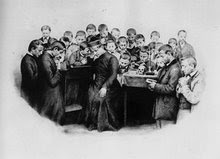
4. LOVE FOR THE CHILDREN. Jesus taught love for children. “Let the children come to me for such is the kingdom of heaven.” Francis Xavier loved the children and they loved him. He taught them their catechism, as well as their prayers. Such was the love the children had for him that barely did he have time to say his prayers or even eat!
5. APOSTOLIC CREATIVITY. Xavier was a genius, as teacher and missionary. As a tool for memorization of the catechism, Xavier made use of the song. In simple verse and rhyme Xavier taught the children the basics of catechism. Domino effect! Then the children would return home and sing the catechism thereby teaching their own parents. Pope John Paul II exhorts followers of Christ to be opened to the Holy Spirit and new apostolic creativity and initiatives. Jesus said to Nicodemus that the spirit blows where He wills. Like Xavier let us be open to the wind-direction of the Holy Spirit and follow!
6. BAPTISM. It all starts with the sacrament of Baptism. After instructions, Francis Xavier would baptize in the hundreds leading to the thousands! At the end of his day at times he could no longer hold up his arm any longer due to the huge numbers of Baptisms he would do.
7. ORDER THE DISORDER/ORGANIZATION. This great saint after finishing his time in one place, would leave well-formed catechists to carry on with the mission of forming the people in the community. Helpers and lay leaders! Now more than ever zealous priests need zealous lay leaders to help to carry on the task of evangelization. “The harvest is rich but the laborers are few.”
8. INCULTURATION. While travelling to Japan, Xavier had to learn the social mores and customs of another country. In this case dressed in rags caused the Japanese Emperor revulsion. As St. Paul says, “I become all things to all men so as to win as many to Christ as possible.” Xavier donned the most elegant clothes fashionable and gave gifts to the Emperor, thereby winning the Emperor’s friendship and opening up the door to the preaching of the Gospel message in Japan.
9. PRAYER AND PENANCE. It is impossible to find a saint who did not take the “two P’s” seriously: prayer and penance! At the end of his exhausting day, Xavier spent hours in front of the Most Blessed Sacrament, praising the Lord, thanking the Lord and imploring for the sanctification and salvation of the people God placed in his path. The consolation that God sent Francis Xavier during his prayer was so intense (very much like that of his contemporary St. Philip Neri) that he begged the Lord “basta”— “enough” of the consolation lest he die of its intensity! May Xavier attain for us the fire of intensity in our prayers! Penance? He slept very little so as to accompany the Lord and offer himself as victim for the salvation of souls.
10. APOSTOLIC ZEAL. The favorite prayer of Xavier was “Give me souls!” Another saint who had a similar motto was Saint John Bosco whose motto was posted on the wall of his office: “Give me souls and take all the rest away.” St. John of the Cross asserts: “Authentic charity is manifested by apostolic zeal.” Indeed if we truly love God then we should love what God loves— the salvation of immortal souls. In the Office of Readings for the Feast of St. Francis Xavier, in a letter written to St. Ignatius, there is a passionate appeal for more workers to gather in the harvest, specifically reproaching the proud and learned at the Universities of Europe (especially Paris). The words of Xavier explode with apostolic zeal and intense suffering for the salvation of immortal souls. Let us meditate attentively the words of St. Francis Xavier:
“Many, many people hereabouts are not becoming Christians for one reason: there is nobody to make them Christians. Again and again I have thought of going round the universities of Europe, especially Paris, and everywhere crying out like a madman. Riveting the attention of those with more learning than charity: What a tragedy: how many souls are being shut out of heaven and falling into hell, thanks to you! I wish they would work as hard at this as they do at their books, and so settle their account with God for their learning and the talents entrusted to them.” (Office of Readings, Dec. 3, Feast of St. Francis Xavier)