Showing posts with label Peter Kreeft. Show all posts

Friday, August 16, 2019

The Winning Strategy


The following comes from the Integrated Catholic Life site:
To win any war, the three most necessary things to know are: (1) that youare at war, (2) who your enemy is, and (3) what weapons or strategies can defeat him.
You cannot win a war (1) if you simply sew peace banners on a battlefield, (2) if you fight civil wars against your allies, or (3) if you use the wrong weapons.
Here is a three point checklist for the culture wars.
1. We Are at War
If you don’t know that our entire civilization is in crisis, I hope you had a nice vacation on the moon.
Many minds do seem moonstruck, however, blissfully unaware of the crisis—especially the “intellectuals,” who are supposed to be the most on top of current events. I was dumbfounded to read a cover article in Time devoted to the question: Why is everything getting better? Why is life so good today? Why does everybody feel so satisfied about the quality of life? Time never questioned the assumption, it just wondered why the music on the Titanic sounded so nice.
It turned out, on reading the article, that every single aspect of life that was mentioned, every single reason for life getting better, was economic. People are richer. End of discussion.
Perhaps Time is just Playboy with clothes on. For one kind of playboy, the world is one great big whorehouse. For another kind, it’s one great big piggy bank. For both, things are getting better and better.
There is a scientific refutation of the Pig Philosophy: the statistical fact that suicide, the most in-your-face index of unhappiness, is directly proportionate to wealth. The richer you are, the richer your family is, and the richer your country is, the more likely it is that you will find life so good that you will choose to blow your brains apart.
Suicide among pre-adults has increased 5000% since the “happy days” of the ’50s. If suicide, especially among the coming generation, is not an index of crisis, nothing is.
Night is falling. What Chuck Colson has labeled “a new Dark Ages” is looming. And its Brave New World proved to be only a Cowardly Old Dream. We can see this now, at the end of “the century of genocide” that was christened “the Christian century” at its birth.
We’ve had prophets who warned us: Kierkegaard, 150 years ago, in The Present Age; and Spengler, 100 years ago, in The Decline of the West; and Aldous Huxley, seventy years ago, in Brave New World; and C. S. Lewis, forty years ago, in The Abolition of Man; and above all our popes: Leo XIII and Pius IX and Pius X and above all John Paul the Great, the greatest man in the world, the greatest man of the worst century. He had even more chutzpah than Ronald Reagan, who dared to call Them “the evil empire”: He called Us “the culture of death.” That’s our culture, and his, including Italy, with the lowest birth rate in the world, and Poland, which now wants to share in the rest of the West’s abortion holocaust.
If the God of life does not respond to this culture of death with judgment, God is not God. If God does not honor the blood of the hundreds of millions of innocent victims then the God of the Bible, the God of Israel, the God of orphans and widows, the Defender of the defenseless, is a man-made myth, a fairy tale.
But is not God forgiving?
He is, but the unrepentant refuse forgiveness. How can forgiveness be received by a moral relativist who denies that there is anything to forgive except a lack of self-esteem, nothing to judge but “judgmentalism?” How can a Pharisee or a pop psychologist be saved?
But is not God compassionate?
He is not compassionate to Moloch and Baal and Ashtaroth, and to Caananites who do their work, who “cause their children to walk through the fire.” Perhaps your God is—the God of your dreams, the God of your “religious preference”—but not the God revealed in the Bible.
But is not the God of the Bible revealed most fully and finally in the New Testament rather than the Old? In sweet and gentle Jesus rather than wrathful and warlike Jehovah?
The opposition is heretical: the old Gnostic-Manichaean-Marcionite heresy, as immortal as the demons who inspired it. For “I and the Father are one.” The opposition between nice Jesus and nasty Jehovah denies the very essence of Christianity: Christ’s identity as the Son of God. Let’s remember our theology and our biology: like Father, like Son.
But is not God a lover rather than a warrior?
No, God is a lover who is a warrior. The question fails to understand what love is, what the love that God is, is. Love is at war with hate, betrayal, selfishness, and all love’s enemies. Love fights. Ask any parent. Yuppie-love, like puppy-love, may be merely “compassion” (the fashionable word today), but father-love and mother-love are war.
In fact, every page of the Bible bristles with spears, from Genesis 3 through Revelation 20. The road from Paradise Lost to Paradise Regained is soaked in blood. At the very center of the story is a cross, a symbol of conflict if there ever was one. The theme of spiritual warfare is never absent in scripture, and never absent in the life and writings of a single saint. But it is never present in the religious education of any of my “Catholic” students at Boston College. Whenever I speak of it, they are stunned and silent, as if they have suddenly entered another world. They have. They have gone past the warm fuzzies, the fur coats of psychology-disguised-as-religion, into a world where they meet Christ the King, not Christ the Kitten.
Welcome back from the moon, kids.
Where is the culture of death coming from? Here. America is the center of the culture of death. America is the world’s one and only cultural superpower.
If I haven’t shocked you yet, I will now. Do you know what Muslims call us? They call us “The Great Satan.” And do you know what I call them? I call them right.
But America has the most just, and moral, and wise, and biblical historical and constitutional foundation in all the world. America is one of the most religious countries in the world. The Church is big and rich and free in America.
Yes. Just like ancient Israel. And if God still loves his Church in America, he will soon make it small and poor and persecuted, as he did to ancient Israel, so that he can keep it alive. If he loves us, he will prune us, and we will bleed, and the blood of the martyrs will be the seed of the Church again, and a second spring will come—but not without blood. It never happens without blood, sacrifice, and suffering. The continuation of Christ’s work—if it is really Christ’s work and not a comfortable counterfeit—can never happen without the Cross.
I don’t mean merely that Western civilization will die. That’s a piece of trivia. I mean eternal souls will die. Billions of Ramons and Vladamirs and Janes and Tiffanies will go to Hell. That’s what’s at stake in this war: not just whether America will become a banana republic, or whether we’ll forget Shakespeare, or even whether some nuclear terrorist will incinerate half of humanity, but whether our children and our children’s children will see God forever. That’s what’s at stake in “Hollywood versus America.” That’s why we must wake up and smell the rotting souls. Knowing we are at war is the first requirement for winning it.
The next thing we must do to win a war is to know our enemy.
2. Our Enemy
Who is our enemy?
Not Protestants. For almost half a millennium, many of us thought our enemies were Protestant heretics, and addressed that problem by consigning their bodies to battlefields and their souls to Hell. (Echoes of this strategy can still be heard in Northern Ireland.) Gradually, the light dawned: Protestants are not our enemies, they are our “separated brethren.” They will fight with us.
Not Jews. For almost two millennia many of us thought that, and did such Christless things to our “fathers in the faith” that we made it almost impossible for the Jews to see their God—the true God—in us.
Not Muslims, who are often more loyal to their half-Christ than we are to our whole Christ, who often live more godly lives following their fallible scriptures and their fallible prophet than we do following our infallible scriptures and our infallible prophet.
The same is true of the Mormons and the Jehovah’s Witnesses and the Quakers.
Our enemies are not “the liberals.” For one thing, the term is almost meaninglessly flexible. For another, it’s a political term, not a religious one. Whatever is good or bad about political liberalism, it’s neither the cause nor the cure of our present spiritual decay. Spiritual wars are not decided by whether welfare checks increase or decrease.
Our enemies are not anti-Catholic bigots who want to crucify us. They are the ones we’re trying to save. They are our patients, not our disease. Our word for them is Christ’s: “Father, forgive them, for they know not what they do.” We say this of the Chinese communist totalitarians who imprison and persecute Catholics, and to the Sudanese Muslim terrorists who enslave and murder Catholics. They are not our enemies, they are our patients. We are Christ’s nurses. The patients think the nurses are their enemies, but the nurses know better.
Our enemies are not even the media of the culture of death, not even Ted Turner or Larry Flynt or Howard Stern or Disney or Time-Warner. They too are victims, patients, though on a rampage against the hospital, poisoning other patients. But the poisoners are our patients too. So are homosexual activists, feminist witches, and abortionists. We go into gutters and pick up the spiritually dying and kiss those who spit at us, if we are cells in our Lord’s Body. If we do not physically go into gutters, we go into spiritual gutters, for we go where the need is.
Our enemies are not heretics within the Church, “cafeteria Catholics,” “Kennedy Catholics,” “I Did It My Way” Catholics. They are also our patients, though they are Quislings. They are the victims of our enemy, not our enemy.
Our enemies are not theologians in so-called Catholic theology departments who have sold their souls for thirty pieces of scholarship and prefer the plaudits of their peers to the praise of God. They are also our patients.
Our enemy is not even the few really bad priests and bishops, candidates for Christ’s Millstone of the Month Award, the modern Pharisees. They too are victims, in need of healing.
Who, then, is our enemy?
There are two answers. All the saints and popes throughout the Church’s history have given the same two answers, for these answers come from the Word of God on paper in the New Testament and the Word of God in flesh in Jesus Christ.
Yet they are not well known. In fact, the first answer is almost never mentioned today. Not once in my life have I ever heard a homily on it, or a lecture by a Catholic theologian.
Our enemies are demons. Fallen angels. Evil spirits.
So says Jesus Christ: “Do not fear those who can kill the body and then has no more power over you. I will tell you whom to fear. Fear him who has power to destroy both body and soul in Hell.”
So says St. Peter, the first pope: “The Devil, like a roaring lion, is going through the world seeking the ruin of souls. Resist him, steadfast in the faith.”
So says St. Paul: “We wrestle not against flesh and blood, but against principalities and powers of wickedness in high places.”
So said Pope Leo the XIII, who received a vision of the 20th century that history has proved terrifyingly true. He saw Satan, at the beginning of time, allowed one century in which to do his worst work, and he chose the 20th. This pope with the name and heart of a lion was so overcome by the terror of this vision that he fell into a trance. When he awoke, he composed a prayer for the whole Church to use to get it through the 20th century. The prayer was widely known and prayed after every Mass—until the ’60s: exactly when the Church was struck with that incomparably swift disaster that we have not yet named (but which future historians will), the disaster that has destroyed a third of our priests, two-thirds of our nuns, and nine-tenths of our children’s theological knowledge; the disaster that has turned the faith of our fathers into the doubts of our dissenters, the wine of the Gospel into the water of psychobabble.
The restoration of the Church, and thus the world, might well begin with the restoration of the Lion’s prayer and the Lion’s vision, because this is the vision of all the popes and all the saints and our Lord himself: the vision of a real Hell, a real Satan, and real spiritual warfare.
I said there were two enemies. The second is even more terrifying than the first. There is one nightmare even more terrible than being chased and caught and tortured by the Devil. That is the nightmare of becoming a devil. The horror outside your soul is terrible enough; how can you bear to face the horror inside your soul?
What is the horror inside your soul? Sin. All sin is the Devil’s work, though he usually uses the flesh and the world as his instruments. Sin means inviting the Devil in. And we do it. That’s the only reason why he can do his awful work; God won’t let him do it without our free consent. And that’s why the Church is weak and the world is dying: because we are not saints.
3. The Weapon
And thus we have our third Necessary Thing: the weapon that will win the war and defeat our enemy.
All it takes is saints.
Can you imagine what twelve more Mother Teresas would do for the world? Can you imagine what would happen if just twelve readers of this article offered Christ 100% of their hearts and held back nothing, absolutely nothing?
No, you can’t imagine it, any more than anyone could imagine how twelve nice Jewish boys could conquer the Roman Empire. You can’t imagine it, but you can do it. You can become a saint. Absolutely no one and nothing can stop you. It is your free choice. Here is one of the truest and most terrifying sentences I have ever read (from William Law’s Serious Call): “If you will look into your own heart in complete honesty, you must admit that there is one and only one reason why you are not a saint: you do not wholly want to be.”
That insight is terrifying because it is an indictment. But it is also thrillingly hopeful because it is an offer, an open door. Each of us can become a saint. We really can.
What holds us back? Fear of paying the price.
What is the price? The answer is simple. T.S. Eliot defines the Christian life as: “A condition of complete simplicity/Costing not less than/Everything.” The price is everything: 100%. A worse martyrdom than the quick noose or stake: the martyrdom of dying daily, dying to all your desires and plans, including your plans about how to become a saint. A blank check to God. Complete submission, “islam,” “fiat”—Mary’s thing. Look what that simple Mary-thing did 2000 years ago: It brought God down and saved the world.
It was meant to continue.
If we do that Mary-thing—and only if we do that—then all our apostolates will “work”: our missioning and catechizing and fathering and mothering and teaching and studying and nursing and businessing and priesting and bishoping—everything.
A bishop asked one of the priests of his diocese for recommendations on ways to increase vocations. The priest replied: The best way to attract men in this diocese to the priesthood, Your Excellency, would be your canonization.
Why not yours?

Saturday, June 29, 2019

Dr. Peter Kreeft on Angels & Demons

Friday, October 20, 2017

Lesson One in Prayer by Dr. Peter Kreeft

The following comes from The Integrated Catholic Life:


Let’s get very, very basic and very, very practical about prayer. The single most important piece of advice I know about prayer is also the simplest: Just do it!
How to do it is less important than just doing it. Less-than-perfect prayer is infinitely better than no prayer; more perfect prayer is only finitely better than less perfect prayer.
Nancy Reagan was criticized for her simple anti-drug slogan: “Just say no.” But there was wisdom there: the wisdom that the heart of any successful program to stop anything must be the simple will to say no. (“Just say no” doesn’t mean that nothing else was needed, but that without that simple decision nothing else would work. “Just say no” may not be sufficient but it is necessary.)
Similarly, no program, method, book, teacher, or technique will ever succeed in getting us to start doing anything unless there is first of all that simple, absolute choice to do it. “Just say yes.”
The major obstacle in most of our lives to just saying yes to prayer, the most popular and powerful excuse we give for not praying, or not praying more, or not praying regularly, is that we have no time.
The only effective answer to that excuse, I find, is a kind of murder. You have to kill something, you have to say no to something else, in order to make time to pray. Of course, you will never find time to pray, you have to make time to pray. And that means unmaking something else. The only way to install the tenant of prayer in the apartment building of your life is to evict some other tenant from those premises that prayer will occupy. Few of us have any empty rooms available.
Deciding to do that is the first thing. And you probably won’t decide to do it, only wish to do it, unless you see prayer for what it is: a matter of life or death, your lifeline to God, to life itself.
Is this exaggerated? Are there more important things? Love, for instance? We need love absolutely; but the love we need is agape, the love that only God has and is; so unless we go to God for it, we won’t get it. And going to God for it means prayer. So unless we pray, we will not love.
Having got that clear and having made prayer your number one priority, having made a definite decision to do it, we must next rearrange our lives around it. Rearranging your time, preparing time to pray, is like preparing your house to paint. As everyone knows who has done any painting, preparation is three-quarters the work, three-quarters the hassle, and three-quarters the time. The actual painting is a breeze compared with the preparation. The same is true of prayer: the hardest step is preparing a place, a time, a sacred and inviolable part of each day for it. Prayer is like Thanksgiving dinner. It takes one hour to eat it and ten hours to prepare it. Prayer is like Christmas Day: it took a month of preparation, decoration, and shopping to arrange for that one day. Best of all, prayer is like love. Foreplay is, or should be, most of it. For two people truly and totally in love, all of their lives together is foreplay. Well, prayer is like spiritual love-making. God has waited patiently for you for a long, long time. He longs for you to touch the fringe of his being in prayer, as the woman touched the hem of Christ’s garment, so that you can be healed. How many hours did that woman have to prepare for that one-minute touch?
The first and most important piece of practical preparation is scheduling. You absolutely must schedule a regular time for prayer, whether you are a “scheduler” with other things in your life or not. “Catch as catch can” simply won’t work for prayer; it will mean less and less prayer, or none at all. One quick minute in the morning to offer your day to God is better than nothing at all, of course, but it is as radically inadequate as one quick minute a day with your wife or husband. You simply must decide each day to free up your schedule so you can pray.
How long a time? That varies with individuals and situations, of course; but the very barest minimum should certainly be at least fifteen minutes. You can’t really count on getting much deep stuff going on in less time than that. If fifteen minutes seems too much to you, that fact is powerful proof that you need to pray much more to get your head on straight.
After it becomes more habitual and easy, expand it, double it. And later, double it again. Aim at an hour each day, if you want radical results. (Do you? Or are you only playing?)
What time of day is best? The most popular time—bedtime—is usually the worst possible time, for two reasons. First, it tends not to be prime time but garbage time, when you’re the least alert and awake. Do you really want to put God in the worst apartment in your building? Should you offer him the sickest sheep in your flock?
Second, it won’t work. If you wait until every other obligation is taken care of first before you pray, you simply won’t pray. For life today is so cruelly complicated for most of us that “every other obligation” is never taken care of. Remember, you are going to have to kill other things in order to pray. No way out of that.
The most obvious and usually best time is early in the morning. If you can’t delay the other things you do, you simply must get up that much earlier.
Should it be the very first thing? That depends. Some people are alert as soon as they get up; others need to shower and dress to wake up. The important thing is to give God the best time, and “just do it.”
Place is almost as important as time. You should make one special place where you can be undisturbed. “Catch as catch can” won’t work for place either.
What place? Some people are not very sensitive to environment and can even use a bathroom. Others naturally seek beauty: a porch, yard, garden, or walk. (I find praying while you take a walk a good combination of spiritual and physical exercise.)
You probably noticed I haven’t said a word about techniques yet. That’s because three-quarters is preparation, remember? But what about methods?
I can only speak from my own experience as a continuing beginner. The two most effective that I have found are very simple. One is praying Scripture, reading and praying at the same time, reading in God’s presence, receiving the words from God’s mouth. The second is spontaneous verbal prayer. I am not good at all at silent prayer, mental prayer, contemplative prayer; my thoughts hop around like fleas. Praying aloud (or singing) keeps me praying, at least. And I find it often naturally leads to silent prayer often, or “mental prayer,” or contemplation.
Most advice on prayer focuses on higher levels: contemplative prayer. But I suspect many of my readers are prayer infants too and need to learn to walk before they can run. So these are some lessons from one man’s prayer kindergarten. Let’s “just do it” even if “it” is only crawling towards God.

Monday, September 11, 2017

Dr Peter Kreeft on Aleksandr Solzhenitsyn's Harvard Address


Dr. Peter Kreeft comments on the Aleksandr Solzhenitsyn Commencement Address, "A World Split Apart," given at Harvard University on 8 June 1978. Solzhenitsyn diagnoses the roots of all our ills in the West.  He was a modern prophet and Dr. Kreeft gives an explanation of the Harvard address that everyone needs to hear!


Below is the original talk as given by Solzhenitsyn at Harvard:

Wednesday, March 18, 2015

Dr. Kreeft: Truth and the Sexual Revolution

Monday, March 16, 2015

Dr. Peter Kreeft on the Authority of the Catholic Church

Wednesday, March 11, 2015

Dr. Peter Kreeft's conversion to Catholicism


Saturday, November 8, 2014

Peter Kreeft on the Hiddenness of God

Wednesday, July 30, 2014

Peter Kreeft: Who's in authority here?


The following comes from Peter Kreeft at The Integrated Catholic Life:
All the beliefs that divide Catholics from fundamentalists are derived from the teaching authority of the Church.
Because Catholics believe in the Church, they believe a fuller, more complex and mysterious set of things than the narrowed down fundamentalist. Thus, the Church is the essential point of divergence.
In the fundamentalist view, the Catholic Church exalts itself over the Bible, adding to God’s Word: It is man arrogating to himself the right to speak in God’s name.
But for Catholics, the fundamentalist puts the Bible in place of the Church as his “paper pope.” Instead of a living teacher (the Church) with a book (the Bible), the fundamentalist has only a book.
Fundamentalists believe that the Bible authorizes the Church. They accept a Church only because it’s in the Bible. Catholics, on the other hand, believe the Bible because the Church teaches it, canonized it (i.e., defined its books) and authored it (the disciples wrote the New Testament).
Last week we looked at the fundamentalist idea of the Bible and contrasted it with the Catholic view. Now we must do the same with fundamentalist notions of the Church.
The most important point here is that the fundamentalist view is a new one while the Catholic view is an old one. The Catholic Church and its claims have been around for more than 19 centuries, fundamentalism for less than one. The historical argument for the Catholic Church is thus very strong. Fundamentalists have to believe that the early Christian Church went very wrong (i.e., Catholic) very early, and went right (i.e., fundamentalist) very late. In other words, the Holy Spirit must have been asleep for 19 centuries in between.
Fundamentalists usually know very little about Church history. They don’t know how many Catholic doctrines can be traced back to the early Fathers of the Church — e.g., that appeals to the Bishop of Rome to definitively settle disputes throughout the rest of the Church occur as early as turn of the first Century; or that the Mass, not Bible preaching, was the central act of worship in all the earliest descriptions of the Christian community.
Five key differences between fundamentalists and Catholics center on the Church’s (1) nature, (2) mystery, (3) authority, (4) structure and (5) end.
Nature
Fundamentalists agree with Catholics that the Church was founded by God, not just by men. For a fundamentalist the Church is not just a religious social club, as it is for a modernist. But while fundamentalists see that God commanded the Church’s beginning, they do not see that He still dwells in it intimately, as a soul lives in its body and as He lives in faithful souls. For a fundamentalist, the Church’s origin is divine but its nature is human.
Mystery
Fundamentalists see the Church in the opposite way from which they see the Bible. They affirm the divine identity of Scripture and minimize or ignore the human side of its authorship. But they stress the human side of the Church and ignore its divine side. In other words, they’re Docetists about the Bible and Arians about the Church. (Docetism was an early heresy that denied Christ’s human nature; Arianism denied His divine nature.) Catholicism alone has consistently affirmed the mystery of the two natures both of Christ, and of the Church and Bible.
Fundamentalists often accuse Catholics of the error of the Pharisees and love to quote Mark 7:7-8, Jesus’ rebuke to the Pharisees for teaching as divine doctrines mere human traditions. The Pope and bishops are men, after all, and fundamentalists bristle at the thought of ascribing to these humans a divine authority. But they’re inconsistent, for they ascribe to the human writers of the Bible a divine authority, and (of course) they ascribe to Christ a divine authority, though He was also human. So the principle that God can and does speak through human authorities is a principle based on Christ and Scripture.
Maybe the simplest way to see the difference is this: Fundamentalists see the Church as man’s gift (of worship) to God, while Catholics see it as God’s gift (of salvation) to man. For fundamentalists, we’re saved as individuals and then join in a kind of ecclesiastical chorus to sing our thanks back to God. For Catholics, we are saved precisely by being incorporated into the Church, Christ’s mystical Body, as Noah and his family were saved by being put into the ark. (Many of the Church Fathers use the ark as a symbol for the Church.)
It’s as if — to extend the metaphor — fundamentalists prefer to be saved by clinging to individual life preservers, then tying them together for fellowship.
To Catholics, the Church is “the mystical Body of Christ.” The Church is a “mystery.” Fundamentalists don’t understand this category. “Mystery” sounds suspiciously pagan to them. They want their religion to be clear and simple (as Moslems do). They’ll admit, of course, that God’s ways are not our ways and often appear mysterious to us. But they don’t want their Church to be mysterious, like God, because they don’t think of it as an extension of God but as an extension of man.
In other words, they think of “mystery” as mere darkness or puzzlement. But in Catholic theology it’s a positive thing: hidden light, hidden wisdom.
Fundamentalists say that they emphasize “the Church invisible” more than “the Church visible” and accuse Catholics of overemphasizing the latter. Fundamentalists draw a sharp distinction between these two dimensions of the Church so that they can explain Scripture’s strong statements about the Church as applying only to “the Church invisible” (the number of saved souls, known to God) and not to the visible Church on earth.
Why? Because if they referred such statements to the visible Church, the claims of the Catholic Church to be that single, worldwide, visible Church stretching back in history to Christ, still forgiving sins and exercising teaching authority in His name — well, these claims would surely seem more likely to be true of the Catholic Church than of any other visible Church.
Fundamentalists also have a very individualistic notion of the Church. The Catholic sense of a single great worldwide organism, a real thing, is not there. The Eastern Orthodox Church usually has an even more powerful sense of the mystery and splendor of the Church than most modern Western Catholics do. They’re east of Rome spiritually as well as geographically — i.e., more mystical. Fundamentalists are west of Rome — much too American.
Authority
A third difference concerns the authority of the Church. This follows from the previous point: Fundamentalists lack the Catholic vision of the Church as a great mystical entity, an invisible divine society present simultaneously in heaven and on earth, linking heaven and earth as closely as man’s soul and body are linked. And lacking this vision, authority can only mean power, especially political power. Thus, fundamentalists sometimes sound like their archenemies, the modernists, when it comes to criticizing the “authoritarianism” and political power of Rome. For both fundamentalists and modernists lack the Catholic understanding of the Church and its authority as much more than “political.”
Yet fundamentalists tend to be quite authoritarian themselves on a personal level — e.g., in their families. They are more willing than most people to both command and to obey authority, if it’s biblical. The issue that divides us is not authority as such but where it is to be found: Church or Bible only?
Structure
The structure of the Christian community also divides us. Fundamentalists usually criticize the “hierarchical” Church. This is often more a matter of politics than of religion, sometimes stemming from American egalitarianism rather than religious conviction. But when it is a matter of religious conviction, such criticism usually takes one of these three forms:
  • First, fundamentalists charge that Catholics worship the Church and the hierarchy, especially the Pope. There’s a fear of idolatry coupled with a fear of the papacy mixed up here, a confusion between sound principle (anti-idolatry) and a gross misunderstanding of facts. While I’ve met many Catholics who love the Pope and (unfortunately) some who hate him, I’ve never met or heard of anyone who worships him!
  • Second, the hierarchy is suspected of corruption just because it’s a hierarchy: It is structurally, culturally, un-American. (So is the hierarchy of angels “un-American.” But that doesn’t mean it’s corrupt.) Of course, 500 years ago there was some truth to this charge, but fundamentalists are still fighting Luther’s battle.
  • Third, there’s often an unadmitted racial prejudice against Italian Popes. Some people, when they hear “Italian,” immediately think “mafia” and “Machiavelli.” This element is rarely admitted, but it definitely plays a part in anti-papal prejudice.
Beyond these irrational criticisms, I’ve never come across any solid theological argument against the papacy. The current Pope (Blessed John Paul II as of the time of this essay – Editors) has done much to temper fundamentalist fears by his holy personality, wise words and strong opposition to abortion and to the excesses of some contemporary theologians.
End
Finally, fundamentalists and Catholics have different visions of the end or task of the Church. For fundamentalists, that task is only two things: edification of the saved and evangelization of the unsaved. For the Catholic, these two ends are essential, but there are also two others.
  • First, Catholics also emphasize the Church’s this-worldly tasks — social justice and the corporal works of mercy such as building hospitals and feeding the poor. Fundamentalists say the Church “shouldn’t get involved in politics” (though many of them are thoroughly politicized on the far right). And when did you last see a fundamentalist hospital.
  • Second, there’s a still more ultimate goal. Evangelization, edification and social service are ultimately only means to this greater end in the Catholic vision. The Church is there for the world, yes (the first three ends), but in a more ultimate sense the world is there for the Church, for her eternal glory and perfection.
The Church’s ultimate task is to glorify God, to be the Bride of Christ. The world is, in the long run, only the raw material out of which God makes the Church. In fact, the universe was created for the sake of the Church! God’s aim from Day One was to perfect His Bride, to share His glory eternally.
When we speak of this eternal glory we have in mind first of all the Church as invisible, as “mystical”; but there’s a substantial unity between the Church invisible and the Church visible, between the Church as inner organism and the Church as outer organization, between its soul and body, as there is between man’s soul and body.
You can see this mystical thing, as you can see a man. The most holy thing you can see on earth has its seat in Rome, its heart in bread and wine on the altar and its fingers as close as your neighbor.
It isn’t that fundamentalists explicitly deny this Catholic vision of the Church; they just don’t comprehend it. They may have things to teach us about being on fire with religious zeal, but we have much to teach them about the fireplace.
A fireplace without a fire is cold and gloomy. But a fire without a fireplace is catastrophic.

Monday, July 28, 2014

Jesus: Liar, Lunatic, Legend, Mystic, or Lord?

The following comes from Dr. Peter Kreeft at Strange Notions:


For Catholics, the doctrine of Christ's divinity is central, for it is like a skeleton key that opens all the other doctrines. Catholics have not independently reasoned out and tested each of the teachings of Christ received via the Bible and the Church, but believe them all on his authority. For if Christ is divine, He can be trusted to be infallible in everything He said, even hard things like exalting suffering and poverty, forbidding divorce, giving his Church the authority to teach and forgive sins in his name, warning about hell (very often and very seriously), instituting the scandalous sacrament of eating his flesh—we often forget how many "hard sayings" he taught!
When the first Christian apologists began to give a reason for their faith to unbelievers, this doctrine of Christ's divinity naturally came under attack, for it was almost as incredible to Gentiles as it was scandalous to Jews. That a man who was born out of a woman's womb and died on a cross, a man who got tired and hungry and angry and agitated and wept at his friend's tomb, that this man who got dirt under his fingernails should be God was, quite simply, the most astonishing, incredible, crazy-sounding idea that had ever entered the mind of man in all human history.
The argument the early apologists used to defend this apparently indefensible doctrine has become a classic one. C.S. Lewis used it often, e.g. in Mere Christianity, the book that convinced Chuck Colson (and thousands of others). I once spent half a book (Between Heaven and Hell) on this one argument alone. It is the most important argument in Christian apologetics, for once an unbeliever accepts the conclusion of this argument (that Christ is divine), everything else in the Faith follows, not only intellectually (Christ's teachings must all then be true) but also personally (if Christ is God, He is also your total Lord and Savior).
The argument, like all effective arguments, is extremely simple: Christ was either God or a bad man.
Unbelievers almost always say he was a good man, not a bad man; that he was a great moral teacher, a sage, a philosopher, a moralist, and a prophet—not a criminal, not a man who deserved to be crucified. But a good man is the one thing he could not possibly have been according to simple common sense and logic, for he claimed to be God. He said, "Before Abraham was, I Am", thus speaking the word no Jew dares to speak because it is God's own private name, spoken by God himself to Moses at the burning bush (Exodus 3:14). Jesus wanted everyone to believe that he was God. He wanted people to worship him. He claimed to forgive everyone's sins against everyone. (Who can do that but God, the One offended in every sin?)

Friday, November 29, 2013

Dr. Peter Kreeft on The Lord of the Rings: Beauty and Language

Monday, October 21, 2013

Dr. Peter Kreeft: How to Win the Culture War

Wednesday, October 2, 2013

Christianity and the New Paganism


The following comes from Dr. Peter Kreeft:


The most serious challenge for Christianity today isn’t one of the other great religions of the world, such as Islam or Buddhism.
Nor is it simple atheism, which has no depth, no mass appeal, no staying power. Rather, it’s a religion most of us think is dead. That religion is paganism—and it is very much alive.
Paganism is simply the natural gravity of the human spirit, the line of least resistance, religion in its fallen state.
The “old” paganism came from the country. Indeed, the very word “paganism” comes from the Latin pagani, “from the fields” or “country-dwellers.” Country people were the last to be converted to Christianity during the Roman Empire, the last to abandon their ancestral roots in pre-Christian belief. Today, country people are the last to abandon Christianity for the “new” paganism, which flourishes in the cities.
The old paganism was a far greater thing than the new. In fact, Chesterton brilliantly summarized the entire spiritual history of the world in this one sentence: “Paganism was the biggest thing in the world, and Christianity was bigger and everything since has been comparatively small.”
There were at least three elements in the old paganism that made it great. And all three are missing in the new paganism
The first is the sense of piety (pietas), the natural religious instinct to respect something greater than yourself, the humility that instinctively realizes man’s subordinate place in the great scheme of things. “Moderation” or “temperance” went along with this, especially in classical civilization. The motto “nothing too much” was inscribed over every temple to Apollo, along with “know thyself.”
This natural modesty and respect contrast sharply with the arrogant attitude of the new pagan in the modern West. Only Oriental societies still preserve a traditional reverence. The West does not understand this, and thinks it quaint at best and hypocritical at worst.
The new paganism is the virtual divinization of man, the religion of man as the new God. One of its popular slogans, repeated often by Christians, is “the infinite value of the human person.” Its aim is building a heaven on earth, a secular salvation. Another word for the new paganism is humanism, the religion that will not lift up its head to the heavens but stuffs the heavens into its head.
A second ingredient of the old paganism that’s missing in the new is an objective morality, what C.S. Lewis called “the Tao” in his prophetic little classic “The Abolition of Man.” To pre-modern man, pagan as well as Christian, moral rules were absolute: unyielding and unquestionable. They were also objective: discovered rather than created, given in the nature of things.
This has all changed. The new paganism is situational and pragmatic. It says we are the makers of moral values. It not only finds the moral law written in the human heart but also by the human heart. It acknowledges no divine revelation, thus no one’s values can be judged to be wrong.
The new paganism’s favorite Scripture is “judge not.” The only judgment is the judgment against judging. The only thing wrong is the idea that there is a real wrong.
The only thing to feel guilty about is feeling guilty. And, since man rather than God is the origin of values, don’t impose “your” values on me (another favorite line).
This is really polytheism—many gods, many goods, many moralities. No one believes in Zeus and Apollo and Neptune any more. (I wonder why: Has science really refuted them—or is it due to total conformity to fashion, supine submission to newspapers?) But moral relativism is the equivalent of the old polytheism. Each of us has become a god or goddess, a giver of law rather than receiver.
A third ingredient of the old paganism but not of the new is awe at something transcendent, the sense of worship and mystery. What the old pagan worshiped differed widely—almost anything from Zeus to cows—but he worshiped something. In the modern world the very sense of worship is dying, even in our own liturgy, which sounds as if it were invented by a Committee for the Abolition of Poetry.
Our religious sense has dried up. Modern religion is de-mythologized, de-miraclized, de-divinized. God is not the Lord but the All, not transcendent but immanent, not super-natural but natural.
Pantheism is comfortable, and this is the modem summum bonum. The Force of “Star Wars” fame is a pantheistic God, and it is immensely popular, because it’s “like a book on the shelf,” as C.S. Lewis put it: available whenever you want it, but not bothersome when you don’t want it. How convenient to think we are bubbles in a divine froth rather than rebellious children of a righteous divine Father! Pantheism has no sense of sin, for sin means separation, and no one can ever be separated from the All. Thus the third feature, no transcendence, is connected with the second, no absolute morality.
The new paganism is a great triumph of wishful thinking. Without losing the thrill and patina of religion, the terror of religion is removed. The new paganism stoutly rejects “the fear of God.” Nearly all religious educators today, including many supposedly Catholic ones, are agreed that the thing the Bible calls “the beginning of wisdom” is instead the thing we must above all eradicate from the minds of the young with all the softly destructive power of the weapons of modern pop psychology—namely, the fear of the Lord.
“Perfect love casts out fear,” says St. John; but when God has become the Pillsbury Doughboy, there is no fear left to cast out. And when there is no fear to cast out, perfect love lacks its strong roots. It becomes instead mere compassion—something good but dull, or even weak: precisely the idea people have today of religion. The shock is gone. That the God of the Bible should love us is a thunderbolt; that the God of the new paganism should love us is a self-evident platitude.
The new paganism is winning not by opposing but by infiltrating the Church. It is cleverer than the old. It knows that any opposition from without, even by a vastly superior force, has never worked, for “the blood of the martyrs is the seed of the Church.” When China welcomed Western missionaries, there were 2 million conversions in 60 years; when Mao and communism persecuted the Church, there were 20 million conversions in 20 years. The Church in East Germany is immensely stronger than the Church in West Germany for the same reason. The new paganism understands this, so it uses the soft, suggestive strategy of the serpent. It whispers, in the words of Scripture scholars, the very words of the serpent: “Has God really said…?” (Gen. 3:1).
The new paganism is a joining of forces by three of the enemies of theism: humanism, polytheism and pantheism. The only five possibilities for ultimate meaning and values are: atheism (no God); humanism (man as God); polytheism (many gods); pantheism (one immanent God); and theism (one transcendent God). The Battle of the Five Kings in the Valley of Armageddon might, in our era, be beginning. Predictions are always unwise, but the signs of the times, for some thoughtful observers, point to a fundamental turning point, the end of an age.
The so-called “New Age Movement” combines all the features described under the title of the new paganism. It’s a loosely organized movement, basically a reflowering of ’60s hippiedom, rather than a centralized agenda. But strategies are connected in three places. There may be no conspiracy on earth to unify the enemies of the Church, but the strategy of hell is more than the strategy of earth. Only one thing is more than the strategy of hell: the strategy of heaven.
The gates of hell cannot prevail against the Church; in fact, God uses the devil to defeat the devil, just as He did on Calvary, when the forces of the Hebrew, Greek and Roman worlds united to crucify Christ, as symbolized by the three languages on the accusation sign over the cross.
The very triumph of the devil, the death of God, was the defeat of the devil, the redemption of mankind, “Good Friday” Because God, who spoke the first word, always gets the last word.

Monday, September 16, 2013

Dr. Peter Kreeft on the Authority of the Catholic Church

Tuesday, September 3, 2013

The Sea: A Lecture by Peter Kreeft

Sunday, September 1, 2013

The Sea Within

The Sea Within: Trailer from Blackfriar Films on Vimeo.

Friday, July 5, 2013

Peter Kreeft - How to Win the Culture War


Saturday, April 27, 2013

Dr. Peter Kreeft: God or Atheism -- Which Is More Rational?

Thursday, January 10, 2013

Thursday, July 26, 2012

An Interview of Dr. Peter Kreeft

The following is an interview of Dr. Peter Kreeft from Brandon Vogt:


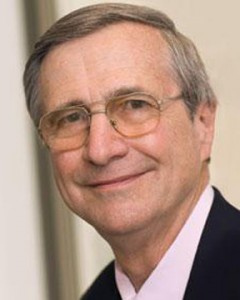
Dr. Peter Kreeft is is a professor of philosophy at Boston College and at the King’s College (Empire State Building), in New York City.
He is a regular contributor to several Christian publications, is in wide demand as a speaker at conferences, and is the author of over 67 books including the Handbook of Catholic ApologeticsChristianity for Modern Pagans, and Fundamentals of the Faith.
He regularly writes on philosophy, theology, and culture, and he’s an expert on C.S. Lewis and J.R.R. Tolkien.
In my opinion, Dr. Kreeft is the closest thing we have to a twenty-first century Lewis. Nobody else mirrors Lewis’ total package: his cunning wit, sharp thinking, baptized imagination, and love for story and wonder. Just listen to some of his talks to see what I mean.
Dr. Kreeft recently sat down with me to discuss C.S. Lewis, the New Atheism, philosophy, story, books, and much more. Enjoy!

 
Brandon: You’ve written several books on C.S. Lewis, including C.S. Lewis for the Third Millennium. One of the prominent threats to Christianity in this third millennium is the so-called New Atheism. It’s spearheaded by Richard Dawkins, an emeritus fellow at Lewis’ own alma mater. How would Lewis respond to this modern form of atheism?
Peter Kreeft: Atheists in C.S. Lewis’ day were as snobbish and arrogant as they are now, but better educated and more capable of debate. Anthony Flew, for example, was eminently fair and intelligent (and, of course, therefore eventually became a theist).
The atheists Lewis knew were more like “The Great Knock” in Surprised by Joy or MacPhee in That Hideous Strength, in that they were quite intellectually honest. I suspect Lewis would prefer not to cast his pearls before swine, so he would probably ignore the so-called “four horsemen” of New Atheism.
 
Brandon: Your newest book, Summa Philosophica, begins by praising two styles of argument and calling for their revival: the Socratic dialogue and St. Thomas’ disputatio. Why are these forms so valuable and why have they been lost?
Peter Kreeft: The Socratic method and the Summa article are both ways of making an issue clear and fair and presenting both sides in a very rational way. They have been lost because philosophy has degenerated into ideology. Objective truth itself is sometimes often seen as a right wing Republican-Christian plot to take over the government (though the rhetoric is cleverer than that, that’s the bottom line).
 
Brandon: It would be a severe understatement to say you like C.S. Lewis and J.R.R. Tolkien. You’ve written several books on their fiction, and in 2011 you  followed their path with your own novel, An Ocean Full of Angels (which I reviewed here). Why is story so valuable in communicating truth, goodness, and beauty?
Peter Kreeft: Story is the oldest, commonest, most beloved, and most effective form of communication because our life is essentially a story. That’s why the Bible is the most realistic of religious books. We can easily ignore or argue away abstractions, but we bump up against concretely real people, things, and events in story, as in life. It is easier to compare concrete things in a fictional story with concrete things in real life than it is to compare abstractions with concrete things in real life (though both are honorable and necessary things to do).
 
Brandon: Moving on to a simpler question, who is your favorite saint and why?
Peter Kreeft: St. Augustine, who has the Lewis-like combination of passionate heart, beautiful style, and deep understanding.
 
Brandon: Outside the Bible and Catechism, what are the top five books you wish every Catholic would read?
Peter Kreeft: Augustine’s Confessions, Pascal’s Pensees, Frank Sheed’s Theology and Sanity and Society and Sanity, and Brother Lawrence’s The Practice of the Presence of God. All of them bring heart and head together to powerfully push the reader up the road to the meaning of life, which is to be a saint, in head, heart, and hand.
The Confessions is unclassifiable; it has everything. The Pensees is the best modern apologetic book. Sheed’s two classics are the clearest popular introduction to Catholic theology I know. And Br. Lawrence’s is the simplest and most effective book for beginners in the spiritual life.
(Note: On Dr. Kreeft’s website he suggests seven more “highly recommended books”:
Brandon: Suppose Pope Benedict invites you to Rome where he ushers you to the balcony at St. Peter’s. He gives you one minute to address the watching world. What do you say?
Peter Kreeft: Listen to this man who ushered me here. Listen to his predecessors. Listen to the One who called him and other successors of Peter. For that One alone has the secret of eternal life and joy.