Showing posts with label Mexico. Show all posts

Tuesday, February 16, 2016

Pope Francis Speaks to Children in Mexico

Monday, February 15, 2016

15-year girl suffering cancer sings Ave Maria to Pope Francis


A heart-wrenching moment when a fifteen-year-old girl suffering from cancer - and with voice of an angel - sings Ave Maria to the Pope and moves entire Mexican hospital ward to tears.

Pope Francis rounds off the day with a visit to pediatric hospital where he kissed dozens of sick children.


One 15-year-old cancer sufferer sang a capella version of Ave Maria and brought the room to tears.

 
See the entire song by clicking the link below:

El Ave María que conmovió al Papa Francisco en MéxicoUn Ave María para el Papa: Esta niña, paciente del Hospital Pediátrico Federico Gómez de Ciudad de México, conmovió al Papa y a millones de personas con su hermosa voz. #PapaenMex
Posted by ACI Prensa on Sunday, February 14, 2016


Sunday, February 14, 2016

Pope Francis Reflection on Mary’s Gaze

The following comes from Zenit:

The Pope addressed the bishops of Mexico this afternoon on his first full day in the country, offering a mariological, pastoral and deeply philosophical reflection on their identity as a people, a nation and as a Church, springing from his own prayer and meditation on the gaze of the Virgin.
Basing himself on the richness of the image of Our Lady of Guadalupe, the Holy Father considered three characteristics of the interchange of gazes that happens before her, affirming his desire to gaze upon her and to be gazed upon by her.
The Pope considered the deep significance to this mirada (gaze), saying that by looking into her eyes, he is “able to follow the gaze of her sons and daughters who, in her, have learned to express themselves.”
“I have reflected greatly on the mystery of this gaze and I ask you to receive in these moments what pours forth from my heart,” he said.
The Holy Father spoke to the bishops for some 50 minutes, largely following his text.
The only significant departure from his prepared words was an exhortation to communion and union as bishops: “This is essential, brothers,” he exclaimed. “This isn’t in the text, but it comes to mind now. If you have to argue, argue, if you have to say something say it, but as men — not behind the other’s back — and as men of God, who can pray together, who can discern together. And if you went too far, ask forgiveness, but maintain the unity of the episcopal body.”

In a Mother’s care

The Pope said that “no other voice can speak so powerfully to me of the Mexican heart as the Blessed Mother can.”
He spoke of Mary’s lap, a place of rest that has given life to Mexico throughout its complex history.
“I invite you to begin anew from that need for a place of rest which wells up from the spirit of your people,” he told the bishops. “The restful place of the Christian faith is capable of reconciling a past, often marked by loneliness, isolation and rejection, with a future, continually relegated to a tomorrow which just slips away. Only in that place of faith can we, without renouncing our own identity, ‘discover the profound truth of the new humanity, in which all are called to be children of God.’”
He told the bishops to “bow down then, quietly and respectfully, towards the profound spirit of your people, go down with care and decipher its mysterious face.”
The Holy Father affirmed the need for the bishops to set an example of first having been with God, so as to lead the people to God.
“Be bishops who have a pure vision, a transparent soul, and a joyful face,” he said. “Do not fear transparency. The Church does not need darkness to carry out her work.”
“Observing your faces, the Mexican people have the right to witness the signs of those ‘who have seen the Lord,’” he continued.
“Can we really be concerned with affairs that are not the Father’s?,” he asked.
“Away from the ‘Father’s affairs’ we lose our identity and, through our own fault, through our own fault,” he repeated, “empty his grace of meaning.”

God’s humility

Pope Francis decried the problem of commercializing death and said that the bishops shouldn’t underestimate the “moral and antisocial challenge which the drug trade represents for Mexican society as a whole, as well as for the Church,” saying it “devours like a metastasis.”
He called the bishops to courage and to a reliable pastoral plan to help the people “finally escape the raging waters that drown so many, either victims of the drug trade or those who stand before God with their hands drenched in blood, though with pockets filled with sordid money and their consciences deadened.”
The Pope told the bishops to build on the fathers of faith of Mexico, who first learned and then taught “the grammar needed to dialogue with God.”
“Imitate [Jesus’] gracious humility and his bowing down to help us,” he said, adding that we can never be thankful enough that God used “the mestizo threads of our people,” to weave the face that reveals him.

Wednesday, February 3, 2016

Pope Francis: Seeking the richness of faith in Mexico

The following comes from (VIS) :

Next week Pope Francis will begin his apostolic trip to Mexico. From 12 to 17 February he will visit Mexico City, Ecatepec, Tuxtla Gutierrez, San Cristobal de Las Casas, Morelia and Ciudad Juarez, and will pray before Our Lady of Guadalupe. For the occasion, the agency Notimex recorded a series of brief questions and expressions of hope for the Mexican people in four videos, presented to the Holy Father. The Pope responded with a video that will be broadcast today on the Notimex website. The following is a summary of the questions and answers. The images can be obtained from the Vatican Television Centre.

Question: Why are you coming to Mexico? What brings you to Mexico?

Pope Francis: "What moves me most is this: what are coming to look for in Mexico? I will come to Mexico not like a Wise Man loaded with things to bring, messages, ideas, solutions to problems … I come to Mexico as a pilgrim, to look for something among the Mexican people. … I come to seek the wealth of faith you have, I come for that infectious wealth of faith. You have an idiosyncrasy, a way of being that is the fruit of a very long road, a history that has been forged slowly, with pain, with success, with failures, with searching, but with a common thread. You have great richness in your heart and, above all, you are not an orphaned people, as you are proud to have a Mother, and when a man or a woman or a people do not forget their Mother, this provides a wealth that cannot be described; it is received and transmitted. So, I will go in search of some of this in you. A people that does not forget its Mother, the Mother who forged her people in hope".


Question: What does Our Lady of Guadalupe represent for the Pope?


Pope Francis: "Security, tenderness. Sometimes I am afraid of certain problems or something unpleasant happens and I do not know how to react, and I pray to her. I like to repeat to myself, 'Do not be afraid, am I not here, your Mother?'. They are her words: 'Do not be afraid'. … I feel this, that she is our Mother, who cares, protects and leads a people, who leads a family, who gives the warmth of home, who caresses with tenderness and who banishes fear. … It is an eloquent image, that of a Mother like a blanket who covers and cares, in the midst of her people. … This is what I feel before Her. … What I would ask you, as a favour, is that this time, the third time I will be on Mexican soil, that you will let me spend a moment before the image. That is the favour I ask of you".


Question: How would you help us to face the violence here?


Pope Francis: "Violence, corruption, war, children who cannot go to school because their country is at war, trafficking, arms manufacturers who sell weapons so that the wars of the world can continue … this is more or less the climate that we live in the world, and you are experiencing a part of it, a part of this 'war', this part of suffering, of violence, of organised trafficking. If I come to you, it is to receive the best of you and to pray with you, so that the problems … that you know exist may be resolved, because the Mexico of violence, the Mexico of corruption, the Mexico of drug trafficking, the Mexico of the cartels, is not the Mexico that our Mother loves, and of course I do not wish to cover up any of that; on the contrary, I would urge you to fight, day by day, against corruption, against trafficking, against war, against disunity, against organised crime, against human trafficking".


"'May you bring us a little peace', one of you said. Peace is something that must be worked on every day, and – to use a phrase that sounds like a contradiction – it must be fought for, every day. It is necessary to combat every day for peace, not for war. It is necessary to sow gentleness, understanding, peace. St. Francis prayed, 'Lord, make me an instrument of your peace'. I would like to be an instrument of peace in Mexico, but with all of you. … And how is peace formed? Peace is a craft, it is formed by hand. From the education of a child to the care for an elderly person: they are all seeds of peace. Peace is born of tenderness, peace is born of understanding, peace is born or is made in dialogue, not in rupture, and this is the key word: dialogue. Dialogue between leaders, dialogue with the people, and dialogue among all people. … Do not be afraid of listening to others, to seeing their motivations. And please, do not enter into any traps to make money; it enslaves life in an inner war and takes away freedom, because peace brings freedom. I come to ask the Virgin, along with you, to give us this peace, so that Our Lady of Guadalupe may give us peace in our heart, in the family, in the city, and in all the country".


Question: What do you wish for from us, and what are your hopes for us?


Pope Francis: "I come to serve, to be a servant of the faith for you … because I felt this vocation … to serve the faith of the people. But this faith must grow and go out into daily life; it must be a public faith. And faith becomes strong when it is public, above all … in moments of crisis. … It is true that there is a crisis of faith in the world. But it is also true that there is a great blessing and a desire … for faith to come forth, for faith to be missionary, for faith not to be closed up in a tin. Our faith is not a museum faith, and the Church is not a museum. Our faith is born of contact, of dialogue with Jesus Christ, our Saviour, with the Lord. … If faith does not go out into the street, it is no use; and taking faith out into the street does not mean merely a procession. That faith goes out into the street means that we show ourselves to be Christians in the workplace, in the family, at university, in college. … Faith wants to be on the streets, like Jesus. … Where did Jesus spend most of his time? On the street, preaching the Gospel, bearing witness. … Our faith demands that we too go forth, that we do not keep Jesus confined to ourselves without letting Him out, as Jesus goes out with us, so if we do not go forth, neither does He. … Renewing the faith means going out into the streets, not being afraid of conflict, seeking solutions to family, school, social and economic problems. Faith has to be my inspiration for my commitment to my people, and it has its risks and its dangers. I would like to end with some of our Mother's words; through me, she is saying to you, 'Do not be afraid of going forth, do not be afraid, my child, I am here and I am your Mother".

Friday, January 22, 2016

Blessed Jose Luis Sanchez del Rio to be Canonized by Pope Francis

The following comes from Deacon Greg:


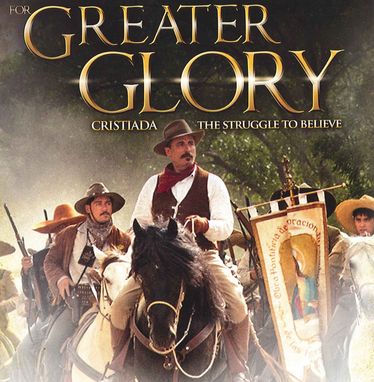
Anyone who saw the 2012 film For Greater Glory will recall the brutal, bloody martyrdom scene of a teenager in 1920s Mexico. That was a true story, and that teenager, José Luis Sánchez del Río, is on the way to being canonized.

Pope Francis on Thursday approved several decrees presented to him from the Congregation for the Causes of Saints, including a miracle attributed to Blessed José, a young member of the Cristero movement that fought for religious freedom when Mexico’s government was severely restricting the activities of the Catholic Church.

In the film version of his story, Blessed José, played by Mauricio Kuri,  is seen as constantly repeating the Cristero cry, “Viva Cristo Rey!” or “Long Live Christ the King.” That’s the same phrase Blessed Miguel Pro and others shouted as they were killed by Mexican government officials.

Pope Benedict XVI beatified him in 2005. The Vatican website has this for Blessed José’s biography:

José Sánchez del Río was born on 28 March 1913 in Sahuayo, Michoacán, Mexico. Wanting to defend the faith and rights of Catholics, he followed in the footsteps of his two older brothers and asked his mother for permission to join the Cristeros. She objected, telling him that he was too young. “Mama,” he replied, “do not let me lose the opportunity to gain Heaven so easily and so soon.” 

On 5 February 1928 the young boy was captured during a battle and imprisoned in the church sacristy. In order to terrorize him, soldiers made him watch the hanging of one of the other captured Cristeros. But José encouraged the man, saying, “You will be in Heaven before me. Prepare a place for me. Tell Christ the King I shall be with him soon.”
 

In prison, he prayed the Rosary and sang songs of faith. He wrote a beautiful letter to his mother telling her that he was resigned to do God’s will. José’s father attempted to ransom his son, but was unable to raise the money in time.On 10 February 1928 the teenager was brutally tortured and the skin of the soles of his feet was sheered off; he was then forced to walk on salt, followed by walking through the town to the cemetery. The young boy screamed with pain but would not give in
 

At times the soldiers stopped him and said, “If you shout, “Death to Christ the King,’ we will spare your life.” But he answered: “Long live Christ the King! Long live Our Lady of Guadalupe!”
 

Once he arrived at the cemetery, José was asked once more if he would deny his faith. The 14 year old shouted out: “Long live Christ the King!” and was summarily shot.

It wasn’t announced whether Pope Francis would canonize Blessed José when he makes his first visit to Mexico next month.

Tuesday, December 11, 2012

LA GUADALUPANA and The New Evangelization


The following comes from Zenit.org:


On the first full day of an international congress on "Ecclesia in America," Carl Anderson, supreme knight of the Knights of Columbus, offered reflections in light of the message given by Our Lady of Guadalupe to St. Juan Diego.
The three-day conference under way in the Vatican is to reflect on themes brought up in the synod on the Americas, which was convened 15 years ago by Blessed Pope John Paul II.
Calling to mind the Virgin Mary in her title as Empress of the Americas, Anderson noted: On Dec. 12, 1531, "the last day of the apparitions of Our Lady of Guadalupe, when St. Juan Diego took a different path in order to find a priest for his dying uncle, Our Lady met him on his detour and posed these questions: 'My youngest son, what is going on? Where are you going? Where are you headed?'"
"Today, during this Congress, we ask the very same questions: What is going on? Where are we going? Where are we headed?"
The supreme knight of the Knights of Columbus went on to say that just as it was during the 16th century in Mexico, today there is a clash of civilizations that has increased over time due to globalization.
"Juan Diego spoke of the plague killing his uncle. We confront another illness -- one just as deadly. And like Juan Diego, it is the care for the human family which brings us here today. Her intervention can come none too soon. The wisdom of Ecclesia in America is apparent," he said.
A blueprint
Anderson applauded the apostolic exhortation's view of the American continent as various countries, but a single entity with a clear vision of a "humanity encountering Christ." Calling the exhortation a "blueprint for the New Evangelization," Anderson stated that "it presents a vision of an 'enculturated' evangelization, in which our diversity is sanctified and purified in its communion in the Church by orienting us toward Christ and therefore to our brethren as well."
"Five centuries ago, our hemisphere was given the perfect example of an enculturated evangelization when Mary appeared to Saint Juan Diego. Her message of reconciliation, unity and love brought forth the great evangelization of an entire hemisphere. By her very presence, Our Lady of Guadalupe became the first and great model of Christian unity presented to all peoples and rising above national and ethnic partisanship," he said.
Anderson also drew a comparison between the time that the apparitions of Guadalupe and today's day , where there is an expectation of war.
"Do we not see in our contemporary culture, a culture which in the words of Evangelium Vitae, 'it is possible to speak in a certain sense of a war of the powerful against the weak?'  Do we not also see with Blessed John Paul II 'a structure of sin' in a culture that concludes that 'a life which would require greater acceptance, love and care is considered useless, or held to be an intolerable burden, and is therefore rejected in one way or another?'" he asked.
Anderson said that this type of war brought about a culture of death which was explained by Blessed Pope John Paul II during his papacy. "The encounter with this culture is fundamental to the new evangelization and it is fundamental to the future of the Christianity in our hemisphere," Anderson said.
Charity and laity
The head of the Knights of Columbus went on to speak on the role of Our Lady of Guadalupe as a model for all Christians and the role that charity and the laity play in the new evangelization in the Americas.
Concluding his address, Anderson told the participants of the international congress that it is crucial for the Church in North, Central and South America to "take the opportunity to find cultural unity through a shared religious identity and value system."
"In a cultural context where the Church is seen as preaching from “outside” the culture, the witness of the laity and of all Christians inside the culture is critical. This was the witness of the first Christians that sparked an interest in Christianity in this very city in what we might call the first wave of evangelization. This is the model that converted the entire American continent. And this is the model for the New Evangelization as well, not only in America, but throughout the world," Anderson concluded.

Thursday, June 7, 2012

The Cristeros and Us


The following comes from George Weigel at First Things:

Most Americans haven’t the foggiest idea that a quasi-Stalinist, violently anti-Catholic regime once existed on our southern borders. But those who don’t know how bad Mexico was in the late 1920s are about to learn, at least those who see For Greater Glory, a recently-released movie about the Cristero War, a passionate (and bloody) defense of Catholicism that’s remembered today, if at all, because of Graham Greene’s novel, The Power and the Glory.
There’s been a strange silence about all this for almost a century. Even Catholics aware of the extent of 20th century martyrdom seem to have little sense of the modern Mexican martyrs—although the addition of the memorial of St. Christopher Magallanes and Companions to the universal liturgical calendar (May 21) ought to remind North American Catholics just what was going on south of the Rio Grande during the years when the brutal government of Plutarco Elias Calles tried to destroy the Catholic Church in Mexico. It was a terrible time, and the example of the Cristeros, who included both underground priests like Blessed Miguel Pro, S.J. (perhaps the first martyr in two millennia to be photographed at the moment of his death) and fighters like General Enrique Gorostieta (well-played by Academy Award nominee Andy Garcia in the new film) ought to inspire 21st-century Catholics to stand firm in defense of religious freedom.
For Greater Glory takes some artistic liberties with history; the martyrdom of Christopher Magallanes, for example, happened in somewhat different circumstances than those described in the film. But taken as a whole, the movie conveys both the hard truth about the Calles regime and the often noble, but sometimes conflicted, story of Calles’s Cristero opponents.
The most moving subplot in the movie involves Jose Luis Sanchez de Rio, a teenager converted to serious Catholicism by Christopher Magallanes (as the film tells it) and “adopted,” in spirit, by General Gorostieta when the lad asks to join the Cristeros. Whatever the artistic license taken with the details of these relationships, it will be a hard heart indeed that is not moved by the depiction of the boy’s martyrdom, as he defies torture and blandishments, all intended to get him to apostasize, and cries “Viva Cristo Rey!” just before the bullets strike him down.
Jose Luis Sanchez del Rio was beatified on Nov. 20, 2005; his liturgical commemoration (Feb. 10, the day of his death) should shape the rhythm of liturgical life in U.S. parishes, like those of St. Christopher Magallanes and Bl. Miguel Pro (Nov. 23).
In his Chrism Mass homily in April, Cardinal Donald Wuerl of Washington urged his priests and seminarians to see For Greater Glory. Cardinal Wuerl is not given to dramatic gestures; his suggestion that the film might help form the self-understanding of Washington’s priests and future priests was all the more powerful for that. Barack Obama is not Plutarco Elias Calles, and the United States in 2012 is not Mexico in 1926-29. But anyone who doubts that there are grave threats to religious freedom in North America today has only to consider the HHS “contraceptive mandate,” the administration’s refusal to defend the Defense of Marriage Act, the administration’s efforts to void the “ministerial exemption” in U.S. employment law, and the bad habit of Canadian human rights “tribunals” to levy serious financial penalties against Christian ministers who preach biblical truth.
Threats to religious freedom come in many forms—some hard, like during the Cristero War; some softer, if no less lethal to the first freedom. One way to blunt the hard threats is to stand firmly against the softer threats and to name those threats for what they are. For Greater Glory will inspire and encourage those already committed to defending religious freedom today. It is even more important, though, that those who haven’t yet seen the threat, or who deny that it exists, ponder this powerful depiction of the nearby and not-so-distant past, for the sake of the present and future.

Wednesday, June 6, 2012

A Carmelite Sister reviews "For Greater Glory"

The following is a review of "For Greater Glory" by a Carmelite Sister:

We rarely go to a movie theatre. Yet, a once-in-a-lifetime opportunity was offered my community, the Carmelite Sisters of the Most Sacred Heart of Los Angeles, to be a part of a premiere showing of "For Greater Glory" on May 31st in Beverly Hills. 75 of our sisters immediately said "yes" to the gracious invitation of Archbishop Jose Gomez. Why? Because it was during those days, the days of the horrendous religious persecution in Mexico in the 1920s that our community began. Mother Maria Luisa Josefa of the Most Blessed Sacrament, affectionately known as Mother Luisita, had already accepted 55 sisters into the new community


It was on July 31, 1926, that President Plutarco Elias Calles enforced the anti-clerical laws throughout Mexico. The following day, August 1, 1926, all religious services were stopped throughout Mexico. No more Masses. No more marriages. No more first Communion. No more religious practices of any kind. This is where the movie begins. And that is why we are so interested. Our community was just beginning at that time also.


Regular folk, people like you and me, felt the loss of their religious freedom all the way to their deepest soul. In the region of Los Altos, where my community and the cristeros originated, a new group formed made up of these Catholics who protested the law. There was a boycott. There was a petition. When all these failed, there rose up a group known as "cristeros" who fought for three years to reclaim their churches and their religious freedom.


Now I had read about the cristeros, researched the elements of the persecution in Mexico, and a few times I've given talks on the beginnings of our community. I had read about how some of our first sisters had been put in jail. I had heard about sleeping on mats and having to get up at a moment's notice and take all belongings and escape over roof tops to safety. I had read coded letters in which our holy foundress, Venerable Mother Luisita, wrote in detail about current fashions. She was a very simple and austere soul and wore only a mended Carmelite habit. I used to think why such detail about current women's fashions, for heaven's sake. Well after seeing the movie, I understood. It was for the sisters to wear a better disguise so they would not be discovered and arrested. After I saw the movie, "For Greater Glory", it all became real to me. The blood. The torture. The injustice of it all. Above all, the faith of the people. What faith!


Some of you reading this column might know us, because your child is in one of our schools, or a family member is in one of our health centers. Or perhaps you participated in one of our retreats we offer. But, today, in this column you will learn more. Our community was born in religious persecution. Our first sisters and the people who stood by them were courageous, strong Catholics. When Mother Luisita arrived by train into the United States in June 1927, she stepped down from the train and kissed the ground of a free country with religious freedom She could wear her Carmelite habit.


Groups of sisters remained in Mexico, hidden by families who knew they would be killed if the Sisters were found in their homes. That's how our schools stayed in session during those dark years, with private lessons and small group lessons which took place in private homes. Our sisters following Mother Luisita's example became beacons of hope and helped God's people deepen their spiritual resources through prayer. That is our mission, "to promote a deeper spiritual life among God's people" Our mission is aimed at fortifying each one of you with the spiritual intimacy with God that will give you strength in hard times.


I urge you to see the movie "For Greater Glory" and when it is over, like me, you will probably see some parallels. Viva Cristo Rey! (Long live Christ the King!)

Tuesday, June 5, 2012

Archbishop Gomez on 'For Greater Glory'

Archbishop Gomez of Los Angeles has written a nice review of the movie For Greater Glory.  The following comes from the Carmelite Sisters of Los Angeles:

The anti-Catholic persecutions in Mexico in the 1920s and 1930s are long forgotten, it seems.

The reality is hard to believe. Just a generation ago, not far from our borders, thousands of men, women and even children, were imprisoned, exiled, tortured and murdered. All for the "crime" of believing in Jesus Christ and wanting to live by their faith in him.

So I welcome the new film, "For Greater Glory." It tells the dramatic story of this unknown war against religion and our Church's heroic resistance. It's a strong film with a timely message. It reminds us that our religious liberties are won by blood and we can never take them for granted.

That such repression could happen in a nation so deeply Catholic as Mexico should make everybody stop and think. Mexico was the original cradle of Christianity in the New World. It was the missionary base from which most of North and South America, and parts of Asia, were first evangelized.

Yet following the revolution in 1917, the new atheist-socialist regime vowed to free the people from all "fanaticism and prejudices."

Churches, seminaries and convents were seized, desecrated and many were destroyed. Public displays of piety and devotion were outlawed. Catholic schools and newspapers were shut down; Catholic political parties and labor unions banned. Priests were tortured and killed, many of them shot while celebrating Mass.

The dictator, Plutarco Elías Calles, used to boast about the numbers of priests he had executed. His hatred of organized religion ran deep. He really believed his reign of terror could exterminate the Church and wipe the memory of Christ from Mexico within a single generation.

He was wrong. In the forge of his persecution, saints were made.

It became a time of international Catholic solidarity. American Catholics opened their doors to refugees fleeing the violence. My predecessor, Archbishop John Cantwell, welcomed many here to Los Angeles — including Venerable Maria Luisa Josefa de la Peña and Blessed María Inés Teresa Arias.

We need to ask for the strength to be Cristeros. By their dying, they show us what we should be living for.

Ordinary Catholics became Cristeros, courageous defenders of Jesus Christ. Many felt compelled to take up arms to defend their rights in what became known as the Cristeros War. Others chose nonviolent means to bear witness to Christ.

"I die, but God does not die," Blessed Anacleto González Flores said before his execution. His words were prophetic.

Martyrs are not defined by their dying but by what they choose to live for. And the Cristeros' blood became the seed for the Church of future generations in Mexico.

Today, we need to know their names and we need to know their stories.

We need to know about the beautiful young catechist, Venerable María de la Luz Camacho. When the army came to burn her church down, she stood in front of the door and blocked their way. They shot her dead. But the church was somehow spared.

We need to know about all the heroic priests who risked their lives to celebrate Mass and hear confessions. Growing up, we had prayer cards made from a grainy photograph of one of these priests, Blessed Miguel Pro. He is standing before a firing squad without a blindfold, his arms stretched wide like Jesus on the cross as he cries out his last words: ¡Viva Cristo Rey! ("Long live Christ the King!")

We need to learn from the examples of all the Cristeros who have been canonized and beatified by the Church. And today especially, we need to pray for their intercession.

As it always has been, today our Catholic religion is under attack in places all over the world. In Mexico and America, we don't face suffering and death for practicing our faith. But we do confront "softer" forms of secularist bullying. And our societies are growing more aggressively secularized.

Already, sadly, we've accepted the "rules" and restrictions of our secular society. We keep our faith to ourselves. We're cautious about "imposing" our beliefs on others — especially when it comes to politics. In recent months, our government has started demanding even more — trying to coerce our consciences, so that we deny our religious identity and values.

We need to ask for the strength to be Cristeros. By their dying, they show us what we should be living for.

So, let's make that our prayer this week. That like the Cristeros, we might be always ready to love and sacrifice to stand up for Jesus and his Church.

And may Our Lady of Guadalupe — Mother of Mexico and the Americas, and the bright star of the New Evangelization, pray for us.












Saturday, June 2, 2012

Latin America anticipates "For Greater Glory"


.- Latin Americans are greatly anticipating the release of “For Greater Glory” on June 1 in the U.S., as weekend box office numbers could determine its distribution in Central and South America.

The movie tells the story of the Cristero War in Mexico during the religious persecution carried out by President Plutarco Elias Calles against the Catholic Church in the 1920s. It stars Andy Garcia, Eva Longoria, Peter O’Toole, Panamanian singer Ruben Blades and Mexican actor Eduardo Verastegui.

Many Latin Americans are hoping that the Hispanic community in the U.S. turns out in large numbers to see the film during its opening weekend June 1-3.

“Catholics ought to go to theaters so that the movie can reach more people in Central and South America, where distribution depends on the outcome in the United States,” the film's producer, Pablo Jose Barroso, said during an EWTN program on May 10.

Barroso noted that the movie is not only for Hispanics or Mexicans, but for everyone, because it clearly speaks of the defense of religious freedom. The persecution by the regime of Plutarco Elias was “bloodier than the Mexican Revolution,” he said.

CNA has received numerous emails from people in Peru, Argentina, Panama, Colombia and other countries in Latin America, who hope the film is shown where they live. 

“For Greater Glory” has already been shown in Mexico, where it topped the box office on its opening weekend, surpassing films such as “Titanic” in 3D and “Wrath of the Titans” in 3D.

For a list of theaters where the film can be seen in the U.S., visit:http://www.forgreaterglory.com/

Thursday, May 31, 2012

For Greater Glory: A Review


The following comes from the NCR:

For Greater Glory tells a story of religious freedom and oppression that is far too little known, and that would be important and worthwhile at any time, but is strikingly apropos in our cultural moment.

The Cristero War or Cristiada of 1926 to 1929 was one of the largest insurgencies in Western history. Yet Americans in general, even Catholics and those of Mexican heritage, remain largely ignorant of this period of brutal suppression and desperate resistance, not to mention the long and contentious history of church-state antagonism in Mexico surrounding it.

For Greater Glory (Cristiada in Mexico) redresses this neglect. One of the most lavish and ambitious films ever produced in Mexico, it’s a breakthrough achievement for producer Pablo José Barroso (previously responsible for the curious but dull Guadalupe and the pious but flawed The Greatest Miracle). It’s also a milestone for faith-based productions generally: a sweeping, handsome epic with strong performances, solid production values and magnificent locations across Mexico.

Making his directorial debut, visual effects expert Dean Wright manages the sizable production capably, and if at times the first-time viewer may not always be entirely sure which mustachioed Latino is which, it’s another reason to see it more than once. (For the record, I’ve seen it twice — and my Reel Faith co-host David DiCerto has seen it four times — and we’ve both found that the film benefits from repeat viewings … which is a good thing.)


Its scope, early 20th-century Latin wartime milieu and Spanish-accented English dialogue invite comparison to There Be Dragons — but where that film centered on a dull protagonist and offered no real picture of the shape of the Spanish Civil War, For Greater Glory follows an ensemble cast through key events of the Cristero War. A pious, faith-friendly celebration of Cristero valor and the Catholic faith, it’s not exactly a history lesson, but neither is it a pseudo-historical fable à la Braveheart.

Opening titles and early scenes sketch some of the background: The 1917 Mexican Constitution included harsh anticlerical provisions that went unenforced until the regime of Plutarco Elías Calles, a fervent atheist, Freemason and virulent enemy of the Church. In 1926, Calles introduced legislation — the “Calles Law” — specifying penalties for violating the constitutional prohibitions: Clergy could be imprisoned for criticizing the government, fined for wearing clerical garb in public, and so forth. Calles also moved to seize Church property, close Catholic schools, seminaries and monasteries, and deport foreign priests.

Andy Garcia plays Enrique Gorostieta Velarde, an accomplished general-turned-businessman whose devout wife Tulita (Eva Longoria) is worried about their daughters’ religious upbringing in the current environment. When Tulita refuses to be comforted, Gorostieta asks defensively, “What do you want me to do?”

What indeed. Gorostieta opposes Calles’ excesses and favors a regime of greater religious freedom, but he’s an unbeliever — in fact, like Calles, he’s an anticlerical Freemason, though the film doesn’t spell this out. Now established as a soap manufacturer, Gorostieta is prosperous, but bored and ripe for a challenge.

There’s a nice moment when Gorostieta is approached by a representative of the National League for the Defense of Religious Liberty (LNDLR), which stands behind the Catholic resistance, called Cristeros or “Christers” — originally (like the word “Christian” itself) a derisive nickname, echoing their battle cry, ¡Viva Cristo Rey! (Long live Christ the King!). Initially dismissive of the ragtag rebels, Gorostieta is caught short by the representative’s parting question and gesture: Taking a cake of soap from Gorostieta’s desk, the man sniffs it appraisingly. Is Mexico’s greatest general content to live out his days producing pink soap?
Peter O’Toole has a small but notable role as a foreign-born cleric named Father Christopher whose kindness and heroic virtue make a lasting impression on a youth named José Luis Sanchez (likable Mauricio Kuri, a Mexico City native). In another small role, Bella star Eduardo Verástegui plays Anacleto Gonzalez Flores, a lawyer who supports peaceful means of resistance to Calles’ campaign. Sanchez and Flores were beatified as martyrs by Pope Benedict XVI in 2005. Sanchez’s martyrdom is almost a miniature Passion of the Christ, complete withPietà shot.

Like many faith-based productions, For Greater Glory could have benefitted from a less heavy hand and more subtlety: less exposition, less intrusive scoring, more nuanced characters and more complexity all around. Take a scene in which Gorostieta introduces young José to his magnificent Arabian horse. It’s a nice character moment with an implicit father-son subtext — but then the filmmakers have to go and make it explicit: “I never had a son,” Gorostieta tells José, “but if I did, I’d want him to be just like you.”

For the most part, everyone does and says exactly what one would expect of a character like them. Every priest is devout, and every executed priest and layman dies with edifying grace, and not a single federale troop involved in executing even priests and children shows the slightest hesitation or conflict.
Father José Reyes Vega (Santiago Cabrera), an important Cristero general, takes up arms, contrary to the demands of his clerical state. Other than that, he is a picture of piety — in marked contrast to the historical Vega, a notorious libertine whose most infamous crime, involving a train holdup, is here depicted as an accident and then forgotten with unseemly haste.

Gorostieta displays some complexity as a leader fighting on behalf of a faith he doesn’t share but is willing to appropriate for his purposes. He wears a large crucifix and uses "God talk" with the troops, though it’s not always clear whether, or how, he believes what he’s saying or when he starts to believe it. When Father Vega says Mass at one point, Gorostieta pointedly sits aside, smoking a cigar. Yet rubbing elbows with God has a way of changing a person, and Gorostieta’s imperceptible transition toward faith is credibly depicted, whether or not it’s historical.


Along with the Cristeros, For Greater Glory honors the contributions of the Feminine Brigades of St. Joan of Arc, a covert women’s society that supported the war effort by smuggling supplies, information and even ammunition — the latter in custom-made undergarments. In this work, as a tense scene on a train illustrates, a wardrobe malfunction could lead to imprisonment or execution.

The film’s most intriguing character is a rugged rancher named Victoriano Ramirez (Oscar Isaacs, The Nativity Story), nicknamed El Catorce (The 14) in honor of an incident involving an ill-fated posse sent to kill him. Ramirez is basically a thug, but a thug with some noble impulses, and his character has the greatest potential for moral corruption or redemption.

That sequence involving the posse is one of the film’s best action set pieces, along with an ambush in a sleepy pueblo. Other action sequences, including an ambush in a valley, get the job done, but could have been staged with more imagination and drama.

Probably the most effective aspect of the film is its mixed depiction of the role of the Mexican hierarchy, the United States and even the Vatican. Early on, we hear that the Vatican is taking too long to weigh in on the Calles laws, though that’s quickly rectified. Bruce Greenwood is effortlessly authoritative as U.S. ambassador Dwight Morrow, a charming and effective negotiator whose main concern in Mexico is U.S. oil interests, though he gradually becomes aware of the enormity of what is occurring. (A nice exchange between Morrow and Calles (Rubén Blades) about mole poblano over one of their famous breakfasts together fleetingly shows another side of Calles.)

Morrow helped negotiate the tragic deal between Calles and the Church leadership that ended the Cristero Rebellion. The Cristeros were essentially sold out, and Calles conceded almost nothing to the Church, even breaking his promise of amnesty and proceeding to execute more Cristeros than died in the war itself. The ambiguity with which the Cristero conflict ended is indicated in the film, though the desire for a triumphant climax somewhat blunts what might have been more effective as a tragic ending (à la The Mission).

Visiting Mexico earlier this year, Pope Benedict XVI highlighted ongoing restrictions on religious freedom in Mexico’s Constitution. In the United States, the U.S. bishops have made a top priority the defense of religious freedom against encroaching federal tyranny on a host of fronts, from immoral health-care mandates to acquiescence to same-sex “marriage.”

The magnitude of the conflict around religious freedom today is something no one could have predicted when production began on For Greater Glory. Some might call the film’s timing providential. I wouldn’t argue with them. For Greater Glory is the right movie at the right time.
Steven D. Greydanus is the Register’s film critic.