Showing posts with label Padre Pio. Show all posts

Friday, July 2, 2021

Padre Pio, Fr. Wojtyla and the Shoulder Wound of Christ

The following comes from Kathy Schiffer at Aleteia:


What do medieval mystic St. Bernard of Clairvaux and modern monk St. Padre Pio have in common? Well, they’re both saints, sharing in the eternal reward that God has prepared for them. But beyond that, both had a sincere devotion to the Shoulder Wound of Christ.

SAINT BERNARD OF CLAIRVAUX, the French abbott and mystic who helped renew the Cistercian Order in the 12th century, related in the annals of Clairvaux a conversation he’d had with our Lord. He prayed, asking Jesus which was his greatest unrecorded suffering; and the Lord answered him:

“I had on My Shoulder while I bore My Cross on the Way of Sorrows, a grievous Wound that was more painful than the others, and which is not recorded by men. Honor this Wound with thy devotion, and I will grant thee whatsoever thou dost ask through its virtue and merit. And in regard to all those who shall venerate this Wound, I will remit to them all their venial sins and will no longer remember their mortal sins.”

ST. PIO OF PIETRELCINA, Capuchin friar, priest and mystic, died in 1968. Padre Pio was known as a confessor and a holy man who for more than 50 years bore the wounds of Christ (the stigmata) on his hands and feet.

In a book published in the Italian language by St. Pio’s friary, titled Il Papa e Il Frate, author Stefano Campanella reported that the future St. Pio had once had a very interesting conversation with Karol Wojtyla, the future Pope St. John Paul II.

According to Campanella, Fr. Wojtyla asked Padre Pio which of his wounds caused the most pain. Fr. Wojtyla expected Padre Pio to say that it was his chest wound; but instead Padre Pio replied, “It is my shoulder wound, which no one knows about and has never been cured or treated.”

In 2008, 40 years after Padre Pio’s death, author Frank Rega wrote about Padre Pio:
At one time Padra [sic] had confided to Brother Modestino Fucci, now the doorkeeper at Padre Pio’s friary in San Giovanni Rotondo, Italy, that his greatest pains occurred when he changed his undershirt. Brother Modestino, like Father Wojtyla, thought that Padre Pio was referring to pains from the chest wound. Then, on February 4, 1971, Brother Modestino was assigned the task of taking an inventory of all the items in the deceased Padre’s cell in the friary, and also his belongings in the archives. That day he discovered that one of Padre Pio’s undershirts bore a circle of bloodstains in the area of the right shoulder.
On that very evening, Brother Modestino asked Padre Pio in prayer to enlighten him about the meaning of the bloodstained undershirt. He asked Padre to give him a sign if he truly bore Christ’s shoulder wound. Then he went to sleep, awakening at 1 a.m. with a terrible, excruciating pain in his shoulder, as if he had been sliced with a knife up to the shoulder bone. He felt that he would die from the pain if it continued, but it lasted only a short time. Then the room became filled with the aroma of a heavenly perfume of flowers — the sign of Padre Pio’s spiritual presence — and he heard a voice saying, “This is what I had to suffer!”

St. Bernard of Clairvaux, after receiving the message from Christ regarding the pain he experienced in his shoulder, sought to foster devotion to the Shoulder Wound of Christ, and penned this prayer:

Prayer to the Shoulder Wound of Christ

Most loving Jesus, meek Lamb of God, I, a miserable sinner, salute and worship the most Sacred Wound of Thy Shoulder on which Thou didst bear Thy heavy Cross which so tore Thy flesh and laid bare Thy Bones as to inflict on Thee an anguish greater than any other wound of Thy Most Blessed Body. I adore Thee, O Jesus most sorrowful; I praise and glorify Thee, and give Thee thanks for this most sacred and painful Wound, beseeching Thee by that exceeding pain, and by the crushing burden of Thy heavy Cross to be merciful to me, a sinner, to forgive me all my mortal and venial sins, and to lead me on towards Heaven along the Way of Thy Cross. Amen.

Monday, November 11, 2019

An Encounter of Saints: Padre Pio and Karol Wojtyla

The following comes from The Path Less Taken:

From a fascinating article by Frank M. Rega. 
Shortly after World War II was over, a young Polish priest who was studying in Rome, Fr. Karol Wojtyla, visited Padre Pio in San Giovanni Rotondo. This encounter took place around 1947 or 1948. At that time in post-war Italy, it was possible to have access to Padre Pio, since travel was difficult and great crowds were not besieging the Friary. The young priest spent almost a week in San Giovanni Rotondo during his visit, and was able to attend Padre Pio’s Mass and make his confession to the saint. Apparently, this was not just a casual encounter, and the two spoke together at length during Fr. Wojtyla’s stay. Their conversations gave rise to rumors in later years, after the Polish prelate had been elevated to the Papacy, that Padre Pio had told him he would become Pope. The story persists to the present day, even though on two or three occasions "Papa Wojtyla" denied it.
     Recently, new information about this visit has come to light, according to a new book in Italian published by Padre Pio's Friary, Il Papa e Il Frate, written by Stefano Campanella (1).  As reported in this book, the future Pope and future Saint had a very interesting conversation.  During this exchange, Fr. Wojtyla asked Padre Pio which of his wounds caused the greatest suffering. From this kind of personal question, we can see that they must have already talked together for some time and had become at ease with each other. The priest expected Padre Pio to say it was his chest wound, but instead the Padre replied, "It is my shoulder wound, which no one knows about and has never been cured or treated." This is extremely significant, not only because it reveals that Padre Pio bore this wound, but because, as far as is known, the future pope is the only one to whom Padre Pio ever revealed existence of this secret wound.
     Centuries earlier, Our Lord himself had revealed to St. Bernard of Clairvaux in a vision, that his shoulder wound from carrying the heavy wooden cross caused him his greatest suffering, and that the cross tore into his flesh right up to the shoulder bone.

Sunday, May 5, 2019

Prayer of Padre Pio for after receiving holy Communion: Stay with me, Lord!


Prayer of St. Padre Pio

Stay with me, Lord, for it is necessary to have
You present so that I do not forget You.
You know how easily I abandon You.

Stay with me, Lord, because I am weak
and I need Your strength,
that I may not fall so often.

Stay with me, Lord, for You are my life,
and without You, I am without fervor.

Stay with me, Lord, for You are my light,
and without You, I am in darkness.

Stay with me, Lord, to show me Your will.
Stay with me, Lord, so that I hear Your voice
and follow You.

Stay with me, Lord, for I desire to love You
very much, and always be in Your company.

Stay with me, Lord, if You wish me to be faithful to You.
Stay with me, Lord, for as poor as my soul is,
I want it to be a place of consolation for You, a nest of love.

Stay with me, Jesus, for it is getting late and the day is coming to a close, and life passes; death, judgment, eternity approaches. It is necessary to renew my strength, so that I will not stop along the way and for that, I need You.
It is getting late and death approaches, I fear the darkness, the temptations, the dryness, the cross, the sorrows.  O how I need You, my Jesus, in this night of exile!

Stay with me tonight, Jesus, in life with all its dangers. I need You.
Let me recognize You as Your disciples did at the breaking of the bread,
so that the Eucharistic Communion be the Light which disperses the darkness,
the force which sustains me, the unique joy of my heart.

Stay with me, Lord, because at the hour of my death, I want to remain united to You, if not by communion, at least by grace and love.

Stay with me, Jesus, I do not ask for divine consolation, because I do not merit it, but the gift of Your Presence, oh yes, I ask this of You!

Stay with me, Lord, for it is You alone I look for, Your Love, Your Grace, Your Will, Your Heart, Your Spirit, because I love You and ask no other reward but to love You more and more.


With a firm love, I will love You with all my heart while on earth and continue to love You perfectly during all eternity. Amen.

Thursday, April 5, 2018

Stigamta: 6 Interesting Facts about this Spiritual Mystery

The following comes from ChurchPop:
Stigmata is one of the strangest phenomenons in the Catholic Church in the last few centuries.
If you don’t already know, stigmata is a supernatural phenomenon in which the wounds of Christ from his passion and death miraculously appear on a person’s body. Some saints have also suffered what is called invisible stigmata, in which they feel the sufferings of Christ but without the bodily marks.
What should Catholics make of this?

Here are 6 things you may not have known about this incredible phenomenon:

1) The first stigmata dates back to the 13th century

There are no known accounts of stigmata prior to St. Francis of Assisi receiving it in the 13th century. You can read the amazing account of his stigmata from his first biography here.
For most of Church history, no one had heard of stigmata, and now it’s something many people claim to experience, which brings us to our next point…

2) Hundreds of people have claimed stigmata since then

Even though there are no known cases of stigmata prior to St. Francis of Assisi in the 13th century, since then there have been hundreds of people who have claimed to have miraculously received stigmata.
It’s hard to understand why God may start acting in a new way, and some people take this fact as an argument against the supernatural character of at least most stigmata (seeing most as copycats rather than miracles).

3) At least one stigmatist admitted to faking it

And yes, at least one significant stigmatist publicly admitted to faking it. Magdalena de la Cruz was a Franciscan nun in Spain in the 16th century who for years claimed to have miraculously received stigmata. She was famous and widely considered to a be living saint, though St. Ignatius of Loyola (founder of the Jesuits) viewed her with suspicion.
At the end of her life, though, after getting very sick, she admitted that her stigmata was fake. She was tried and found guilty by the Inquisition, which sentenced her to penance for the rest of her life in her convent.

4) Around 85% of stigmatists have been women

This number might be a bit dated (it’s hard to find up to date statistics on this sort of thing), but according to a study in the early 20th century, out of 321 known stigmatists from the 13th century until then, only 41 of them had been men.
Even so, some of the most famous cases have been men, such as St. Francis of Assisi and St. Padre Pio.

5) St. Padre Pio had stigmata for 50 years and was studied by multiple doctors

Probably the most famous modern case of stigmata, and one that was able to be examined in light of modern science, was the stigmata of St. Padre Pio.
He first received it as a young man in 1911 at the age of 24. Word began to spread worldwide about his condition in 1919. From the 1920s through the 1950s, multiple sets of doctors and scientists examined and studied his wounds, with differing conclusions. While everyone agreed the wounds were real, they couldn’t conclusively determine whether they were miraculous, natural, or simply self-inflicted.
The Church, however, was satisfied enough with the evidence for Padre Pio being honest that Pope St. John Paul II canonized him in 2002.

6) St. Catherine of Siena had invisible stigmata

The famous 14th century saint first received the normal visible stigmata when she was 28. But she humbly didn’t want to draw attention to herself, so she requested that God take away the physical wounds while keeping the same physical suffering. Other saints have also reportedly done this.

Monday, February 12, 2018

Padre Pio's devotion to Our Blessed Mother


The following comes from the Free Republic site:


One of the outstanding characteristics of Padre Pio’s(Francesco Forgione’s) spirituality was his deep devotion to Mary. His love for the Blessed Mother was one which was present from his earliest years and which lasted through his whole life. In the small town of Pietrelcina where he was born, devotion to the Madonna has been a characteristic of the people’s spirituality for many centuries. Our Lady Liberatrix (Our Lady of Liberty) was the special patroness of the area and was venerated in the main church. Every year there was a festival in her honor with a procession through the streets.

The Forgiones were an extremely devout family. When the church bells rang every morning the family gathered for morning prayers. They went to church every day and prayed the Rosary together as a family every evening. Prayer came before all other activities in the household. Maria Giuseppa, Padre Pio’s mother, also had a great devotion to Our Lady of Mount Carmel.


Padre Pio was 14 years old when he visited the shrine in Pompeii dedicated to Our Lady. Our Lady of Pompeii was especially dear to his heart and often when he needed a special grace for himself or for someone else, he would ask his friends to pray to Our Lady of Pompeii for his intentions. He wrote, “I should like to ask you, if it is not inconvenient, to do me the kindness of making three consecutive novenas to the Virgin of Pompeii for a grace to be obtained for me from her Son, a grace which will mean a great deal for a certain soul.” On another occasion he wrote, “I thank you for the novenas you made for me to Our Lady of Pompeii and I would ask you if it is not inconvenient, to continue because I am in great need.”


In his letters to his spiritual directors, Padre Pio called the Blessed Mother, “beautiful Virgin Mary,” “most tender mother of priests,” “Mediatrix of all graces.” In Our Lady, he saw the advocate of sinners, the most beloved, the consoler. He frequently referred to Mary simply as “Mother.” Reciting the Angelus he rarely managed to restrain his emotions and when he spoke about her it was not unusual for him to shed tears.


For more of this story please go here.

Friday, August 19, 2016

Padre Pio on Anxiety

Wisdom of Padre Pio: “Do not anticipate the problems of this life with apprehension, but, rather, with a perfect hope that God, to whom you belong, will free you from them accordingly. He has defended you up to now. Simply hold on tightly to the hand of his divine providence, and he will help you in all events, and when you are unable to walk, he will lead you; don’t worry . . . Don’t think about tomorrow’s events because the same heavenly Father who takes care of you today will do the same tomorrow and forever.

“Live tranquilly. Remove from your imagination that which upsets you, and often say to the Lord, “Oh, God, you are my God, and I will trust in you. You will assist me and be my refuge, and I will fear nothing . . . “ 

Thursday, July 14, 2016

A Prayer for Trust and Confidence in God’s Mercy by Padre Pio

O Lord, we ask for a boundless confidence and trust in Your divine mercy, and the courage to accept the crosses and sufferings which bring immense goodness to our souls and that of Your Church. Help us to love You with a pure and contrite heart, and to humble ourselves beneath Your cross, as we climb the mountain of holiness, carrying our cross that leads to heavenly glory. May we receive You with great faith and love in Holy Communion, and allow You to act in us as You desire for your greater glory. O Jesus, most adorable Heart and eternal fountain of Divine Love, may our prayer find favor before the Divine Majesty of Your heavenly Father.

                                          Padre Pio 

Tuesday, June 28, 2016

Padre Pio: "The Madonna is the shortcut to get to God"


The following comes from Zenit:
Padre Pio said that "The Madonna is the shortcut to get to God."
There is no doubt that in order to see the face of Jesus, we must turn to His Mother, and it is to Her who we look to heal our diseases, to turn our tears into prayer. To Her, we offer our suffering and concern for the salvation of souls , our loneliness so that it becomes contemplation, and our fears to turn into hope.
We are confident, as written by St. Bernard of Clairvaux in his prayer, Memorare, that never was it known that anyone who fled to Mary's protection, implored her help, or sought her intercession was left unaided.
We wish you, dear readers, your families, your friends, and your loved ones a Happy Feast of the Immaculate Conception.

Sunday, June 26, 2016

Padre Pio on Listening to Your Guardian Angel

The following comes from Aleteia:

Padre Pio had encounters with angels throughout his life and got to know them very well. He also received interior locutions; he had to discern from whom they came and how he ought to react to them.
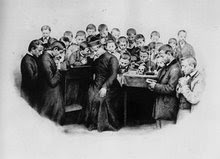
In a letter he wrote on July 15, 1913, to Annita, he gives her (and us) invaluable advice regarding how to act in relation to our guardian angel, locutions, and prayer.

Dear daughter of Jesus,

May your heart always be a temple of the Holy Spirit. May Jesus increase the fire of his love in your soul and may he always smile upon you, as he does on all the souls that he loves. May Mary Most Holy smile upon you during all the events of your life, and abundantly make up for the absence of your earthly mother.

May your good guardian angel always watch over you, and be your guide on the rough path of life. May he always keep you in the grace of Jesus and hold you up with his hands so that you may not hurt your foot on a stone. May he protect you under his wings from all the deceits of the world, the devil and the flesh.

Have great devotion, Annita, to this beneficent angel. How consoling it is to know that we have a spirit who, from the womb to the tomb, never leaves us even for an instant, not even when we dare to sin. And this heavenly spirit guides and protects us like a friend, a brother.

But it is very consoling to know that this angel prays unceasingly for us, and offers God all of our good actions, our thoughts, and our desires, if they are pure.

Oh! For goodness' sake, don't forget this invisible companion, ever present, ever disposed to listen to us and even more ready to console us. Oh, wonderful intimacy! Oh, blessed companionship!  If only we could understand it! Keep him always before your mind's eye. Remember this angel's presence often, thank him, pray to him, always keep up a good relationship. Open yourself up to him and confide your suffering to him. Be always afraid of offending the purity of his gaze. Know this, and keep it well present in your mind. He is easily offended, very sensitive. Turn to him in moments of supreme anguish and you will experience his beneficent help.

Never say that you are alone in the battle against your enemies; never say that you have no one to whom you can open your heart and confide. It would be a grave injustice to this heavenly messenger.

Regarding interior locutions, don't worry; stay calm. What you must avoid is your heart becoming attached to these locutions. Don't give them too much importance; show that you are indifferent. You should neither scorn nor love or desire such things.  Always respond to these voices thus: "Jesus, if it is you who are talking to me, let me see the facts and effects of your words, that is to say, holy virtue in me."

Humble yourself before the Lord and trust in him; spend your energy, with the help of divine grace, in the practice of the virtues, and then let grace work in you as God desires. The virtues are what sanctify the soul and not supernatural phenomena.

And don't confuse yourself trying to understand which locutions come from God. If God is their author, one of the principle signs is that as soon as you hear those voices, they fill your soul with fear and confusion, but then, they leave you in a divine peace. On the contrary, when the author of the interior locutions is the enemy, they begin with a false security, followed by agitation and indescribable malaise.

I have absolutely no doubt that God is the author of the locutions, but we must be very cautious because often the enemy mixes in a great deal of his own work with them. But this should not scare you: this is a test to which even the greatest saints and most enlightened souls were subjected, and yet they were acceptable in the eyes of the Lord. You must simply be careful not to believe in these locutions too easily, above all dealing with those that are related to how you must act and what you must do. You should receive them and submit them to the judgment of your director and resign yourself to accept his decision. 


Read the rest here.

Monday, May 9, 2016

A Padre Pio Miracle

The following comes from Patti Maguire Armstrong:

Paul Walsh was 17 years old when the car he was driving hit a tree on Chester Pike in suburban Piladelphia on an icy December night in 1983. One doctor described his head injuries as the equivalent of dropping an egg on a cement sidewalk. Not only was his skull shattered, every bone in his face was broken and there was a tear in his brain. Doctors at Crozier Chester Medical Center said he was irreversibly brain damaged and would never regain consciousness. But as the old saying goes, “never say never.”

On Saturday, May 14, 2005, Paul Walsh received a bachelors degree in liberal arts from Neumann College In Aston, PA. “I’d like to teach special ed,” said the 38-year-old graduate, who is employed as a full-time health care associate with Elwyn, Inc., a residential day program for the mentally disadvantaged. “I’d like to continue working with mentally disadvantaged persons.”

Paul’s recovery from massive head injuries in 1984 was “unexplained, on a purely medical and scientific basis” said one of the physicians who treated him, Michael Ryan, M.D. In a written statement, Dr. Ryan said: “It is my feeling that without the help of the supernatural influence, Paul would today be dead or continue to be in a comatose state.”

Although he recalls little of his four-month ordeal following the accident, his mother, Betty Walsh, remembers every detail, from the moment she got the phone call on the night of the accident. “The nurse told me to come to the hospital right away,” said the mother of ten from Ridley Park, PA. “It was hard to even recognize Paul. His face was so swollen, like a pumpkin, and totally wrapped in bandages. It didn’t look very good but he did recognize my voice because he moved when he heard me.”


After ten hours of surgery the following day, during which Paul lost four and half times the amount of blood in his body, he was transferred to Crozier-Chester Medical Center where his condition remained critical.

At first, he seemed to be improving and was even talking a little, but there was a suspicious fluid dripping out of his nose. Everyone thought he had a cold and a month went by before doctors discovered the fluid wasn’t from nasal congestion - it was spinal fluid. A cat scan revealed a tear in Paul’s brain.

“That’s when they realized he was worse off than they thought,” Betty said.

Doctors tried to repair the tear but the inside of Paul’s head was too shattered. They resorted to draining the fluid with spinal taps and then a catheter, but Paul’s condition continued to deteriorate. He began slipping in and out of consciousness.

Another cat scan revealed that he had hydrocephalus and the ventricles of his brain were filling with fluid. Doctors prepared him for emergency surgery to put a shunt in his head to drain the fluid when they discovered yet another serious complication - he had also developed spinal meningitis. “At this point, there was no hope,” Betty said. “The ventricles just kept filling with fluid and it flattened the frontal lobe of his brain which one doctor told me was his whole personality.”

Even though Paul was alive, in essence, he was gone.“They kept saying ‘you have to stop hoping. . . the way he is now is the way he’s going to be. He is permanently and irreversibly brain-damaged.’” But Betty was not about to give up on her son. Even though she had nine other children at home, she felt like the woman in the Bible who had ten coins but lost one and could not stop searching until she found it.

“We just decided Paul needed a miracle,” Betty said. “In the end, if Paul didn’t get better, I would accept it, but in the meantime, I was really going to believe I could have a miracle and I would at least pray with faith.”

A woman from St. Madeline’s in Ridley Park, gave her five prayer cards for people who were in the process of beatification and needed a miracle. Every day after Mass, she and her mother would go to the hospital and pray the rosary over Paul, then say the five prayers. “Whenever I came to the Padre Pio prayer, Paul blessed himself, even though he was totally unconscious,” Betty said.

Several people witnessed the phenomena, including a few nurses. Betty decided to call a local group of Padre Pio devotees and report what was happening. They decided to send someone to the hospital with one of the gloves worn by Padre Pio over the bloody stigmata wounds in his hands. On Monday, March 12, Paul was blessed with the relic and within days, one of his many serious ailments had miraculously vanished.

Betty called the group again and on April 6, 1984, the glove was once again brought to Paul and laid on his head. “I knew immediately something happened because it was like an electric shock went through him,” Betty said. “He opened his eyes and looked around the room, very clear-eyed. Then he fell back into the coma again but I just knew something had happened.”

She was right. The next day, when she returned to the hospital she was shocked to find her son sitting in a chair and watching television. He turned and said “Hi Mom.”

The nurse rushed in and told Betty: “He’s been talking all day!” When she called the neurosurgeon to tell him Paul Walsh was talking, the doctor said, “It’s not possible’ and hung up on her.”

But it was true. “They gave Paul another cat scan and all the doctor kept saying was, ‘I don’t believe this. I don’t’ believe this.’ The frontal lobe of his brain wasn’t smashed anymore.”
Even more inexplicable was what happened days later, on Easter Sunday morning, when Paul and his roommate woke up to find a man standing at the foot of Paul’s bed. Described as “an old priest in a brown robe,” Paul thought it was Betty’s brother, Charley, who bears a remarkable resemblance to Padre Pio.

“I remember being very certain that my Uncle Charley had been in to visit me,” Paul said. “I did see him. He was very happy and smiled at me. And then he left the room.”

Betty knew it couldn’t have been Charley because he lives in Boston. She folded up a picture of Padre Pio, hiding the name, and showed it to Paul. “That’s who visited me,” he said. “Isn’t that Uncle Charley?”

Weeks later, Paul Walsh walked out of Crozier Chester Medical Center, completely healed.

If there was any doubt in their minds that Padre Pio interceded in Paul’s healing, those doubts were put to rest a year after the accident when the family received an unexpected phone call from Bill Rose, who lived on the property where Paul hit the tree. Rose claimed he heard the crash the night of the accident and ran outside to find Paul laying on the ground with his face in a gutter. He knew the person was dying and while someone called for an ambulance, he held Paul’s head up out of the gutter and prayed for his soul.

“Within three to five minutes of your son’s accident,” he told Betty, “I dedicated him to Padre Pio.”

To this day, Paul admits he still wonders “why me?” But that doesn’t stop him from telling his story whenever he can. “I’m not doing this for myself,” Paul said. “I want to give other people hope.”

Saturday, May 7, 2016

Padre Pio on Grace

"My soul is spurred on by the liveliest gratitude to attest that the Lord grants such grace to my soul without my meriting it. Far be it for me to consider myself superior to other souls for this reason. On the contrary, I believe that of all the people in the world, I am the one who serves the Lord least, and since the Lord gave such clarity to my soul through this grace, I acknowledge myself to be more obliged than any other soul to serve and love the Creator. For my soul, every minute of imperfection I commit is a sword of sorrow that pierces my heart."


Saint Padre Pio

Thursday, May 5, 2016

A Quote from Padre Pio

"Everybody can, and should, propagate the glory of God, and work for the salvation of men, by leading a Christian life, by praying constantly to the Lord: ' Your kingdom come, and lead us not into temptation, but deliver us from evil.' This is what we should do, offering yourself completely and continually to the Lord for this purpose."  Padre Pio

Sunday, February 7, 2016

Pope Francis: Padre Pio was a true 'servant of mercy'

On Saturday Pope Francis said St. Padre Pio is a key example of someone who has given their entire life in the service of God’s mercy, but cautioned that there is only one reason he was able to do so: prayer.
“We can say that Padre Pio was a servant of mercy. He did so full-time, practicing, at times in exhaustion, the apostolate of listening,” the Pope said Feb. 6.
Through his ministry in the confessional, where he would at times spend 10-15 hours a day, the saint was able to become “a caress of the living Father, who heals the wounds of sin and refreshes the heart with peace.”
Francis said Padre Pio never tired of welcoming and listening to the people who came to him. He said the saint spent his time and strength spreading “the perfume of the forgiveness of the Lord.”
The only reason Padre Pio was able to do this, he said, is because “he was always attached to the source: he was continuously quenched by Jesus Crucified, and so became a channel of mercy.”
“In this way his small drop became a great river of mercy, which irrigated many dry hearts and created an oasis of life in many parts of the world.
Pope Francis spoke to members of “Padre Pio prayer groups,” workers at the Home to Relieve Suffering – founded by St. Pio in 1956 – and faithful from the Manfredonia-Vieste-San Giovanni Rotondo archdiocese who were present in St. Peter’s Square.
St. Pio of Pietrelcina, colloquially known as “Padre Pio,” was a priest of the Order of the Friars Minor Capuchin, a stigmatist, and a mystic, who lived from 1887-1968. He was beatified in 1999, and canonized in 2002 by St. John Paul II. He was born in Pietrelcina, but ministered in San Giovanni Rotondo from 1916 until his death.
The papal audience with the different groups associated with Padre Pio marks just one of several activities being held in honor of the fact that the relics of Padre Pio have made their way to Rome for the first time alongside those of another friar, St. Leopold Mandic, as part of a special tour during the Jubilee of Mercy.

Wednesday, February 3, 2016

Year of Mercy: Relics of St. Padre Pio and St. Leopold Mandic in Rome

The following comes from the OSV:
In honor of the Jubilee Year of Mercy, a special exposition of the relics of St. Padre Pio (Pio of Pietrelcina) and St. Leopold Mandic will be on display in Rome from Feb. 3 to Feb. 11 as Lent gets underway. The relics will travel all over Rome and its environs, from the Basilica of St. Lawrence Outside the Walls on Feb. 3-4, to the Jubilee Church San Salvatore in Lauro on Feb. 4-5, to St. Peter’s Basilica from Feb. 6-11.
Padre Pio and Leopold are commonly recognized as holy men who served and dispensed the mercy of God with special fervor. St. Leopold, a Croatian who lived most of his life in Padua, became renowned for his dedication to the confessional and the administering of God’s forgiveness through the Sacrament of Reconciliation. When his fellow Capuchin Franciscans accused him of leniency, St. Leopold is said to have remarked, “Should the Crucified blame me for being lenient, I would answer Him: Lord, you gave me this bad example. I have not yet reached the folly of your having died for souls.”
Another Capuchin dedicated to the Sacrament of Reconciliation, Padre Pio became known all around the world for his stigmata, his physical manifestation of the crucifixion wounds of Jesus. Rumored to have additional gifts, including bilocation and the reading of hearts, the faithful flocked to Padre Pio as a pilgrimage site in his own right, and he sometimes spent as many as 16 hours a day in the confessional.
The relics of these two men, saints of the confessional and missionaries of the mercy of God, will be returned to their home dioceses on Feb. 11.
The relic display is just one many special events that the Vatican is holding during the Year of Mercy to the benefit of the expected millions of pilgrims to the Eternal City. Since the start of the Jubilee Year of Mercy Dec. 8, Rome already has welcomed nearly 1.4 million visitors to participate in events geared toward the Holy Year — and 40 percent of them had traveled from abroad.
In a special way, it is these pilgrims to whom Archbishop Rino Fisichella, president of the Pontifical Council for Promoting the New Evangelization — the dicastery charged with organizing and implementing the jubilee year — and Pope Francis wish to reach out, welcoming them to the Eternal City and providing them with unique opportunities to seek the mercy of God. During a press conference at the Vatican Jan. 29, Archbishop Rino Fisichella, addressed additional events.

Mercy Fridays

Throughout the Year of Mercy, Pope Francis plans to perform a corporal work of mercy on one Friday each month. The first of these “Mercy Fridays” took place on Dec. 18 when Pope Francis opened the Door of Charity at a homeless shelter in Rome, Don Luigi di Liegro, and celebrated Mass. On Jan. 15, the Holy Father visited two nursing homes, one which houses only 33 people and one which serves only six. These six residents live there with their families, and a staff helps the family members to care for those in a persistent vegetative state. Pope Francis took the opportunity to speak briefly with each resident on these surprise visits. According to the Vatican, Pope Francis chose these locations to “highlight … the value and dignity of life in every situation.”

Extra general audiences on Saturday

In an effort to be able to greet more pilgrims who come to Rome, Pope Francis added an additional monthly general monthly general audience to his schedule, which will be held in addition to the weekly audience each Wednesday. The inaugural jubilee audience was held in St. Peter’s Square on Jan. 30. An estimated 30,000 people were in attendance, which is a marked difference from the average attendance of the Wednesday audiences in 2015, which was just under 15,000, according to the Prefecture of the Papal Household.
At the first of these jubilee audiences, Pope Francis called on all Christians to recognize the close link between mercy and mission, and encouraged Christians to share the Gospel and the joy that comes with the mercy of God, which he described as “the concrete sign that we have met Jesus.”

Missionaries of Mercy

On Ash Wednesday, Feb. 10, Pope Francis will officially commission the missionaries of mercy, and send them out all over the world. As Archbishop Fisichella described, these men are being charged by Pope Francis “to be privileged witnesses in their respective Churches of the extraordinariness of this Jubilee event.” Originally, there were going to be about 800 of these missionaries, but that number has swelled to around 1,071, according to organizers. These missionaries will be sent out to the whole world, to administer God’s mercy in a special way. They are even being granted the faculty to remit certain sins, the forgiveness of which are typically reserved to the Holy See. These missionaries will come from all over the world, and include priests of Eastern Rite Catholic Churches.
Reportedly around 700 of these priests will be present in Rome for the commissioning and sending-forth on Ash Wednesday. Only these priests will concelebrate with the pope at the Ash Wednesday Mass on Feb. 10.

24 Hours for the Lord

On March 4-5, Pope Francis will kick off and lead a celebration of the Sacrament of Reconciliation and Eucharistic Adoration, and has invited and encouraged churches all over the world to join.
Called “24 Hours for the Lord,” this is the third annual celebration of the event. The event begins with a penance service celebrated by Pope Francis in St. Peter’s Basilica on the evening of March 4. Parishes, communities, and dioceses throughout the world will be joining in, dedicating an entire day to the forgiveness of sins through the Sacrament of Reconciliation, as well as adoration of the Blessed Sacrament.

Wednesday, November 18, 2015

Padre Pio: The Spirit of God

“The Spirit of God is a spirit of peace. Even in the most serious faults he makes us feel a sorrow that is tranquil, humble, and confident. This is precisely because of his mercy. The spirit of the devil, instead, excites, exasperates, and makes us feel, in that very sorrow, anger against ourselves. We should, on the contrary, be charitable with ourselves first and foremost. Therefore if any thought agitates you, this agitation never comes from God, who gives you peace, being the spirit of peace, but from the devil.”
— St. Pio of Pietrelcina

Tuesday, November 3, 2015

The True Story of Padre Pio

Monday, October 26, 2015

A Padre Pio Quote

My past, O Lord, to your Mercy; my present, to your Love; my future, to your Providence!  
St. Padre Pio

Wednesday, September 30, 2015

Confessors of the Year for Mercy: Saint Pio and Saint Leopold

Wednesday, September 23, 2015

Rare Video Footage of St. Padre Pio

Tuesday, September 22, 2015

St. Padre Pio on Anxiety