Showing posts with label priesthood. Show all posts

Saturday, January 18, 2020

A Prayer for Priests by St. Therese

O Jesus, Eternal Priest, keep your priests within the shelter of your Most Sacred Heart, where none can touch them.  Keep unstained their anointed hands, which daily touch your Sacred Body.  Keep unsullied their lips daily tinged with your Precious Blood.  Keep pure and unworldly their hearts, sealed with the sublime mark of the priesthood.  Let your Holy Love surround and protect them from the world’s contagion.  Bless their labors with abundant fruit, and may the souls to whom they minister be their joy and consolation here, and their everlasting crown in the hereafter.  Amen.

-St. Therese of the Child Jesus


Wednesday, December 4, 2019

Archbishop Fulton Sheen: Christ, Priesthood and Victimhood

“If in Christ, Priesthood and victimhood are inseparable, should this not be so in ‘other-Christ’s’? Why have we considered ourselves only as offerers and not as offered, as preachers and not as sin-bearers, as social workers and not as redeemers? The priest is called to be a sin-bearer, as Christ was. This does not mean that he must wear hair shirts. Penance does not require hair shirts today; our neighbors are hair shirts. Victimhood means that we feel the guilt and sin of the world as if it were our own, and by constant union with Christ, seek to reconcile all mankind to Him. Love means identification with others – not only with the sheepfold, but also those who are not in it. If sin were finished, the Priest need only be a Priest; but if Calvary is continuing then the glorified Christ can still ask: why do you persecute me?” Archbishop Fulton Sheen (Those Mysterious Priests)

Thursday, October 31, 2019

An Archbishop Sheen Quote for Today

“Contact with the Divine is a privilege that can similarly turn into indifference unless each day one tries to get a step closer to the Lord… The only defense against acedia, against the tragic loss of divine reality, is a daily renewal of faith in Christ. The priest who has not kept near the fires of the tabernacle can strike no sparks from the pulpit.”
                 —Venerable Fulton J. Sheen

Tuesday, July 2, 2019

The Spirit and the Eucharist

Monday, May 20, 2019

Thomas Merton on Priesthood

If you are afraid to love, never become a priest, never say Mass.  The Mass will draw you down upon your soul a torrent of interior suffering which has only one function:  to break you wide open and let everybody in the world into your heart.  For when you begin to say Mass, the Spirit of God awakens like a giant inside you and bursts the locks of  your private sanctuary.  If you say Mass, you condemn your soul to the torrent of a love that is so vast and insatiable that you will never be able to bear it alone.  That love is the love of the Heart of Jesus, burning within your own heart and bringing down upon you the huge weight of His compassion for all the sinners of the world.

Thursday, April 4, 2019

A Prayer for Priests by Cardinal O'Connor

PRAYER FOR PRIESTS: Lord Jesus, we your people pray to You for our priests. You have given them to us for OUR needs. We pray for them in THEIR needs.

O loving Mother Mary, Mother of Priests, take to your heart your sons who are close to you because of their priestly ordination and because of the power which they have received to carry on the work of Christ in a world which needs them so much. Be their comfort, be their joy, be their strength, and especially help them to live and to defend the ideals of consecrated celibacy.

Lord Jesus, we your people pray to You for our priests. You have given them to us for OUR needs. We pray for them in THEIR needs.

We know that You have made them priests in the likeness of your own priesthood. You have consecrated them, set them aside, anointed them, filled them with the Holy Spirit, appointed them to teach, to preach, to minister, to console, to forgive, and to feed us with Your Body and Blood.

Yet we know, too, that they are one with us and share our human weaknesses. We know too that they are tempted to sin and discouragement as are we, needing to be ministered to, as do we, to be consoled and forgiven, as do we. Indeed, we thank You for choosing them from among us, so that they understand us as we understand them, suffer with us and rejoice with us, worry with us and trust with us, share our beings, our lives, our faith.

We ask that You give them this day the gift You gave Your chosen ones on the way to Emmaus: Your presence in their hearts, Your holiness in their souls, Your joy in their spirits. And let them see You face to face in the breaking of the Eucharistic bread.

We pray to You, O Lord, through Mary the mother of all priests, for Your priests and for ours. Amen.

(by John Cardinal O’Connor, Archbishop of New York)


Wednesday, January 23, 2019

Fr. Benedict Groeschel: A Call To The Priesthood

Monday, January 21, 2019

A Prayer for Priests by Fr. William Doyle

Here is a beautiful prayer for priests by Fr. Willie Doyle, heroic priest of World War I:

O my God, pour out in abundance Thy spirit of sacrifice upon Thy priests. It is both their glory and their duty to become victims, to be burnt up for souls, to live without ordinary joys, to be often the objects of distrust, injustice, and persecution.
The words they say every day at the altar, “This is my Body, this is my Blood,” grant them to apply to themselves: “I am no longer myself, I am Jesus, Jesus crucified. I am, like the bread and wine, a substance no longer itself, but by consecration another.”
O my God, I burn with desire for the sanctification of Thy priests. I wish all the priestly hands which touch Thee were hands whose touch is gentle and pleasing to Thee, that all the mouths uttering such sublime words at the altar should never descend to speaking trivialities.
Let priests in all their person stay at the level of their lofty functions, let every man find them simple and great, like the Holy Eucharist, accessible to all yet above the rest of men. O my God, grant them to carry with them from the Mass of today, a thirst for the Mass of tomorrow, and grant them, ladened themselves with gifts, to share these abundantly with their fellow men. Amen.

Hat tip to Deacon Greg!

Tuesday, August 14, 2018

St. Maximilian Kolbe: Priest, Saint and Hero


The following comes from Neal Obstat:

Saint Maximilian Maria Kolbe, whose feast day is today, was killed on August 14, 1941 in a starvation bunker at the Auschwitz Concentration Camp; was cremated on August 15; and was canonized by Pope John Paul II in 1982 as a ‘martyr of charity.’ Those two numbers in the subject line are the Nazi’s dehumanizing arm-branded numbers for Fr. Kolbe and the man he exchanged places with, Franciszek Gajowniczek.

Good-Death
Among the many extraordinary characteristics of this saint, it was his manner of dying that stands as the true canon, or measure of his Christian holiness.
He breathed heaven into the darkest hell on earth, psalmody into the wailing dungeon, joy into the pit of despair, and love into the epitome of hate. As his Master on the Cross had done, he reminded all Christians, and all humanity, that it is precisely in the darkest moments that mercy must shine most brightly. Indeed, I am convinced that it is on this hinge that the ‘success’ of the new evangelization hangs — we are disciples of Christ Crucified in the face of our foe, or we are no Christians at all.
Eyewitness
Here is an account of Kolbe’s last days given by eyewitness Bruno Borgowiec:
The ten condemned to death went through terrible days. From the underground cell in which they were shut up there continually arose the echo of prayers and canticles. The man in-charge of emptying the buckets of urine found them always empty. Thirst drove the prisoners to drink the contents. Since they had grown very weak, prayers were now only whispered. At every inspection, when almost all the others were now lying on the floor, Father Kolbe was seen kneeling or standing in the centre as he looked cheerfully in the face of the SS men.

Father Kolbe never asked for anything and did not complain, rather he encouraged the others, saying that the fugitive might be found and then they would all be freed. One of the SS guards remarked: this priest is really a great man. We have never seen anyone like him.

Two weeks passed in this way. Meanwhile one after another they died, until only Father Kolbe was left. This the authorities felt was too long. The cell was needed for new victims. So one day they brought in the head of the sick-quarters, a German named Bock, who gave Father Kolbe an injection of carbolic acid in the vein of his left arm. Father Kolbe, with a prayer on his lips, himself gave his arm to the executioner. Unable to watch this I left under the pretext of work to be done. Immediately after the SS men had left I returned to the cell, where I found Father Kolbe leaning in a sitting position against the back wall with his eyes open and his head drooping sideways. His face was calm and radiant…

Sunday, April 22, 2018

Irish Priest Wows Audience and Judges of Britain's Got Talent

Thursday, March 29, 2018

Archbishop Chaput: Holy Week and the gift of priesthood

The following comes from Archbishop Chaput at Catholic Philly:
Holy Week is the most sacred time of the Christian year. And on every Holy Thursday, priests of the archdiocese gather at the annual Chrism Mass to renew their fraternal bonds and the meaning of their vocation.
The readings of the Chrism Mass have a special beauty and power, and they deserve the attention of all the faithful, not just our priests:
First reading: Is 61:1-3a, 6a, 8b-9
Second reading: Rev 1:5-8
Gospel: Lk 4:16-21
The Bible has dozens of dramatic moments, but the one that arguably matters most is the last line of the Chrism Mass Gospel: “Today, this Scripture passage is fulfilled in your hearing.” If human history has a center, this is it. If Scripture has a direction and meaning, this is it. All of God’s contact with humanity either leads up to this point, or flows from it. As C.S. Lewis once famously observed, in speaking these Gospel words Jesus is either stating a fact, or he’s blaspheming, or he’s mentally ill. There’s no middle ground. And the people in the synagogue who heard him say the words, understood this very well — which is why they tried to assault him.
Christ’s radical claim requires a radical response. The apostles who followed him reconfigured their lives and risked or gave away all that they owned. Joy and fruitfulness come from this kind of discipleship, but very little comfort. Faith is not a leisure activity. And it may become even less so in the years ahead as many people forget their religious roots and drift away from the Church as their home.
Living the Catholic faith, for every committed Christian, is a life of conscious focus and sacrifice. But for priests, whom Christ configures to himself through ordination, this is especially true. The priesthood is a “helping profession” only in the sense that it “helps” to have someone around who’s willing to live, serve, intercede, suffer and die on our behalf. Jesus lived and died for all of us. In like manner, priests are called to live and die for their people in his name. Otherwise the priesthood means nothing.
The lives of our priests have a purpose that no one else can fulfill. As Isaiah reminds priests in the Chrism Mass readings, “God has anointed” them. Anointing is the outward physical mark of a permanent, interior covenant. Priests have a mission to which they must conform their lives; a mission to heal the wounded; offer real and enduring freedom to their people; to comfort the suffering, to restore gladness and glory to those who mourn.
The people who carried the Catholic faith forward in history, who made the culture of beauty, music, art and architecture rooted in the Christian understanding of God and humanity – these generations were taught, spiritually fed, and shaped by priests exactly like the men who minister to us in our local Church. Where there is Catholic faith anywhere in the world, it exists because priests offered their lives for the sake of Jesus Christ and the people God called them to serve.
The crisis of our time is not finally a crisis of resources or personnel or intelligence or talent. God has given us enough of all these things, if we steward them with prudence.
Rather, what too many people lack today is faith. Unbelief is easy, like adultery in a marriage where the spouses have stopped cultivating their love out of indifference or resentment. But it leads nowhere, because faith is the only firm foundation for human hope.
Fidelity can be difficult. But it leads in the opposite direction – to meaning, hope and life. And priests play an irreplaceable role in strengthening the faith of the Christian people.
This Holy Week, as we remember Christ’s suffering on the cross and ready ourselves for the joy of the Resurrection, please also remember our priests. They need our love and support as brothers in the Lord’s work. Thank God for them. Pray for them in a special way. The bond of Christian people and their priests is the strength of the Church in a skeptical world that has never needed the Word of God more urgently.

Friday, September 15, 2017

The Final Sermon of Fr. Gaston Hurtubise: Thank my Lord!


In 1992 Fr. Gaston Hurtubise died while preaching on the Sacred Heart of Jesus. His last words were, "God is ready to open his heart to us, to establish us in him, to eternal bliss. Thank my Lord!"

While attempts were made to revive him, he had already gone to the Lord.


Thursday, June 2, 2016

Pope Francis to Priests: Get involved in the lives of the people

The following comes from the Vatican Insider: 

Pope Francis has exhorted Catholic priests not to see people who approach them for spiritual help merely as “cases” to be handled but to instead enter into the complications of people’s lives, unafraid of being drawn in to unclear or messy situations. 

In a series of three reflections Thursday for thousands of priests in Rome for celebrations surrounding the ongoing Jubilee year of mercy, the pontiff said simply: “Mercy gets its hands dirty.” 

The pope said he had heard many clergy say “very clerical” things in describing people’s situations to others such as saying “I have found this case,” as if to indicate: “I won’t touch it, I won’t dirty my hands. I’ll make a ’clean’ pastoral work.” 
“Mercy touches, it gets involved, it gets caught up with others, it gets personal,” Francis told the priests. “It does not approach ’cases’ but persons and their pain.” 
“Mercy exceeds justice; it brings knowledge and compassion; it leads to involvement,” the pope continued. “By the dignity it brings, mercy raises up the one over whom another has stooped to bring help. The one who shows mercy and the one to whom mercy is shown become equals.” 

The pontiff was speaking Thursday in three separate reflections to priests gathered in retreat at three different Rome basilicas -- St. John Lateran, St. Mary Major, and St. Paul’s Outside the Walls. 

Thousands of clergy have come to Rome from around the world this week for the special Jubilee for Priests, part of the holy year celebrations. As a culmination of the week’s events, the clergy will celebrate Mass with Francis Friday in St. Peter’s Square. 

The pontiff used the reflections Thursday to give a lengthy, detailed and deeply spiritual overview of his understanding of God’s mercy. 

During the first reflection he focused on what he called the “embarrassed dignity” shown in the Gospel parable of the prodigal son, who is welcomed home by his father after foolishly spending his inheritance. 

“That is how we have to see ourselves: poised between our utter shame and our sublime dignity,” Francis told the priests. “Dirty, impure, mean and selfish, yet at the same time, with feet washed, called and chosen to distribute the Lord’s multiplied loaves, blessed by our people, loved and cared for.” 

“Only mercy makes this situation bearable,” said the pope. 

The pontiff said that the celebration the father in the parable throws for his son at his returning home does not indicate that mercy is naive or foolish, but rather that mercy “makes it possible to look to the future in a different way.” 

“It is not that mercy overlooks the objective harm brought about by evil,” said Francis. “Rather, it takes away evil’s power over the future. It takes away its power over life, which then goes on.” 

“Mercy is the genuine expression of life that counters death, the bitter fruit of sin,” said the pope. “As such, it is completely lucid and in no way naïve.” 

“It is not that it is blind to evil; rather, it sees how short life is and all the good still to be done,” he said. “That is why it is so important to forgive completely, so that others can look to the future without wasting time on self-recrimination and self-pity over their past mistakes.” 

“In starting to care for others, we will examine our own consciences, and to the extent that we help others, we will make reparation for the wrong we ourselves have done,” said the pontiff. “Mercy is always tinged with hope. Mercy is the mother of hope.” 

In his second reflection of the day at the Basilica of St. Mary Major the pontiff reflected on the role of sin, which he said is “the vessel of mercy.” 

“Our sin is usually like a sieve, or a leaky bucket, from which grace quickly drains,” said Francis. 

“That is why the Lord had to teach Peter the need to ’forgive seventy times seven,’” said the pope. “God keeps forgiving, even though he sees how hard it is for his grace to take root in the parched and rocky soil of our hearts. He never stops sowing his mercy and his forgiveness.” 

The pontiff then said that the “real vessel of mercy” is “the mercy which each of us received and which created in us a new heart.” 

“Here we enter more deeply into the mystery of the Son, Jesus, who is the Father’s mercy incarnate,” said the pope. “Here too we can find the definitive icon of the vessel of mercy in the wounds of the risen Lord.” 

Explaining that Jesus kept the wounds of his crucifixion after his resurrection, and that he may even have them in Heaven now, Francis said: “Those wounds remind us that the traces of our sins, forgiven by God, never completely heal or disappear; they remain as scars.” 

“God’s mercy is in those scars,” said Francis. “In the scars of the risen Christ, the marks of the wounds in his hands and feet but also in his pierced heart, we find the true meaning of sin and grace.” 

“As we contemplate the wounded heart of the Lord, we see ourselves reflected in him,” said the pope. “His heart, and our own, are similar: both are wounded and risen. But we know that his heart was pure love and was wounded because it willed to be so; our heart, on the other hand, was pure wound, which was healed because it allowed itself to be loved.” 

Friday, May 6, 2016

St. John Paul II the Model for Priests and Bishops

The following comes from Cardinal Wuerl at the NCR:

One of the powerful, enduring legacies of St. John Paul II’s nearly 30-year pontificate, are the priests and bishops whose vocations were inspired and formed by the newly canonized saint's efforts: the JP2 Generation.

One young priest whose heart was captured by St. John Paul II from the very beginning he stepped out onto St. Peter’s balcony was a Father Donald Wuerl, today's Cardinal Wuerl of the Archdiocese of Washington.

A few years later then-Father Wuerl found himself a collaborator in St. John Paul II’s reform of the priesthood: assisting in the mandated study of U.S. seminaries, and later (as bishop) at the synod on priestly formation that would lead to Pastores Dabo Vobis, the saint’s blueprint for how to form the next generation of shepherds for the Church. St. John Paul II made him an auxiliary bishop for the Seattle Archdiocese in 1986 to take over the decisions on liturgy, priestly and seminarian formation, and other key areas from Archbishop Raymond Hunthausen. In 1988, he was made bishop of Pittsburgh, and then Archbishop of Washington in 2006 (and later cardinal) by Benedict XVI, where he established the Blessed John Paul II Seminary.

In the days leading up to the canonization of St. John Paul II, Cardinal Wuerl shared what St. John Paul II meant for him personally, as a priest, a bishop, and for the new generation of shepherds whose vocations the saint inspired with his words "be not afraid."

How did John Paul II leave his mark on you as a priest?
He left his mark in a number of ways, but first and probably the most significant was his complete identification of his vocation with the Church — with Christ in his Church. That was something I saw and appreciated so much in him, first as a young priest.

What memory stands out for you?

He stepped out in front of St. Peter’s Basilica for that first Mass, and he simply reminded us not to be afraid, and to open wide the doors of our hearts to Christ. And from that day on, every time I listened to him, heard him speak, or saw him, it was clear to me that he identified himself completely with Christ at work in his Church. He saw himself as trying to make that presence of Christ as visible, as audible, as tangible as possible. I think it was a great lesson, because what it says is those of us who are in priestly ministry — those who (as the Church teaches) are configured to Christ as to his Church — we have to see ourselves totally and completely in love with that Church. And that is what came across with John Paul II.


Sunday, April 17, 2016

Pope Francis: Do you want to be a priest?

Thursday, April 14, 2016

The Titanic’s Catholic priest who went down hearing confessions

The following comes from Lifesite News:  
Amidst all the tales of chivalry from the Titanic disaster there is one that’s not often told.
It is that of Fr. Thomas Byles, the Catholic priest who gave up two spots on a lifeboat in favour of offering spiritual aid to the other victims as they all went down with the “unsinkable” vessel.


A 42-year-old English convert, Fr. Byles was on his way to New York to offer the wedding Mass for his brother William. Reports suggest that he was reciting his breviary on the upper deck when the Titanic struck the iceberg in the twilight hours of Sunday, April 14th, 1912.
According to witnesses, as the ship went down the priest helped women and children get into the lifeboats, then heard confessions, gave absolution, and led passengers in reciting the Rosary.
Agnes McCoy, one of the survivors, says that as the great ship sank, Fr. Byles “stood on the deck with Catholics, Protestants and Jews kneeling around him.”
“Father Byles was saying the rosary and praying for the repose of the souls of those about to perish,” she told the New York Telegram on April 22, 1912, according to the website devoted to his memory, FatherByles.com.
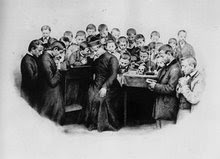
In the words of the priest’s friend Fr. Patrick McKenna, “He twice refused the offer of a place in a boat, saying his duty was to stay on the ship while one soul wanted his ministrations.”

Friday, April 8, 2016

Praying for Priests

The following comes from Catholic Exchange:


Catholic priests are on the front lines of the call from Christ to shepherd His people. As living, breathing witnesses to the transcendent reality of the saving mission of Christ and His Church, our priests are indispensable. They give and give their lives to this mission by providing the spiritual food and shelter of Christ. While many of the phenomenal evangelistic initiatives that are fulfilling our call to the New Evangelization, what might not often be thought of is the necessity of spiritually providing for our priests.
In her new book and mission, Kathleen Beckman has given a clarion call to all of us to provide more than just material or financial support for our priests. Rather, she calls all of us to give something much more powerful: prayer.
JARED ZIMMERER: Your new book, Praying for Priests: A Mission for the New Evangelization, is a clarion call to respond to the Holy See’s plan of prayer and sacrifice for priests. In what ways does this call fit in context with the New Evangelization?
KATHLEEN BECKMAN: It is clear that intercessory prayer for priests is at the very heart of the New Evangelization considering what Pope John Paul II wrote in Pastores Dabo Vobis, no.2, “The formation of future priests…is considered by the Church one of the most demanding and important tasks for the future of the evangelization of humanity.”
The sequence of Holy See events between 1951 when Pope Pius XII wrote Evangelii Praecones (Heralds of the Gospel), and 2013 when Pope Francis authored Evangelii Gaudium (Joy of the Gospel) also helps us to understand the connection. In March 2005, On Holy Thursday, Pope John Paul II directed his last formal letter to all priests, in which he affirms: “Particularly in the context of the New Evangelization, the people have a right to turn to priests in the hope of ‘seeing’ Christ in them (cf. Jn 12:21). Vocations will certainly not be lacking if our manner of life is truly priestly, if we become more holy, more joyful, more impassioned in the exercise of our ministry.”
On October 7, 2012, Pope Benedict XVI convened a synod of bishops on the topic of “The New Evangelization for the Transmission of the Christian Faith.” At the end of the month, the synod of bishops responded with the following proclamation: “The experience of encountering the Lord Jesus…must be fundamental to every aspect of the New Evangelization. This is the ‘contemplative dimension’ of the New Evangelization which is nourished continually through prayer, beginning with the liturgy, especially the Eucharist…”
Two months later, November 2012, Mauro Cardinal Piacenza, then Prefect of the Congregation for the Clergy, wrote a letter to all bishops around the world, encouraging them to ardently promote a worldwide movement of Eucharistic adoration and intercessory prayer for the sanctification of priests, principally through the promotion of an updated version of the Congregation’s booklet Eucharistic Adoration for the Sanctification of Priests and Spiritual Maternity.
The goal of Praying for Priests: A Mission for the New Evangelization is to magnify the Holy See’s plan by expanding catechesis on the interior renewal of the priesthood for the New Evangelization and spiritual motherhood, while emphasizing the complimentary role of the ministerial priesthood and the laity for our respective call to be joyful evangelizers.
JARED: In a time when the priesthood is still marred with the scar of the scandals from the past, how important is it that those devoted to the Church support their priests, not only in the physical sense at their parish, but in the spiritual life as well?
KATHLEEN: Love requires that the laity should not be only consumers of the ministerial priesthood but also contributors. While it is vital to support priests in their parish ministry, their spiritual support is the highest good and the greatest need because it is a divine mandate.
When I conducted research for the book, I was surprised by a majority of Catholic parents who admitted they are not in favor of their children becoming priests or nuns. That is why the book includes a rosary of reparation based on Pope John Paul II’s Salvifici Doloris (On The Christian Meaning of Human Suffering) for priests and laity—both of whom have caused scandal. According to Pope Francis, “Sanctity is stronger than scandal”. The Holy See specifically implored prayer “for the sanctification of priests” as the way forward for the Church. This is part of the universal call to holiness. Holier priests lead to a holier Church, and a holier Church will attract people back to Jesus Christ because holiness is extremely attractive.

Sunday, April 3, 2016

St. Faustina's Prayer for the Church and Priests

O my Jesus, I beg Thee on behalf of the whole Church: Grant [her] love and the light of Thy Spirit, and give power to the words of priests so that hardened hearts might be brought to repentance and return to You, O Lord. Lord, give us holy priests; Thou Thyself maintain them in holiness. O Divine and Great High Priest, may the power of Thy mercy accompany them everywhere and protect them from the devil's traps and snares which are continually being set for the souls of priests. May the power of Thy mercy, O Lord, shatter and bring to naught all that might tarnish the sanctity of priests, for Thou canst do all things (1052). 

Jesus, my most beloved, I beg Thee for the triumph of the Church, for blessings on the Holy Father, and on all the clergy; for the grace of conversion for impenitent sinners. And I ask Thee for a special blessing and for light, O Jesus, for the priests before whom I will make my confessions throughout my lifetime. 

Wednesday, February 17, 2016

Pray for Fr. Joseph Peek

Fr. Joseph Peek is nearing the end of his earthly journey and is preparing for life eternal.  Please keep him and his family in your prayers.  Fr. Peek is a military veteran of the US Navy and is asking prayers through the intercession of  the courageous and holy Grunt Padre, Servant of God Fr. Vincent Capodanno. 

Read about Fr. Peek's vocation and courage here.


A SHORT PRAYER FOR THE DYING
The Special Prayer of the Pious Union of St. Joseph
  
O St. JOSEPH, foster father of the Child Jesus and true spouse
of the Blessed Virgin Mary, pray for us and for the dying of this
day (or this night). Amen. 

PRAYER FOR THE AGONIZING 
O St. JOSEPH, protector of those in agony, take pity on those
who at this very moment when I pray to thee are engaged in
their last combat. 
O blessed Joseph, take pity on my soul too when the hour of
the final battle shall arrive for me. Then, O my holy patron, do
not abandon me, but grant me thine assistance; show that thou
art my good father, and obtain that my Divine Savior may receive
me with mercy into that abode where the elect enjoy a life
that shall never end. Amen. 

Friday, February 5, 2016

Pray for Priests


Saint Michael the Archangel,

defend us in battle.
Be our protection against the wickedness and snares of the devil.
May God rebuke him, we humbly pray;
and do Thou, O Prince of the Heavenly Host,
by the Divine Power of God,
cast into hell Satan and all the evil spirits
who roam throughout the world seeking the ruin of souls.