Showing posts with label media. Show all posts

Wednesday, January 31, 2018

An Interview with Saint John Bosco

A unique event marks the year 1884 in the life of Don Bosco. He gives his first and only press interview to a French journalist writing for the Journal de Rome. An excerpt of this historic event is reproduced below:


"Reporter: By what miracle have you been able to found so many houses in so many different countries?


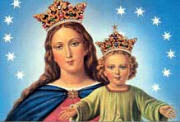
Don Bosco: I have done far more than I hoped, but I don't know how.  The Blessed Virgin knows our needs, and She helps us.


Reporter: How does She help you?


Don Bosco:  For instance.  Once I received a letter from Rome saying that the building of the Sacred Heart needed 20,000 lire within a week.  At that moment I had no money.  I left the letter by the holy water stoop, fervently prayed to the Blessed Virgin and went to sleep, leaving the matter in Her hand  Next morning I received a letter from an unknown person.  "I had made a vow to Our Lady.  In exchange for a certain favour I would give 20,000 lire."  On another occasion I was in France.  There I got the unpleasant news that one of my houses was in dire straits unless 70,000 lire were found at once.  I could see no solution, so I prayed.  I was about to go to bed at 10:00 pm when someone knocked.  It was a friend of mine with a thick file in his hands.  "Don Bosco, in my will I had assigned 70,000 lire for your works.  But today it occurred to me that it is better not to wait for death in order to do good.  I've brought it to you. Here is 70,000 lire."


Reporter: These are miracles.  May I indiscreetly ask you whether you have performed miracles yourself?


Don Bosco: I have only thought of doing my duty.  I have prayed and trusted in the Madonna.


Reporter: Don Bosco, could you comment on your educational philosophy and the methods you use in your schools that are so much admired? How do you manage to maintain discipline when dealing with so many boys?

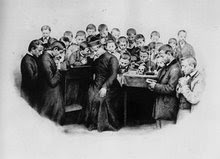
Don Bosco: The Salesian way of educating the young is quite simple. Basically, I insist on letting boys be boys. Let them play and enjoy themselves as much as they want as long as God is not offended. But if I have a philosophy of education, it consists in discovering a boy’s best qualities and then exploiting them to his advantage. You must admit, sir, that any person is at his best when he is doing what he likes and does best. Children are the same. Promote their positive qualities and they will thrive. As for discipline—love and respect for the young is the answer. In the 46 years I have worked among children, never once have I had to resort to corporal punishment, which by the way is very much in vogue. And if I may say so, all those children who have come under my care have always continued to show me their love and respect.

Reporter: Let me ask about your mission work in foreign lands. How have you managed to reach such faraway places as Patagonia and Tierra del Fuego?

Don Bosco: Well, honestly, we got that far by taking one step at a time."


Reporter: What do you think of the present conditions of the Church in Europe and in Italy?  How do you see the future?


Don Bosco:  I'm no prophet.  You journalists are, a bit.  You should be asked that.  Nobody but God knows the future.  Nevertheless, humanly speaking, the future seems bleak.  My forecast is very sad, but I'm not afraid.  God will always save his Church, and our Lady, who visibly protects the contemporary world, will make redeemers arise.


(From Teresio Bosco's book "Don Bosco")

Friday, November 27, 2015

Paul J. Kim: God Is In The Media??

Thursday, November 7, 2013

10 Habits for Healthy Information Consumption

The following comes from The Radical Life:
It’s never been more important for us to take control of the info we consume on a daily basis. Every piece of information we encounter throughout our day – whether we like it or not - changes who we are.
If we are to become who we are made to be, we must be deliberate about consuming the information that will shape us into such!
I have a long way to go. It’s a difficult process requiring courageous choices, but it’s worth it. Here are 10 things we are doing in our family to encourage healthy info consumption:
1. Get rid of cable TV.
I’m not quite saying throw the TV out the window. But no cable TV. Everything about cable TV is designed to hook and reel you in. Don’t take the bait. Instead, buy TV shows and movies individually (like on iTunes) when you want to watch them. Or you can always go out and watch them somewhere else (sports bar, friends house, etc.).
That way you’ll end up only watching things that are really worth watching, and nothing else. You’ll probably end up saving money in the end, too (we do).
2. Go ad-free radio.
Another great benefit of buying your TV/movies individually, rather than using cable TV, is that it removes a lot of ads from your life. In addition to that, spend <$10/month for ad-free Spotify or Pandora radio and you can listen to anything you want anywhere you go, with no ads! It’s worth it.
Every time you succumb to using a “free” service (that is supported by ads) you are selling a little piece of the formation of your soul. There’s no such thing as a free lunch.
3. Use an RSS reader to follow your blogs/news online.
Many blogs and news sources let you read full articles straight from an online reader (and often with no ads) via RSS. It helps you consume just the content you like while avoiding the sidebars and teasers that litter most websites (which are all designed to suck you in further). Note: Most news sites will make you click over to their website from their RSS feed to read their full story. But you can at least read a little bit before deciding if it’s worth your time to do so and exposing yourself to the rest of their site. If you’re looking for an RSS reader, I recommend Feedly.
4. Sometimes quitting is good.
If you start watching a movie or TV show and it’s not amazing from the beginning, quit. Don’t mindlessly watch the rest of it. There are too many better things to consume. If you start a book/article and it’s not amazing from the beginning, quit. There are too many amazing things to read.
5. Turn off push notifications.
On your computer, on your phone, on your tablet. Check your email/Facebook/etc. when *you* decide it’s time to do so. If something is that urgent, somebody will call or text you. Otherwise, don’t risk it stealing the focus from what you set out to do today. It can wait for the proper time. It’s a great lesson in patience, too.
6. Put down your phone.
It’s practical to carry it with you when you go out, but when you get home or to work, put it across the room. Focus on whatever you are doing and don’t allow bad habits (of checking your phone every 3 minutes) to consume every idle moment of your day.
7. Be not afraid of missing out.
It’s okay if you don’t know the latest gossip, news or reality TV show ending. I promise. Try a month without it and you’ll see that the world is still spinning and that your life is probably better off, too!
Additionally, with so much great information at our fingertips on various topics, it’s easy to become information gluttons. Consume what you can, but let the rest go. If your expectation is to know everything there is to know about something, you will be chronically dissatisfied and stressed. The profound brain things inside your head will constantly hurt. By all means, enthusiastically pursue learning about your passions, but be content to consume an amount that fits well within the limits of the day God gave you.
8. Plan healthy things.
When you diet, it’s not enough to just avoid the junk food. You also need to plan healthy meals to take its place. If you only remove the junk info, you’ll find yourself just falling into new bad habits. When we are tired and idle, it’s easy to end up indiscriminately consuming whatever most easily pops in front of us (i.e. web surfing, channel surfing, DVR digging, gossip, etc.). Plan healthy activities to fill this void.
Play, listen and dance to great music. Sing songs together. Make something. Read a book. Tell stories to each other. Pray. Plan to watch a worthwhile movie together. Go outside. Play a sport. Go for a walk. The list is endless. Make a list of 10 things you’d like to do more of. I guarantee that consuming more mindless information, surfing the internet, watching more TV and listening to advertisements will not be on the list. Plan healthy things into your day.
9. Keep your social media in check.
Social media has found a unique place in our lives. But remember that such tools (especially if they are “free”) are not primarily designed to be what is best for you and your most important relationships. They are designed to keep you on their site for as long as possible by feeding your itchy clicky finger and your fear of missing out. Don’t be afraid to cut some cords or set some hard limits with how you use it. It’s powerful stuff, but don’t let it keep you from greater things.
10. Schedule silence.
You need silence, a complete break from the constant noise. If you don’t schedule silence into your day and then protect it, it won’t happen. Bonus: board up the windows, disconnect the electricity and block all wireless transmission. Guard your silence like a treasure. Flee to it. Cling to it as life. Schedule it in and make it a priority. Start with just a few minutes and try to build it up to an hour each day.
God is whispering to you there. Listen.

Thursday, September 12, 2013

Pope Francis Takes the Faith to the Pages of the Secular Press

The following comes from the NCR:


Pope Francis has pulled yet another surprise by taking the unprecedented step of writing a long letter to the founder of an Italian daily newspaper, explaining the faith to non-believers.

The 2,500-word missive, written in response to July 7 and Aug. 7 editorials by Eugenio Scalfari, the atheist founder of the socialist-leaning La Repubblica newspaper, principally addresses themes covering the faith, the Church and today’s increasingly secularist culture.

Scalfari was prompted to write his articles partly to show his admiration for the Holy Father, but also in response to Pope Francis’ first encyclical, Lumen Fidei (The Light of Faith), that was published in July. After lauding the Popes’ qualities and his love for the poor, Scalfari posed three questions at the end of his Aug. 7 editorial, none of which Scalfari expected to be answered.

The first was whether God’s mercy extends to non-believers; the second, whether it is sinful to doubt the existence of absolute truth; and the third, whether belief in God is merely a product of human thought.

In his letter of reply, published in today’s edition of the newspaper, Francis begins by saying “it is nothing other than positive, not only for us individually but also for the society in which we live, to pause to dialogue about a reality that is as important as faith, which refers to preaching and the figure of Jesus.”
He points to two circumstances that make such dialogue “proper and precious”. The first, he says, stems from a paradox: that the Christian faith, once seen as symbol of light, has been branded as the “darkness of superstition” and “opposed to the light of reason” in today’s modern culture, formed by the Enlightenment.

Noting the lack of communication between the Church and modern culture, Pope Francis said “the time has come” and that the Second Vatican Council “inaugurated” such an exchange, for “an open dialogue without preconceptions that reopens the doors to a serious and fruitful meeting.” 

The Security of Faith

The second circumstance, he continues, is to stress that dialogue is “profound and indispensable” and not a “secondary accessory” expression of the believer. He quotes Lumen Fidei and a passage (no. 34) on how truth leads to humility: “Far from making us inflexible, the security of faith sets us on a journey; it enables witness and dialogue with all.”

He explains how faith for him was born from a personal encounter with Jesus, but also points out how that encounter was made possible through the Church via “the community of faith… the intelligence of Sacred Scripture, to new life that, as gushing water, flows from Jesus through the Sacraments, to fraternity with everyone and at the service of the poor, true image of the Lord.”

“Without the Church, I believe, I would not have encountered Jesus, while being aware that the immense gift that is faith is preserved in the fragile clay vessels of our humanity,” he says.

The Holy Father adds that it is “due to this personal experience of faith lived within the Church that I am at ease in listening to your questions and in seeking, together with you, the paths along which we may perhaps begin to walk some of the way together.”

Referring to the first of Scalfari’s articles, the Pope explains the essence of the Christian faith: the incarnation, the cross, and Christ’s love for every man whom He recognizes has having “inestimable value.”

Each of us, therefore, is called to “choose the love of Jesus, to enter his way of being, thinking and acting,” the Pope explains in his letter. “This is the faith, with all the expressions that are unfailingly described in the encyclical.”

‘Communication, Not Exclusion’
The Pope makes the case that the originality of the Christian faith lies in the fact that it allows each believer to participate in the relationship that Jesus has with God who is “Abba” (“Daddy”) — a relationship that extends to all other men, including enemies, as a sign of love.

The sonship of Jesus, he says, is not an “insurmountable separation” between Jesus and everyone else, but tells us that “in him, all are called to be children of the Father and brothers to each other.” The particularity of Jesus, he says, is for “communication, not exclusion.”  

He explains to Scalfari that the Church is called to sow the leaven and salt of the Gospel in the world — that is, the love and mercy of God — pointing to the afterlife and to our own destiny. For those who live the Christian faith, he adds, “that does not mean fleeing the world” or seeking some kind of “hegemony,” but rather “service to mankind,” keeping a sense of hope alive, prompting good works in spite of everything, and always looking to what lies beyond.

He then touches on the Jewish faith, stressing that God’s faithfulness to his covenant with Israel has never failed, and that throughout the “terrible trials” of past centuries, “the Jews have preserved their faith in God.” For this, the Pope says, “we as a Church, but also as humanity, will never be sufficiently grateful to them.”

Their perseverance in faith, he continues, “reminds everyone, including Christians, of the fact that we are always waiting, like pilgrims, for the Lord’s return, and that therefore we must always be open to Him and never take refuge in what we have already attained.”

Answering Scalfari’s Questions
Turning to the first question raised by Scalfari, about whether God’s mercy extends to non-believers, Francis answers: “Considering — and this is the fundamental issue — that the mercy of God knows no limits if we turn to him with a sincere and penitent heart, the real question for those who do not believe in God lies in listening to one’s own conscience.”

He explains: “Sin, also in those who are without faith, exists when it goes against our conscience. Listening to and obeying one’s conscience means, indeed, to make decisions in relation to what is perceived as good and bad. And on this decision rests the goodness or evil of our actions.”

Addressing the second question, on whether it is wrong or a sin to believe that no “absolute truth” exists, the Pope writes: “The truth, according to Christian faith, is God’s love for us in Jesus Christ. So, the truth is a relationship! Each one of us receives the truth and expresses it in his or her own way, from the history, culture, and situation in which he or she lives.”

“This doesn’t mean that truth is variable or subjective, quite the opposite,” the Pope insists. “But is means that it is given to us always and only as a way and a life. Did not Jesus himself say: ‘I am the Way, the Truth, and the Life’? In other words, truth being altogether one with love, requires humility and openness to be sought, received and expressed.”

In response to the final question, on whether belief in God is merely a product of human thought, he says that the greatness of man “rests in his capacity to think of God,” and that this means “being able to experience a knowing and responsible relationship with him.”

“But the relationship is between two realities,” he says. “God does not depend on our thought. Besides, when man’s life on earth ends — for the Christian faith, in any case, this world as we know it is destined to fall — man will not cease to exist, and, in a way that we do not know, nor will the universe that was created with him.”

Francis concludes by emphasizing that the Church, despite “the languidness, the infidelity, the mistakes and the sins that may have been committed by those who belong to her, has no other meaning or aim other than living and bearing witness to Jesus.”

Complementing Benedict’s Initiative

Pope Francis’ efforts to reach out to non-believers complement those of the Pope Emeritus. During his pontificate, Benedict XVI founded the “Courtyard of the Gentiles,” a structure for permanent dialogue between believers and non-believers created by the Pontifical Council for Culture. The initiative has organized several events in European capitals since it began in 2010.

Benedict XVI also shared his thoughts with a secular newspaper when he penned an op-ed for the Financial Times shortly before Christmas last year.

Wednesday, August 7, 2013

What interest does the media have in trying to debunk classical Christianity?

The following comes from New Advent!:  You can say that it's mostly to stir up controversy, because that makes money in the long run. The media know that there are a lot of Christians in this country, so when you take the anti-religion perspective it's going to stir up controversy. I might venture to say that there are people in the mainstream media culture who don't like Christianity, so they really are using the tools they hav e to undermine it.  

Monday, August 5, 2013

Lumen Fidei: A commentary by Fr. Robert Barron

Wednesday, July 31, 2013

Michael Coren on Media Coverage of Pope Francis

Sunday, November 6, 2011

TV Spots to Invite Catholics 'Home' at Christmas


The following comes from Zenit.org:

A ministry dedicated to bringing fallen-away Catholics back to the Church through media will be getting its message to 250 million people this Christmas season.

Catholics Come Home will air a one-minute invitation to return to parish life and get to know the Church. The spot will run more than 400 times from Dec. 16 to Jan. 8, reaching every U.S. diocese.

According to a statement from the ministry, Catholics Come Home hopes to inspire as many as 1 million souls to come home to local parishes. They've based this goal on statistical census results from Catholics Come Home media initiatives that have aired in 30 past partner dioceses: Where these ads have aired, Mass attendance has increased an average of 10%, and helped over 300,000 people home to the Church, just since 2008.

The bi-lingual Catholics Come Home commercials are scheduled to air on CBS, NBC, Univision, TBS, USA, TNT, CNN, Fox News, and other networks during shows such as 60 Minutes, NCIS, NBC Nightly News, the Today Show, Jay Leno, O'Reilly, major sports, and highly rated sitcoms.

Tuesday, March 1, 2011

PONTIFF CALLS ON CHURCH TO FIND PARABLES FOR TODAY

The following comes from Zenit.org:

Jesus proclaimed the Kingdom by referring to elements from his environment: fields, seeds, flocks and other images. Today, says Benedict XVI, we are called to discover new symbols and metaphors, in order to proclaim the Gospel to a digital culture.

The Pope made this reflection today when he addressed participants in the plenary assembly of the Pontifical Council for Social Communications.

The Holy Father centered his reflection on the concept of "language." He referred to his 
Message for World Communications Day, which speaks of the cultural transformation being brought about by new communications technology.

"A new way of learning and thinking is being carried out, with unheard of opportunities to establish relationships and to build communion," he said.

In that context, the Pontiff offered a reflection on "the fact that thought and relationship always occur in the form of language, understood of course in a general sense, not just verbal."

Language, he said, is not just a "provisional coating of concepts," but rather the "living and palpitating context in which the thoughts, concerns and projects of men are born to the conscience and are molded in gestures, symbols and words."

"Hence, man not only 'uses' but in a certain way 'inhabits' the language," the Pope stated.

Call to caution

The language being developed for digital communication has particular tendencies, Benedict XVI observed, as it tends more to emotion and intuition than analysis, giving priority to images. There is no longer a clear distinction between written and spoken language, as writing in this digital world is taking the form and immediacy of oral communication.

The person, of course, is involved in this communication.

"When persons exchange information, they are already sharing themselves and their vision of the world," the Pope clarified. "They become 'witnesses' of what gives meaning to their existence."

This is not without risks, the Holy Father cautioned, and they are risks that are little considered -- dangers such as superficial relationships, over-emphasis on emotions, and "the prevalence of the most convincing opinion in regard to the desire for truth."

Thinking deeper

Benedict XVI affirmed that all of this makes reflection on language an urgency.

"The point of departure," he said, "is revelation itself, which gives us testimony of how God communicated his wonders precisely in the language and the real experience of men."

He stressed the need "to become attentive listeners of the languages of the men of our time, to be attentive to the work of God in the world."

For the Church, the challenge is not just to use today's language for the Gospel message, but to "think in a more profound way" about the relationship between faith and these changes.

"If the new languages have an impact on the way of thinking and living, they also affect, in some way, the world of faith, its intelligence and its expression," he said. "[...] The digital culture poses new challenges to our capacity to speak and to listen to a symbolic language that speaks of transcendence."

Christ called on the elements of his environment to proclaim the Kingdom, the Pontiff reminded; likewise, "we are called to discover, also in the digital culture, significant symbols and metaphors for persons, which can be of help when speaking of the Kingdom of God to contemporary man."

Linguistic seduction

The Bishop of Rome affirmed that an appeal to spiritual values is precisely the key to promoting a "truly human" communication.

This, he said, is what our nature as persons created in God's image calls for.
"[B]iblical communication according to the will of God is always linked to dialogue and responsibility, as attested, for example, by the figures of Abraham, Moses, Job and the Prophets, and never to linguistic seduction, as is, instead, the case of the serpent, or of incommunicability and of violence, as in the case of Cain," he reflected. "Hence the contribution of believers could be of help for the world of the media itself, opening horizons of meaning and value that the digital culture is not capable to perceive and represent on its own."

Tuesday, January 25, 2011

March for Life and the Media Malpractice


I found this at the Anchoress site. Nothing the mainstream media does surprises me anymore.

Thursday, December 23, 2010

A Matter of Faith: Malcolm Muggeridge with Fr. Patrick Peyton

Friday, November 19, 2010

Dominican Sisters Return to Oprah

The Dominican Sisters of Mary will be featured on the Oprah Winfrey Show on Tuesday, November 23rd.

This is a new show that includes interviews with Mother Assumpta, Sr. Joseph Andrew, Sr. Mary Samuel, Sr. John Dominic and other Sisters; as well as on-site filming of the First and Final Profession Masses and this year’s Entrance Day, during which we welcomed 22 Aspirants.

The show will feature the experience of a Sister entering religious life and the meaning of religious profession as being ‘married’ to Christ.

You may recall that Oprah first reached out to our community on February 9th of this year due to an interest in the hidden aspects of religious life. Click here to watch an excerpt from that program.

The response from the first show was so positive that the Sisters were asked if we would be open to another opportunity to share our life. We have accepted this invitation in the hopes of reaching an audience we might not otherwise reach with the witness of our life and the Gospel. Please join us in praying that the show will be for the good of souls and the honor of God.

As we approach the Thanksgiving holiday, let us give thanks to God for His bountiful goodness. May God bless you and your families during this holiday season.

In Jesus and Mary,

The Dominican Sisters of Mary, Mother of the Eucharist

Wednesday, September 29, 2010

Sunday Night Live with the Salesians of Don Bosco


EWTN Global Catholic Television Network: Sunday Night Live – Fr. Benedict Groeschel, CFR – Fr. Pat Angelucci, SDB, Director Salesian High School and Brother Michael Leschinsky, Salesians of Don Bosco – The Relic Pilgrimage of Don Bosco

Sunday, September 26, 2010

Skeptical Journalist Surprised by Medjugorje

The following comes from the Medjugorje Site:
I recently spent three days in Medjugorje. And, as a journalist, I have never felt so useless before. For the first time in my career I realise my words cannot express what I would like to share. Call me unskilled or incompetent if you will, but when I try to describe what I have found inside me since my visit to the town I cannot find the words.

I was very sceptical about the Medjugorje phenomenon before my visit. But driven by a somewhat cynical curiosity I went to Medjugorje with a friend who had been there 15 times before and has co-written a book about the shrine.

The whole car journey there was an unbroken dialogue between my mind and his heart; I could not understand with my brain what my friend was trying to share through his heart. And this is exactly what I am doing right now: I want to share the experience of my heart through the words of my mind. Is that possible?

Before my visit I found it difficult to believe that Our Lady had been continually speaking for almost 30 years in such a peripheral place. What’s more, I could not accept that Mary would be appearing on earth again to share some secrets about trials humanity will face in the future.

Actually, I confess I still find these things very hard to grasp rationally. Medjugorje is completely illogical, if you look at it in a purely rationalistic way. But as soon as I arrived I stepped out of the Kingdom of Reason and into the Empire of the Heart.

I visited Sister Elvira’s community, where people with problems of drug addiction found a way to live again. I encountered a local man, Michele Vasilj, in whose eyes I caught a glimpse of Mary’s sight. I met Sister Cornelia at the orphanage she runs, and there I was given a mysterious sort of prophecy regarding my private life; it was incredible.

I cried without reason while I was praying in the parish church. I have cried only once before like this. That happened when I prayed for the first time in a charismatic community (you may recall that I wrote about that experience in this slot last July). But this time my tears were much heavier and meaningful, a gift from Our Lady.

I listened to the visionary Mirjana witnessing to her experience and I realised that some of the words she was saying from the balcony of her tiny house in front of about a hundred people were spoken directly to me. When I listened to one of Mary’s messages I realised the words spoke directly to my heart, giving me the solution to a problem I was carrying around like a heavy burden.

Many of you are probably thinking: he is pathetic. That is what I used to think whenever I bumped into one of the many Medjugorje devotees. Reason cannot grasp this phenomenon – at least mine can’t. Reason is inclined to say that Medjugorje relies on coincidence, autosuggestion and emotionalism. But these explanations no longer satisfy me. If you have experienced what I experienced you would understand why.

In fact, the point of my trip to Medjugorje has been precisely this: to discover that there is a mysterious spiritual dimension that is far beyond our understanding, that cannot be limited by our mind. So the only words that can be useful are these: come and see. In Medjugorje a new world could be unveiled inside you. At least, that is what has happened to me.

Saturday, September 25, 2010

Prejudiced journalism 'diminishes public life,' warns Archbishop Chaput

The following comes from the CNA:

Delivering the featured address at a religion news writers conference in Denver on Friday, Archbishop Charles Chaput commented on what he believes to be the new secular “orthodoxy” within American media and warned that slanted journalism “diminishes public life.”

On Sept. 24, the Denver prelate made his remarks as keynote speaker at the 61st annual Religion Newswriters Association conference at the city's Westin Tabor center downtown.

Opening his speech, Archbishop Chaput underscored that a “free press is part of the American identity, and also one of its best institutions. I respect that. I value what journalists do for the same reason I value the importance of religious faith in American life – both in the private home and in the public square.”

In that regard, he added, the “kind of journalism that tracks our religious life is so important because it’s the profession where two of our defining freedoms meet.”

“A responsible press, and a faith shaped by the God of charity and justice, share two things in common: a concern for human dignity, and an interest in truth,” the prelate noted. “Freedom means that our choices matter. It also means that our mistakes have consequences.”

Archbishop Chaput then referred to famed 20th century author George Orwell and how his controversial work titled “Animal Farm” – which critiqued the Soviet regime in Russia in the mid 1900s – was initially suppressed from publication.

“Six decades later, this essay still has value,” he continued, “And here’s why: Most arguments for press freedom deal with the media’s need for independence from state censorship and propaganda. That makes sense. But Orwell focused on something very different – a kind of undermining of free thought and expression unique to modern democratic societies.”

“Nobody demanded the media’s fawning coverage of the Soviet Union,” the archbishop recalled. “Nobody required the falsification of facts, or the ugly attacks on critics of Stalin, or the covering-up of unpleasant truths. Nobody forced journalists and editors to do these things. They freely chose to do them.”

“The news media of the day were staffed by decent men and women,” he clarified. “They felt they were on the side of social progress. They thought the Soviet Union, whatever its flaws, was fighting for human progress too. So they ignored unhappy details and hard questions about the reality of Soviet life.”

This dynamic “created what Orwell saw as a new form of religious orthodoxy,” said Archbishop Chaput. “That orthodoxy shaped the boundaries of permissible thought and expression. And Orwell warned that this unspoken tendency toward group-think would threaten the press in democratic societies well into the future.”

Orwell’s observations “capture the way many people feel today toward the news media and coverage of religion news,” he went on. “In practice – at least in the eyes of ordinary people I hear from every week – a new body of ideas seems to shape the limits of acceptable thought in American public life.”

“This new orthodoxy seems to influence the selection of religious news and how that news gets presented. It seems to frame which opinions are appropriate and which ones won’t be heard. And it seems to guide the historical narrative that media present to their audiences,” the archbishop emphasized. “At its core, it has a set of assumptions about the nature of human life, the purpose of government, and the proper role of religion in the lives of individuals and in society that veers away from past American habits of thought.”

The Denver prelate noted that this “new thinking seems to presume a society much more secular and much less religious than anything in America’s past or warranted by present facts; a society where people are free to worship and believe whatever they want, so long as they don’t intrude their religious idiosyncrasies on government, the economy, or culture.”

While “I do know reporters and editors whom I admire, and whose fairness and skill I commend,” said the archbishop, “I think the deficiencies in today’s coverage of religion are too real to ignore.”

The “Christian story now told in mainstream media” depicts the faith as “a backward social force and a menace to the liberty of their fellow citizens.”

“One of the worst habits many Catholics had at the start of the clergy sex abuse crisis, including many bishops, was to minimize a very grave problem,” he said. “But news media show many of the same patterns of denial, vanity, obstinacy and institutional defensiveness in dealing with criticism of their own failures.”

“Freedom of the press clearly includes the right to question the actions and motives of religious figures and institutions,” Archbishop Chaput noted. “But freedom doesn’t excuse prejudice or poor handling of serious material, especially people’s religious convictions. What’s new today is the seeming collusion – or at least an active sympathy – between some media organizations and journalists, and political and sexual agendas hostile to traditional Christian beliefs.”

“When this happens,” he underscored, “the results are bad for everybody.”

“It’s no accident that freedom of religion and freedom of the press are both named – in that order – in the First Amendment. The country’s founders believed that protecting these two freedoms would be vital to the American experiment,” the archbishop said. “They saw that a self-governing people needs truthful information and sensible opinion from sources other than the state. They also believed that morality grounded in religious belief is fundamental to forming virtuous people able to govern themselves.”

“Knowledge professionals have their own kind of orthodoxy,” he added. “They place a high premium on their own skill and autonomy. This has consequences. It predisposes them to be uncomfortable with, and even hostile toward, any claims of revealed truth, religious institutions, traditions, doctrines and authority.”

“The point I want to leave you with is this: Journalism is a 'knowledge profession.' But like any other profession, the work of journalism doesn't necessarily translate into self-knowledge or self-criticism. And any lasting service to the common good demands both. Journalism has its own unstated orthodoxies. It has its own prejudices. And when they go unacknowledged and uncorrected – as they too often seem to do – they can diminish our public life.”

Thursday, September 16, 2010

Fr. Robert Barron to Launch National TV Program on WGN

The following comes from the CNA:

Fr. Robert Barron of the Archdiocese of Chicago will begin broadcasting a weekly national television show on WGN America to reach Catholics and others searching for Christ. He will be the first priest since Archbishop Fulton Sheen to have a regular, national program on a commercial television network.

Fr. Barron, a professor at University of St. Mary of the Lake/Mundelein Seminary, runs the global media ministry called “Word on Fire.”

His WGN America show will be titled “Word on Fire with Father Barron.” It will premier at 8:30 a.m. Central Time on Sunday, Oct. 3. It will also run on WGN Chicago at 9:30 a.m.

“Now is the time to reach out to Catholics and others who are searching for meaning in their lives or who have left the Church because they are disillusioned,” Fr. Barron said. “In each episode, our mission will be to encourage believers and bring the transformative power of the Gospel to the culture.”

The priest, who was ordained in 1986, has also been producing a ten-part documentary titled “Catholicism,” telling the story of the Church through travels to 16 countries. He will preview highlights of the series in his weekly broadcasts.

“The faith of the Church is our strength,” Fr. Barron continued. “Our program will strive to show viewers the richness of the Catholic faith and how it is a treasure to be shared now and with future generations. The faith imbues our life with meaning and imparts to all a renewed sense of purpose.”

Funds for the WGN America program were raised through private donations. The website for Word On Fire is http://www.wordonfire.org/

Sunday, September 12, 2010

Sunday Night Live with Fr. Benedict Groeschel, CFR

Friday, July 9, 2010

Every Priest is a Communicator


Every priest is a communicator. That's according to the secretary of the Pontifical Council for Social Communications, Irish Monsignor Paul Tighe. He was speaking in the context of the recent 44th World Day of Social Communications, whose motto was ""The Priest and Pastoral Ministry in a Digital World: New Media at the Service of the Word."

“Its very clear that the priest is at the core of his vocation, a communicator. One of the jobs that a priest does in any parish is to promote communications within the parish. But very specially he is the one who is charged with bringing the word of God into that parish. So as a communicator we hope that a priest, as somebody who having listened to and encountered the Word of God himself can then bring that and share it with other people”.

The recent emphasis is on new technology, which enables the Church to expand the boundaries of the Good News.

“The recent emphasis of course is on the development of the new technologies. And the new technologies means that priests have the possibility to reach people they maybe would not have had the opportunity to reach. So we traditionally think of the parish as something that is geographically limited. Nowadays we can think of a more universal parish where the priest who decides to make available his preaching, to make available his ideas, can reach people in different corners of the world. And we want to encourage priests to take advantage of this new technology, to share the Word of God: to bring their message, their insight into the Word of God to the lives of different people”.

Training begins in the seminary.

“So one of the things that we are doing at the Pontifical Council is, we are encouraging that there will be more attention to communcations in Seminary Programs throughout the world. Not just about teaching people technologies or the art of technical communcations. But they become people who, having really listened to the Word of God, become people who bring that Word to the lives of different people”.

Friday, July 2, 2010

Fr. Robert Barron comments on New Media and Evangelization

Thursday, May 20, 2010

Father Barron comments on The PBS Ban on Religion