Showing posts with label Chesterton. Show all posts

Wednesday, December 26, 2018

A Chrismas Poem by G.K. Chesterton


There fared a mother driven forth
Out of an inn to roam;
In the place where she was homeless
All men are at home.
The crazy stable close at hand,
With shaking timber and shifting sand,
Grew a stronger thing to abide and stand
Than the square stones of Rome.

For men are homesick in their homes,
And strangers under the sun,
And they lay their heads in a foreign land
Whenever the day is done.

Here we have battle and blazing eyes,
And chance and honour and high surprise,
But our homes are under miraculous skies
Where the yule tale was begun.

A child in a foul stable,
Where the beasts feed and foam;
Only where He was homeless
Are you and I at home;
We have hands that fashion and heads that know,
But our hearts we lost---how long ago!
In a place no chart nor ship can show
Under the sky's dome.

This world is wild as an old wife's tale,
And strange the plain things are,
The earth is enough and the air is enough
For our wonder and our war;
But our rest is as far as the fire-drake swings
And our peace is put in impossible things
Where clashed and thundered unthinkable wings
Round an incredible star.

To an open house in the evening
Home shall all men come,
To an older place than Eden
And a taller town than Rome.
To the end of the way of the wandering star,
To the things that cannot be and that are,
To the place where God was homeless
And all men are at home.

(Gilbert Keith Chesterton)

Monday, December 24, 2018

G.K. Chesterton on Christmas

"What life and death may be to a turkey is not my business; but the soul of Scrooge and the body of Cratchit are my business." - "Christmas," All Things Considered

Sunday, November 13, 2016

G.K. Chesterton on Confession


When people ask me, or indeed anybody else, “Why did you join the Church of Rome?” the first essential answer, if it is partly an elliptical answer, is, “To get rid of my sins.” For there is no other religious system that does really profess to get rid of people’s sins. It is confirmed by the logic, which to many seems startling, by which the Church deduces that sin confessed and adequately repented is actually abolished; and that the sinner does really begin again as if he had never sinned.
And this brought me sharply back to those visions or fancies with which I have dealt in the chapter about childhood. I spoke there of the indescribable and indestructible certitude in the soul, that those first years of innocence were the beginning of something worthy, perhaps more worthy than any of the things that actually followed them: I spoke of the strange daylight, which was something more than the light of common day, that still seems in my memory to shine on those steep roads down from Campden Hill, from which one could see the Crystal Palace from afar.
Well, when a Catholic comes from Confession, he does truly, by definition, step out again into that dawn of his own beginning and look with new eyes across the world to a Crystal Palace that is really of crystal. He believes that in that dim corner, and in that brief ritual, God has really remade him in His own image. He is now a new experiment of the Creator. He is as much a new experiment as he was when he was really only five years old. He stands, as I said, in the white light at the worthy beginning of the life of a man. The accumulations of time can no longer terrify. He may be grey and gouty; but he is only five minutes old.
-G.K. Chesterton (From his Autobiography)

Saturday, July 9, 2016

A Classic GKC Quote

"The Catholic Church is like a thick steak, a glass of red wine, and a good cigar."
                                                 G.K. Chesterton 

Tuesday, January 26, 2016

The Word in Silence Glitters Gold

The following comes from Elizabeth Scalia at OSV:


G.K. Chesterton once wrote, “There never was anything so perilous or so exciting as orthodoxy.” 
I am bound to agree. After decades of writing freelance, I have come to realize that nothing so challenges and satisfies as writing about Jesus Christ and His truth as articulated through the Catholic Church — popes and pew-sitters alike. To follow the great Marcus Grodi on the back page of The Catholic Answer is a vast privilege and humbling challenge, which makes me a bit of a grateful beggar; there’s a reason why this new column is called Ora Pro Nobis. How blessed I am, though, to launch it in an issue so chock-full of perilous, exciting and instructive orthodoxy! 
Seeing Jerid Miller’s piece on Verbum Domini land at The Catholic Answer in the same month I debut here is one of those small-but-happy synchronicities that make you feel you’re being looked after. Small bites of Pope Benedict XVI’s beautifully wrought exhortation on the Word of God, taken in concert with other sacred reading, have been flavoring all of my study with a consoling steadiness that builds from a single line to which I keep returning: “The realist is the one who recognizes in the word of God the foundation of all things” (Verbum Domini, No. 10). 
On first reading that, I gasped at the simple profundity. If this is true, and if the Word of God, the Logos existing before all things is All-Good, then it follows that all created creatures — all things, down to their spinning atoms — are good and founded upon this Word. 
On some level we must know this to be true, yet only a relative handful of human beings, among the billions who have walked the earth, seem to have found it obvious. Chesterton was onesuch, as evidenced in the unending sense of surprised delight he took of the world and everything in it. He found newspaper ink to be as wonderful as beach glass, which — it went without saying — was to him as glorious as a good cigar or a glass of beer or orthodoxy. As awe-struck and grateful for the world as a teenager in love, he routinely saw goodness about him, and pondered the unconditional gift of days, asking, “Why am I allowed two?” 
In Chesterton’s wordy sphere, though, how did he gain his wondering insightfulness? He lived and breathed the 19th-century equivalent of social media (what a blogger he would have been!) of which our pope writes: “Ours is not an age which fosters recollection; at times one has the impression that people are afraid of detaching themselves, even for a moment, from the mass media. For this reason, it is necessary nowadays that the people of God be educated in the value of silence . . . only in silence can the word of God find a home in us, as it did in Mary, woman of the world and, inseparably, woman of silence” (VD, No. 66). 
Do we lose sight of God’s ever-present goodness simply because we are underexposed to true silence? For all his gregariousness, Chesterton’s mostly unplugged era provided necessary pockets of deep silence, a different means of connectedness which we lately encounter only by force of will. To consent to be in silence is a kind of humility; it involves a potent giving up of the self. St. Therese Couderc, the foundress of the Cenacle Sisters, understood this, and in her ministry assisted retreatants toward such recollectedness. Devalued by her own community, however, she was forced to live deeply within silence, one which supports Benedict’s exhortation: “I saw written as in letters of gold this word Goodness, which I repeated for a long while with an indescribable sweetness. I saw it, I say, written on all creatures, animate and inanimate, rational or not, all bore this name of goodness. In a sense, St Therese Couderc was privileged to “see” the Verbum Domini, the Logos of all origins, contained in the single word “goodness.” 

Monday, August 17, 2015

G. K. CHESTERTON ON ANTI-CATHOLICISM


"The great temptation of the Catholic ... is the temptation to intellectual pride. It is so obvious that most of his critics are talking without in the least knowing what they are talking about, that he is sometimes a little provoked towards the very un-Christian logic of answering a fool according to his folly. He is a little bit disposed to luxuriate in secret, as it were, over the much greater subtlety and richness of the philosophy he inherits; and only answer a bewildered barbarian so as to bewilder him still more. He is tempted to ironical agreements or even to disguising himself as a dunce."

("The Thing," New York: Sheed & Ward, 1929, p. 134)

Sunday, December 28, 2014

The God in the Cave by G.K. Chesterton

I came across this GKC quote at the Ignatius Insight:

This sketch of the human story began in a cave; the cave which popular science associates with the cave-man and in which practical discovery has really found archaic drawings of animals. The second half of human history, which was like a new creation of the world, also begins in a cave. There is even a shadow of such a fancy in the fact that animals were again present; for it was a cave used as a stable by the mountaineers of the uplands about
Bethlehem; who still drive their cattle into such holes and caverns at night. It was here that a homeless couple had crept underground with the cattle when the doors of the crowded caravanserai had been shut in their faces; and it was here beneath the very feet of the passersby, in a cellar under the very floor of the world, that Jesus Christ was born But in that second creation there was indeed something symbolical in the roots of the primeval rock or the horns of the prehistoric herd. God also was a CaveMan, and, had also traced strange shapes of creatures, curiously colored upon the wall of the world ; but the pictures that he made had come to life. 

A mass of legend and literature, which increases and will never end has repeated and rung the changes on that single paradox; that the hands that had made the sun and stars were too small to reach the huge heads of the cattle. Upon this paradox, we might almost say upon this jest, all the literature of our faith is founded. It is at least like a jest in this; that it is something which the scientific critic cannot see. He laboriously explains the difficulty which we have always defiantly and almost derisively exaggerated; and mildly condemns as improbable something that we have almost madly exalted as incredible; as something that would be much too good to be true, except that it is true. When that contrast between the cosmic creation and the little local infancy has been repeated, reiterated, underlined, emphasized, exulted in, sung, shouted, roared, not to say howled, in a hundred thousand hymns, carols, rhymes, rituals pictures, poems, and popular sermons, it may be suggested that we hardly need a higher critic to draw our attention to something a little odd about it; especially one of the sort that seems to take a long time to see a joke, even his own joke. But about this contrast and combination of ideas one thing may be said here, because it is relevant to the whole thesis of this book. The sort of modern critic of whom I speak is generally much impressed with the importance of education in life and the importance of psychology in education. That sort of man is never tired of telling us that first impressions fix character by the law of causation; and he will become quite nervous if a child's visual sense is poisoned by the wrong colors on a golliwog or his nervous system prematurely shaken by a cacophonous rattle. Yet he will think us very narrow-minded, if we say that this is exactly why there really is a difference between being brought up as a Christian and being brought up as a Jew or a Moslem or an atheist. T he difference is that every Catholic child has learned from pictures, and even every Protestant child from stones, this incredible combination of contrasted ideas as one of the very first impressions on his mind. It is not merely a theological difference. It is a psychological difference which can outlast any theologies It really is, as that sort of scientist loves to say about anything, incurable. Any agnostic or atheist whose childhood has known a real Christmas has ever afterwards, whether be likes it or not, an association in his mind between two ideas that most of mankind must regard as remote from each other; the idea of a baby and the idea of unknown strength that sustains the stars. His instincts and imagination can still connect them, when his reason can no longer see the need of the connection; for him there will always be some savor of religion about the mere picture of a mother and a baby; some hint of mercy and softening about the mere mention of the dreadful name of God. But the two ideas are not naturally or necessarily combined. They would not be necessarily combined for an ancient Greek or a Chinaman, even for Aristotle or Confucius. It is no more inevitable to connect God with an infant than to connect gravitation with a kitten. It has been created in our minds by Christmas because we are Christians; because we are psychological Christians even when we are not theological ones. In other words, this combination of ideas has emphatically, in the much disputed phrase, altered human nature. There is really a difference between the man who knows it and the man who does not. It may not be a difference of moral worth, for the Moslem or the Jew might be worthier according to his lights; but it is a plain fact about the crossing of two particular lights, the conjunction of two stars in our particular horoscope. Omnipotence and impotence, or divinity and infancy, do definitely make a sort of epigram which a million repetitions cannot turn into a platitude. It is not unreasonable to call it unique. 

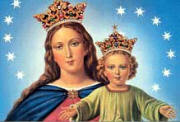
Bethlehem is emphatically a place where extremes meet. Here begins, it is needless to say, another mighty influence for the humanization of Christendom. If the world wanted what is called a non-controversial aspect of Christianity, it would probably select Christmas. Yet it is obviously bound up with what is supposed to be a controversial aspect (I could never at any stage of my opinions imagine why); the respect paid to the Blessed Virgin. When I was a boy a more Puritan generation objected to a statue upon my parish church representing the Virgin and Child. After much controversy, they compromised by taking away the Child. One would think that this was even more corrupted with Mariolatry, unless the mother was counted less dangerous when deprived of a sort of weapon. But the practical difficulty is also a parable. You cannot chip away the statue of a mother from all round that of a newborn child. You cannot suspend the new-born child in mid-air; indeed you cannot really have a statue of a newborn child at all. Similarly, you cannot suspend the idea of a newborn child in the void or think of him without thinking of his mother. You cannot visit the child without visiting the mother, you cannot in common human life approach the child except through the mother. If we are to think of Christ in this aspect at all, the other idea follows I as it is followed in history. We must either leave Christ out of Christmas, or Christmas out of Christ, or we must admit, if only as we admit it in an old picture, that those holy heads are too near together for the haloes not to mingle and cross. 

Monday, December 8, 2014

Regina Angelorum by G.K. Chesterton


OUR LADY went into a strange country,
Our Lady, for she was ours,
And had run on the little hills behind the houses
And pulled small flowers;
But she rose up and went into a strange country
With strange thrones and powers.


And there were giants in the land she walked in,
Tall as their toppling towns,
With heads so high in heaven, the constellations
Served them for crowns;
And their feet might have forded like a brook the abysses
Where Babel drowns.


They were girt about with the wings of morning and evening,
Furled and unfurled,
Round the speckled sky where our small spinning planet
Like a top is twirled;
And the swords they waved were the unending comets
That shall end the world.


And moving in innocence and in accident,
She turned the face
That none has ever looked on without loving
On the Lords of Space;
And one hailed her with her name in our own country
That is full of grace.


Our Lady went into a strange country
And they crowned her queen,
For she needed never to be stayed or questioned
But only seen;
And they were broken down under unbearable beauty
As we have been.


But ever she walked till away in the last high places,
One great light shone
From the pillared throne of the king of all the country
Who sat thereon;
And she cried aloud as she cried under the gibbet
For she saw her son.


Our Lady wears a crown in a strange country,
The crown he gave,
But she has not forgotten to call to her old companions
To call and crave;
And to hear her calling a man might arise and thunder
On the doors of the grave.


~G.K. Chesterton

Thursday, September 18, 2014

A Quote from G.K. Chesterton

"Happiness is not only a hope, but also in some strange manner a memory ... we are all kings in exile."
                                                                             
G.K. Chesterton

Friday, May 16, 2014

G. K. Chesterton: "Our Father is younger than we"

“Because children have abounding vitality, because they are in spirit fierce and free, therefore they want things repeated and unchanged. They always say, "Do it again"; and the grown-up person does it again until he is nearly dead. For grown-up people are not strong enough to exult in monotony. But perhaps God is strong enough to exult in monotony. It is possible that God says every morning, "Do it again" to the sun; and every evening, "Do it again" to the moon. It may not be automatic necessity that makes all daisies alike; it may be that God makes every daisy separately, but has never got tired of making them. It may be that He has the eternal appetite of infancy; for we have sinned and grown old, and our Father is younger than we.” 
                                                                                      ― G.K. Chesterton

Wednesday, February 19, 2014

Fr. Robert Barron: Holy Priests, Crazy Prophets, Bold Kings

The following comes from Real Clear Religion:


A classic characterization of Jesus is that he is priest, prophet, and king. As priest, he sanctifies, that is to say, he reestablishes the lost link between divinity and humanity; as prophet, he speaks and embodies the divine truth; and as king, he leads us on the right path, giving guidance to the human project. You might say that, as priest, he is the life; as prophet, he is the truth; and as king he is the way.
Not only is this munus triplex (triple office) a rich way to characterize the Lord; it is also a very good way to designate who the baptized are supposed to be. According to Catholic theology, baptism is much more than merely a symbolic sign of belonging to the church. It is the means by which a person is incorporated into Christ, becoming a member of his mystical body. Baptism, accordingly, makes the baptized an alter Christus, another Christ. This is precisely why, for example, every candidate for baptism is anointed with oil, just as, in the Old Testament, priests, prophets, and kings were anointed upon assumption of their offices.
So what does this look like in practice? How does it show itself in the lives of ordinary believers?
Let us look at priesthood first. A priest fosters holiness, precisely in the measure that he or she serves as a bridge between God and human beings. In ancient Roman times, the priest was described as a pontifex, bridge-builder, and this remains a valid designation in the Christian context. The reconciliation of divinity and humanity produces in human beings a wholeness or integration, a coming together of the often warring elements within the self. The same dynamic obtains on a grander scale as well: when cities, societies, cultures rediscover a link to God, they find an inner peace.
And therefore baptized priests are meant, first, to embody the harmony that God wants between himself and those made in his image and likeness. They affect this through their own intense devotion to prayer, the sacraments, and the Mass. In their cultivation of a real friendship with the living Christ, they act out their priestly identity and purpose. Then, they are sent out into families, communities, places of work, the political and cultural arenas, etc. in order to carry the integration they have found like a holy contagion. If baptized priests stop praying, stop going to Mass, stop frequenting the sacraments, they will become, in short order, like salt that has lost its savor.
What does it mean for the average baptized person to be a prophet? A person is a prophet in the measure that he or she bears the truth of God. G.K. Chesterton said that in an upside-down world such as ours, the prophet is the one who stands on his head so that he might see things aright. This is why, of course, prophets have always appeared more than a little insane. In fact, the Hebrew word for prophet, nabi, has the overtone of madman. Well, of course: in a world that has lost its bearings, those who speak the divine truth will, perforce, appear unhinged.
How does one cultivate this salutary madness? Baptized prophets should exercise their brains by studying philosophy, theology, spirituality, church history, and the lives of the saints. And they can't be satisfied with reading superficial tracts designed for children. Augustine, Origen, Bernard, Thomas Aquinas, Ignatius, John Henry Newman, Chesterton, and Ratzinger beckon. If those classic authors are a bit intimidating, Fulton Sheen, C.S. Lewis, Peter Kreeft, George Weigel, and Robert Spitzer provide more accessible but still meaty fare. Having been illumined, these prophets are then sent out into their worlds as beacons of light. God knows that in our increasingly secularized society, such illumination is desperately needed, but if baptized prophets stop studying and stop speaking, they are like lamps over which a bushel basket has been placed.
Finally, what does it mean for the ordinary Catholic to be a king? In the theological sense, a king is someone who orders the charisms within a community so as to direct that community toward God. In this way, he is like the general of an army or the conductor of an orchestra: he coordinates the efforts and talents of a conglomeration of people in order to help them achieve a common purpose. Thus, a Catholic parent directs her children toward the accomplishment of their God-given missions, educating them, shaping them interiorly, molding their behavior, disciplining their desires, etc. A Catholic politician appreciates the moral dimension of his work, and legislates, cajoles, and directs accordingly. A Catholic private equity investor saves a company that provides indispensable jobs in a declining neighborhood, etc.
How does one grow in the capacity to exercise kingly leadership? One can do so by overcoming the cultural prejudice in favor of a privatized religion. Most of the avatars of secularism would accept religion as a personal preoccupation, something along the lines of a hobby. But such an attenuated spirituality has nothing to do with a robustly Biblical sense of religion. On the Catholic reading, religious people -- the baptized -- come forth boldly and publicly and are more than willing to govern, to be kings, out of religious conviction. If you are looking for examples of what I'm describing here, look no further than William Lloyd Garrison, Fulton Sheen, Martin Luther King, Jr., or Dorothy Day. Baptized kings who refuse to reign are like a hilltop city covered in clouds.
The key to the renewal of our society is a recovery of the deepest meaning of baptism, to become priestly, prophetic, and kingly people.

Friday, September 27, 2013

The Anchoress: The Key to Pope Francis


The following comes from Elizabeth Scalia:
The Holy Father continues to speak with a sharp sense of urgency:
“Yes, you have to come to know Jesus in the Catechism – but it is not enough to know Him with the mind: it is a step. However, it is necessary to get to know Jesus in dialogue with Him, talking with Him in prayer, kneeling. If you do not pray, if you do not talk with Jesus, you do not know Him. You know things about Jesus, but you do not go with that knowledge, which He gives your heart in prayer. Know Jesus with the mind – the study of the Catechism: know Jesus with the heart – in prayer, in dialogue with Him. This helps us a good bit, but it is not enough. There is a third way to know Jesus: it is by following Him. Go with Him, walk with Him.”
It is necessary, “to go, to walk along the streets, journeying.” It is necessary, said Pope Francis, “to know Jesus in the language of action.” Here, then, is how you can really know Jesus: with these “three languages ​​- of the mind, heart and action.” If, then, “I know Jesus in these ways,” he said in conclusion, “I involve myself with Him”​​:
“One cannot know Jesus without getting oneself involved with Him, without betting your life [on] Him. When so many people – including us – pose this question: ‘But, who is He?’, The Word of God responds, ‘You want to know who He is? Read what the Church tells you about Him, talk to Him in prayer and walk the street with him. Thus, will you know who this man is.’ This is the way! Everyone must make his choice.”
This reminds me of what are purported to be Chesterton’s last words:
Within the Spadaro Interview, one comment of Francis’ hasn’t been given much attention, but it is important. It is part of the key to the man and all that motivates him:
“I pray the breviary every morning. I like to pray with the psalms. Then, later, I celebrate Mass. I pray the Rosary. What I really prefer is adoration in the evening, even when I get distracted and think of other things, or even fall asleep praying. In the evening then, between seven and eight o’clock, I stay in front of the Blessed Sacrament for an hour in adoration. But I pray mentally even when I am waiting at the dentist or at other times of the day.
The prayer is the key. Without it, we can know the Catechism back and forth, and we can seek to serve others and look for Christ in each other, but the root of all of that — the root that feeds our understanding of the books and helps us to see Christ in others, and to recognize the promptings of the Holy Spirit — is prayer. Daily prayer is what nourishes all of the rest: feeds it, supports it, connects it, grounds it, as Mary grounded Martha.
If you find yourself an admirer of Francis who doesn’t know what to do about it, start with prayer.
And if you’re tepid about Francis — if he scares you a bit, and you’re not sure what he is about — start with prayer, too.
All prayer is good; like Francis, I love the Divine Office — I love praying with and through the psalms. If you’re not sure how to do that, you can learn here, or check out Daria Sockey’s excellent The Everyday Catholic’s Guide to the Liturgy of the Hours

Thursday, August 29, 2013

A Theist or Atheist?


The following comes from Fr. Dwight Longenecker: 
HuffPo reports that an atheist in New Jersey has succeeded in getting a license plate that reads ATHE 1ST. The problem is the statement is ambiguous. What if I read it and conclude that the driver is… A theist? That’s the problem with atheists…they haven’t thought of all the possibilities.
Their advertising stunts are so lame. What about the one in Times Square last year which showed encouraged people to enjoy Santa Claus, but not Christ because Christ was a myth? Duh. So Santa is real? Then there is the really, really smart clever and witty bus signs posted in England that said something like, “God probably doesn’t exist so enjoy yourself.” Is that it? Is that all they could think of? Is that the extent of their wit, their wordplay, their badinage? What about the super dull bus poster above? And advertising on a bus to start with? Who advertises on a bus? Can’t help thiking of nuns on the bus. It’s much the same sort of tiresome, self righteous, yawn inducing activism.
And people say Christianity is boring?
Geesh, Christianity is very interesting compared to these yawners. I mean we’ve got cool stuff like snake handlers, incorrupt bodies of saints, relics, Eucharistic miracles, statues that weep and bleed, apparitions of the Blessed Virgin Mary and more. We’ve got monks who brew beer and nuns who levitate. We’ve got saints who bi-locate, exist for years on nothing but the Eucharistic and joke with their torturers. You might not believe any of that stuff or think it’s all some sort of psychosis, but at least it’s interesting. Furthermore, we have fun stuff like pilgrimages, and World Youth Day, and all night vigils and climbing the Santa Scala on your knees–not to mention wild places like Antonio Gaudi’s cathedral in Barcelona, Mont St Michel, the catacombs or that Capuchin cellar in Rome with all the bones.
Atheism on the other hand is so mind numbingly dull, and the worst kind of atheism is the self righteous, “We’re good people too you know” kind of atheism. “Oh, look at me. I’m working at the soup kitchen!  I campaigned to ban nuclear power! I have a ‘co-exist’ bumper sticker on my Prius.” They pretend to be revolutionaries, but to me they seem as dull as the McMansion next door and the usual suburban, fast food, shop at the mall American. At least the old fashioned atheists followed their logic and tried to wipe out everyone who didn’t agree with them. Stalin, Lenin, Mao and Pol Pot had teeth. The present day respectable atheists are about as interesting as yesterday’s oatmeal.
They’re bland. “It’s a case of the bland leading the bland…and they shall both fall into the ditch.”
Not only dull, but humorless. The closest thing to wit I’ve ever experienced with atheists is a bit of sophomoric sarcasm. They’re always so darned serious…especially about themselves. Not only dull, but a little bit spooky.
The conversation with atheists always lacks a certain edge. There’s a slipperiness to it and a lack of grip–like wrestling in jello with a one armed man. I have thought long and hard about this phenomenon and I think it is because the theist is arguing from a positive proposition and the atheist is arguing from a negation. The theist is arguing in support of something positive. The atheist can only deny. That denial and essential negativity culminates in a vagueness about everything–their mindset seems dull and out of focus.
The bottom line is that if there is no God, no heaven and no hell and no final judgement then what’s the point? The weary dullness of the atheist is a true reflection. Without an afterlife and a final tally then there are only two options: the old Greek choice– Epicureanism and Stoicism. The first is, “Eat, Drink and be merry for tomorrow you die.” The second is “Be good. Be noble… for tomorrow you die.”
It’s like we’re all on the deck of a sinking cruise liner with no lifeboats. The Epicureans sit down to a five course meal and try to hold on while the tables slip away. The Stoic stands on the deck, gazes into the distance and goes down with the ship.
The Christian spots a distant light, believes it is a rescue ship, dons a life jacket and jumps in to swim for it or die in the attempt.
Chesterton writes better on this subject here.