Showing posts with label immigration. Show all posts

Tuesday, January 21, 2014

Pope Francis visits Sacred Heart Basilica; A Salesian Parish serving the young, poor and homeless of Rome

 Pope Francis, the Bishop of Rome, made a pastoral visit to one of his parishes Sunday, choosing one situated in an area filled with migrants, refugees, homeless persons, and itinerants.

During his Jan. 19 visit to Sacred Heart of Jesus at the Praetorian Barracks, Pope Francis said Mass in the evening and met with members of the parish, including the homeless who live near Rome’s large Termini train station.

While located in Rome's geographical center, three miles east of the Vatican, Sacred Heart is in an “existential periphery” of the city.

“Initially (Pope Francis) said, ‘I don’t want to go to a church in the center of Rome, but on the outskirts,’” the parish's pastor, Fr. Valerio Baresi, a Salesian, told CNA Jan. 20.

“Then he realized we, because we are in the center of Rome – we’re across from Termini station – that we live in the reality of an existential periphery, because here there are numerous poor people, looking to survive near the station.”

Termini is Rome's main railway station, connecting it to Europe and Italy's major cities; it is also a metro station, where the city's two main lines intersect.

Sacred Heart offers special outreach to the diverse populations who arrive at Termini, often living on the peripheries of society. Each Thursday the parish hosts a get-together with games, songs, reading the upcoming Sunday gospel together, as well as a dinner. On Friday, a group of young people bring dinner to the homeless at Termini station.

“It’s not just that we give them something to eat: above all, we create relationships,” explained Fr. Baresi.

The many activities are run by both the Salesian priests at the parish and a group of missionary sisters from Argentina. Together, they work “with the youth” rather than “for the youth” of the parish, forming the young people to be able to enter into the work of service with people from all over the world.

“It’s beautiful to see the young refugees together with the young Italians - mutual enrichment, one learning from the other, one teaching the other,” reflected Fr. Baresi.

Sacred Heart, which serves over 400 refugees every year, also offers Italian classes, education for a middle school diploma, and a driving school, “so that they can find it easier to enter into the world of work.”

During his homily for Mass, Pope Francis preached on Christ as the “lamb of God,” taking on the “weakness” of humanity.

Christ “takes away many sins with love,” preached the Bishop of Rome. He “is full of love, close to the small, close to the poor: he was there among the people.”

The city's bishop also emphasized the profundity of God's forgiveness.

“Maybe we have torment in the heart, darkness in the heart, maybe one feels sad for a sin… but (Jesus) came to take on all the sins … this is the salvation of Jesus.”

Jesus came to bring “peace in the world, but first in the heart,” he said.

“We must grow in faith in Jesus.”

Often we have faith in a doctor, or a brother or sister, to help us, and “it is good to have faith in humanity. But don’t forget to have faith in the Lord! This is the key to life.”

“Jesus never deludes, never, eh? Never – listen well, you young people who are starting life: Jesus never deludes!”

Pope Francis then led the congregation in an Ignatian-style meditation about Sunday’s gospel reading.

“I invite you to do something. Close your eyes. Let us imagine this scene. We arrive at the river. There is John the Baptist, and Jesus passes by. We hear the voice of John the Baptist, ‘behold the lamb of God’, and now we hear the voice of Jesus in each one of us, in the silence of our hearts.”

Following the Mass, a Ghanaian refugee, Steven, told CNA he appreciates Sacred Heart because “here they have respect for everyone – we are all like family here, we don’t have a difference between refugees or the people who live in Rome.”

Steven met Pope Francis during the pastoral visit, and said that when he asked the Pope to pray for him, he replied, “pray for me too.”

“One thing he said that was very interesting for me,” Steven added, is “he said that no one here can save us – only God will save us.”

Monday, January 20, 2014

‘Immigrant Pope’ pope visits Rome’s immigrant parish

Here is another article on the Pope's visit to our Salesian Parish in Rome (The Basilica of the Sacred Heart).  The following comes from John Allen at NCR:
Pope Francis, who already profiles as the “immigrant pope” both due to his arriving in Rome from “the ends of the earth,” as he said on the night of his election, and because of his strong advocacy on behalf of migrants and refugees, made another clear statement of solidarity Jan. 19 by visiting a Roman parish known for outreach to immigrants and the poor.
Not coincidentally, the visit came on a day set aside by the Catholic church as the “World Day of Migrants and Refugees.” Francis released a message for the occasion back in August, insisting that migrants and refugees “are not pawns on the chessboard of humanity.”
The pope’s visit today to the parish of Sacro Cuore di Gesù a Castro Pretorio was obviously intended to drive that point home.
During his afternoon outing to the parish, which is located near the main Roman train station of Termini, the pope met with both roughly 60 homeless persons who live in the area and a delegation of 100 young immigrants along with parish volunteers who work with them.
The visit builds on frequent mentions over the past ten months by Francis of immigrants as primary victims of a “throw-away culture,” as well as his July 8 visit to Lampedusa, an island in the southern Mediterranean that serves as a major point of arrival for migrants and refugees from Africa and the Middle East seeking to reach Europe.
On that occasion, Francis condemned a “globalization of indifference” to immigrants and laid a wreath in the sea to commemorate the estimate 20,000 people who have died over the last two decades trying to make the crossing.
During his Sunday Angelus address earlier on Jan. 19, Francis told immigrants that “you are close to the heart of the church” and said that he thinks often of the hardships many of them are forced to endure.
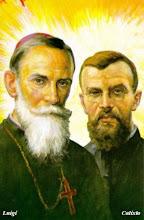
The pope cited Blessed Giovanni Battista Scalabrini, a 19th century Italian bishop who founded a religious order specialized in the care of migrants and refugees, to condemn “merchants of human flesh” who traffic in migrants.
The pope also called on wealthy nations to be “welcoming” of immigrants and to “preserve their values.”
During his parish visit, Francis also met children baptized within the past year as well as their parents, newly married couples and young families. He also heard five confessions and celebrated a Mass.
The parish of Sacro Cuore di Gesù a Castro Pretorio was constructed by Italian St. John Bosco at the request of Pope Leo XIII, and is entrusted to Bosco’s Salesian order. It’s long had a special focus on the homeless and immigrant population that tends to congregate around the Termini train station.
Salesian Fr. Valerio Baresi, the pastor, said that the parish offers Italian language classes, vocational training, and other services to roughly 400 immigrants and asylum seekers every year.
“We’re situated in a context of fairly degrading human circumstances, related to so many people who, either because they’re immigrants or they’re homeless, try to ‘camp out’ in the are around the station,” Baresi told Vatican Radio.
“We can’t pretend not to see them, or to ignore them,” he said.
This was Francis’ fourth visit to a Roman parish, after outing to St. Elizabeth and Zechariah on May 26, St. Cyril of Alexandria on Dec. 1, and St. Alfonso Maria Liguori on Jan. 6. On that last visit, the pope witnessed a “living nativity set” organzied each year by members of the parish.
During his brief and entirely extemporaneous homily, Francis reflected on the gospel reading of John the Baptist's proclamation upon seeing Jesus: 'Behold the lamb of God, who takes away the sins of the world.' Francis invited the congregation to close their eyes and imagine the scene, saying something to Jesus in the silence of their hearts, and also insisted that "Jesus never disappoints us."
Francis’ interest in service to the poor was also reflected in his 40-minute encounter the evening before his parish visit with 101-year-old Italian Fr. Arturo Paoli, a member of the “Little Brothes of the Gospel” religious order inspired by Blessed Charles de Foucauld.
Paoli was active in the the Italian resistence to fascism in the 1940s before spending much of the 1960s and 70s in Latin America, where he became one of the forerunners to the liberation theology movement.
A brief notice from Vatican Radio said Paoli had expressed a strong desire to see Francis, whom he knew as a Jesuit provincial in Argentina in the 1970s, and that the pope welcomed him for a lengthy private meeting at the Casa Santa Marta, the Vatican residence where Francis resides.

Francis: “Even the greatest sins can be forgiven”

Pope Francis visits the last church built by Don Bosco!  Yesterday he visited the Salesian Basilica of the Sacred Heart in Rome!  The following comes from the Vatican Insider:

This afternoon Francis visited Rome’s Sacro Cuore Basilica, a parish that serves a part of the city considered an “existential periphery”: “Faith is the key to success in life”

GIACOMO GALEAZZIROME
“Even lorryfuls of sin can be forgiven. Faith is the key to success in life,” Francis warned. People from all over Rome braved the rain and went to meet Francis, the Pope who wants a poor Church for the poor. They were joined by the homeless people who spend their days out in the freezing cold at Rome’s Termini railway station or the gardens in Piazza Vittorio.

“So often we place our trust in one person, in our brothers and sisters who want to help us but forget about trusting in the Lord. And yet this is the key to success in life: I place my trust in you, that’s the bet we have to make,” Francis said. 

The parish of the Basilica dedicated to the Sacred Heart of Jesus and run by the Salesians of Don Bosco, is the fourth parish Francis has visited since his election. The church and oratory were founded by Don Bosco. While at the altar of the Basilica of Our Lady Help of Christians on 16 May 1887 – a year before his death – Don Bosco felt so moved by the memory of what the Virgin Mary had foretold 62 years earlier – “All will become clear to you in time” – that he wept.

There are people who have been tainted by sins that are so great “it would take a lorry to carry them.”  Francis used this imagery to remind faithful of how sinful they can be.

Upon his arrival at the Basilica, Francis was met by Giuseppe Versaldi, Cardinal-Deacon of Sacro Cuore di Gesù and President (though not yet confirmed as such) of Prefecture for the Economic Affairs of the Holy See, the Vicar of Rome Agostino Vallini, the Auxiliary Matteo Zuppi and the Salesian bishop Mario Toso, Secretary of the Pontifical Council for Justice and Peace.

In his homily for the mass celebrated in the the Basilica of Sacro Cuore di Gesù in Rome’s Castro Pretorio area, Francis said “We must listen to John the Baptist who proclaims Jesus as Saviour and must grow, trusting in Jesus.” Focusing on the Gospel passage where Jesus arrives at the Jordan River to be baptised and John the Baptist says: “Behold, the lamb of God who takes away the sins of the world.” “Jesus never stopped being a meek, good and loving lamb that is close to children and the poor; he was there among the people,” Francis said.

“He healed everyone, he taught and prayed, but Jesus was very weak, like a lamb. Still, he had the strength to carry all of our sins on his shoulders. All of them,” Francis continued. “No father, you don’t know what I’ve done in my life. I’ve committed to many sins, a lorry couldn’t hold them,” Francis said illustrating his point. “Often, when we look deep into our conscience, we see big ones, but that’s what he came for, to bring peace tot he world!” “Maybe we feel torment in our hearts, maybe there is darkness in our hearts, we may be sad because we feel guilt: he came to take all of that away, he brings peace, he forgives all,” Francis said.

“This is Jesus’ strength,” Francis said. “His love and meekness.” The Pope invited faithful to “grow, trusting in Jesus.” “We often place our trust in doctors and that’s good because doctors heal us. We place our trust in people, our brothers or sisters and it’s good to have this human trust. But let us not forget to trust in the Lord: this is the key to having success in life: having faith in the Lord.”

And if “trusting” seems like a “gamble”, Francis said the Lord “never lets us down.” This message was aimed especially at young people who are starting out in life: “Jesus never lets us down.” “Let us close our eyes and imagine that scene, on the banks of the River Jordan: While John is baptising Jesus, he says to him:  “Behold, the lamb of God”.”  “Let each one of us say something to Jesus in silence, something from the heart,” the Pope told faithful gathered in the Basilica dedicated to the Sacred Heart of Jesus.

“The Lord Jesus is meek and good, just like a lamb. And he was baptised even though he did not need to be. John felt his strength. Behold, the Lamb of God. This is Jesus who gives us the strength of hope. He is called the Lamb and takes away the sins of the world. With all his love and meekness he never stopped being God and man, filled with love and always by children’s side. He taught and prayed and was very weak but he was strong enough to bear the weight of the world’s evils on his shoulders.” 

Monday, July 8, 2013

Pope Francis at Lampedusa: Don't give into the 'globalization of indifference'

The following comes from Rome Reports: 

Pope Francis celebrated Mass in Lampedusa. That's the Italian island, where  dozens of illegal immigrants, arrive every day. The altar itself, was very symbolic. The base was a boat, that was used by group of North African migrants, who fled their native land, inhopes of a better future

During his homily, Pope Francis said one should not get accustomed to the suffering of others. He also denounced the 'globalization of indifference.' 


FRANCIS “We see a person, on the brink of death, laying out on the street and we think 'poor man.' Yet we carry on with our day. We think: It's not my responsibility...and we feel justified by this notion.' Who has cried for these people who lost their lives on a boat? For the young mothers who  traveled with their children? For those men, who are looking for means to support their families? We are a society that has forgotten the experience of shedding tears, of suffering amid  the globalization of indifference.” 
The Pope wore his purple papal robes, to mark a penitential ceremony. He asked God for forgiveness in light of the indifference that has dominated this social issue. 

FRANCIS “Lord, we ask  forgiveness, for those who with their laws and decisions have created situations, that have led to these tragedies. Forgive us, Lord.”
Before leaving the Pope thanked the residents of the island. He described them as a light that the world must acknowledge. He also called on both individuals and worldwide leaders to show the same courage, the community of Lampedusa has shown, by welcoming immigrants who flee their countries in search of a better life. 

Tuesday, November 1, 2011

POPE BENEDICT: MIGRANTS ALSO NEED NEW EVANGELIZATION


The following comes from Zenit.org:


The Church has to meet the challenge of helping migrants to keep their faith, even if their destination countries provide less support than their native cultures, says Benedict XVI.
This is the theme taken up by the Pope's message for the World Day of Migrants and Refugees, which will be celebrated Jan. 15.
The message was released by the Vatican today.
"Today we feel the urgent need to give a fresh impetus and new approaches to the work of evangelization in a world in which the breaking down of frontiers and the new processes of globalization are bringing individuals and peoples even closer," the Holy Father wrote. "This is both because of the development of the means of social communication and because of the frequency and ease with which individuals and groups can move about today. In this new situation we must reawaken in each one of us the enthusiasm and courage that motivated the first Christian communities to be undaunted heralds of the Gospel's newness."
The Pontiff observed how migrants often are "constrained to consider [Christ] no longer relevant to their lives, to lose the meaning of their faith, no longer to recognize themselves as members of the Church, and often lead a life no longer marked by Christ and his Gospel."
He said that their emigration often implies leaving behind "peoples characterized by their Christian faith" and finding themselves in countries with a Christian minority or where faith "has been reduced to a cultural fact."
"Here the Church is faced with the challenge of helping migrants keep their faith firm even when they are deprived of the cultural support that existed in their country of origin, and of identifying new pastoral approaches, as well as methods and expressions, for an ever vital reception of the Word of God," the Pope continued. "In some cases this is an opportunity to proclaim that, in Jesus Christ, humanity has been enabled to participate in the mystery of God and in his life of love. Humanity is also opened to a horizon of hope and peace, also through respectful dialogue and a tangible testimony of solidarity. In other cases there is the possibility of reawakening the dormant Christian conscience through a renewed proclamation of the Good News and a more consistent Christian life to enable people to rediscover the beauty of the encounter with Christ who calls Christians to holiness wherever they may be, even in a foreign land."
The Holy Father exhorted Christian communities to be close to migrant workers and their families, not only "accompanying them with prayer, solidarity and Christian charity," but also "fostering new political, economic and social planning that promotes respect for the dignity of every human person, the safeguarding of the family, access to dignified housing, to work and to welfare."
He also mentioned international students and their particular situation. At the presentation of the World Day message, it was announced that these students are expected to number 7 million by the year 2025.
"Christian communities are to be especially sensitive to the many young men and women who, precisely because of their youth, need reference points in addition to cultural growth, and have in their hearts a profound thirst for truth and the desire to encounter God," the Pope said. "Universities of Christian inspiration are to be, in a special way, places of witness and of the spread of the new evangelization, seriously committed to contributing to social, cultural and human progress in the academic milieu. (...) If these students meet authentic Gospel witnesses and examples of Christian life, it will encourage them to become agents of the new evangelization."
The Pontifical Council for Migrants and Travelers is in the process of organizing a world conference on the pastoral care of international students. The congress, scheduled for Nov. 30 to Dec. 3 in Rome will focus on the theme "International Students and the Meeting of Cultures."