Blessed Pope Paul VI may be on his way to canonization! The following comes from La Stampa:
In a special issue entitled “It will be the year of Paul VI Saint”, the weekly magazine of the diocese of Brescia, La voce del popolo, writes that on 13 December, theologians of the Vatican Congregation for the Causes of Saints recognized a miracle attributed to the intercession of Pope Montini, after a first free go-ahead had been given by the medical consultation of the Vatican Congregation itself. At this point it is necessary that the cardinals of the Congregation and, finally, the Pope express themselves on the same miracle.
The miracle regards the birth of a girl from Verona called Amanda, who in 2014 had survived for months despite the fact the placenta was broken.
Pope Francis beatified his predecessor on 19 October 2014, concluding the extraordinary Synod of Bishops on the Family.
“Rumors are so insistent and the next steps so fast to take, that everything indicates 2018 as Blessed Paul VI’s canonization year”, writes the diocesan newspaper of Brescia. The last official stage took place last December 13 in the theological commission. The miracle attributed to the intercession of John Baptist Montini about the healing of a fetus in prenatal age in 2014 was approved. The expectant mother native from Verona, at risk of miscarriage, a few days after the beatification of Montini in Brescia, went to the Sanctuary “delle Grazie”, to pray to the newly beatified Pope.
Subsequently, a child in good health was born. After the doctors and theologians’ recognition, there are still a few more steps to be taken: the passage in the commission of cardinals, the final approval of the Pope and that of the Consistory with the official announcement and the definition of the date. But at this point, it is more than a hope. The month of October could be the right one. From 3 to 28 October in Rome, the 15th Ordinary Assembly of the Synod of Bishops on young people will be celebrated and will gather in the Vatican prelates from all over the world. What better opportunity to canonize in front of such a large portion of the College of Bishops, the other pontiff, after Saint John XXIII of the Second Vatican Ecumenical Council? It will most likely take place on one of the first three Sundays of October, even if the most accredited date today seems to be the 21. Indeed, sooner or later, in 2018 Paul VI will be Saint! We praise the Lord to Whom we entrust the year that will come”.
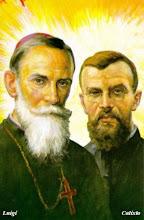
Giovanni Battista Montini, was born on 25th September, 1897. As a priest and later as Archbishop of Milan he had great love for Don Bosco and was a great supporter of Salesian works on behalf of poor youth. He was elected pope on June 21, 1963 and was responsible for steering the Second Vatican Council initiated by his predecessor to its final conclusion. In 1965 Fr. Louis Ricceri was elected the 6th successor of Don Bosco and responded promptly to the Pope’s call to renewal in line with the council’s teachings by convoking the (Special) 20th General Chapter. In 1972 Pope Paul VI beatified Michael Rua, the second successor of Don Bosco and in 1976 declared Bishop Louis Versiglia and Fr. Callistus Caravario martyrs. He raised the status of the Salesian Pontifical Atheneo into a Pontifical University. A year before his death Fr. Egidius Viganò was elected the 7th successor of Don Bosco at the 21st General Chapter at the new Salesian Residence at Via della Pisana in Rome. Pope Paul VI died on 6th August, 1978. His magisteral discourses during the special audiences held at the two general chapters are part of the Salesian legacy.
Greetings to you, Brethren, and sons and daughters of the United States of America! We welcome you in the name of the Lord!
The entire Catholic Church, here, at the tomb of the Apostle Peter, welcomes you with festive joy. And together with you, the entire Catholic Church sings a hymn of heavenly victory to Saint John Nepomucene Neumann, who receives the honor of one who lives in the glory of Christ.
In a few brief words we shall describe for the other pilgrims some details of his life, which are already known to you.
We ask ourselves today: what is the meaning of this extraordinary event, the meaning of this canonization? It is the celebration of holiness. And what is holiness? It is human perfection, human love raised up to its highest level in Christ, in God.
At the time of John Neumann, America represented new values and new hopes. Bishop Neumann saw these in their relationship to the ultimate, supreme possession to which humanity is destined. With Saint Paul he could testify that “all are yours, and you are Christ’s, and Christ is God’s” (1 Cor. 3, 22). And with Augustine he knew that our hearts are restless, until they rest in the Lord (S. AUGUSTINI Confessiones, 1, 1).
His love for people was authentic brotherly love. It was real charity: missionary and pastoral charity. It meant that he gave himself to others. Like Jesus the Good Shepherd, he lay down his life for the sheep, for Christ’s flock: to provide for their needs, to lead them to salvation. And today, with the Evangelist, we solemnly proclaim : “There is no greater love than this: to lay down one’s life for one’s friends” (Io. 15, 13).
John Neumann’s pastoral zeal was manifested in many ways. Through faithful and persevering service, he brought to completion the generosity of his initial act of missionary dedication. He helped children to satisfy their need for truth, their need for Christian doctrine, for the teaching of Jesus in their lives. He did this both by catechetical instruction and by promoting, with relentless energy, the Catholic school system in the United States. And we still remember the words of our late Apostolic Delegate in Washington, the beloved Cardinal Amleto Cicognani: “You Americans”, he said, “possess two great treasures: the Catholic school and the Confraternity of Christian Doctrine. Guard them like the apple of your eye” (Cfr. Epistola 2 iunii 1963).
And who can fail to admire all the loving concern that John Neumann showed for God’s people, through his priestly ministry and his pastoral visitations as a Bishop? He deeply loved the Sacramental of Reconciliation: and like a worthy son of Saint Alphonsus he transmitted the pardon and the healing power of the Redeemer into the lives of innumerable sons and daughters of the Church. He was close to the sick; he was at home with the poor; he was a friend to sinners. And today he is the honor of all immigrants, and from the viewpoint of the Beatitudes the symbol of Christian success.
John Neumann bore the image of Christ. He experienced, in his innermost being, the need to proclaim by word and example the wisdom and power of God, and to preach the crucified Christ. And in the Passion of the Lord he found strength and the inspiration of his ministry: Passio Christi conforta me!
The Eucharistic Sacrifice was the center of his life, and constituted for him what the Second Vatican Council would later call “the source and summit of all evangelization” (Presbiterorum Ordinis, 5). With great effectiveness, through the Forty Hours Devotion he helped his parishes become communities of faith and service.
But to accomplish his task, love was necessary. And love meant giving; love meant effort; love meant sacrifice. And in his sacrifice, Bishop Neumann’s service was complete. He led his people along the paths of holiness. He was indeed an effective witness, in his generation, to God’s love for his Church and the world.
There are many who have lived and are still living the divine command of generous love. For love still means giving oneself for others, because Love has come down to humanity; and from humanity love goes back to its divine source! How many men and women make this plan of God the program of their lives! Our praise goes to the clergy, religious and Catholic laity of America who, in following the Gospel, live according to this plan of sacrifice and service. Saint John Neumann is a true example for all of us in this regard. It is not enough to acquire the good things of the earth, for these can even be dangerous, if they stop or impede our love from rising to its source and reaching its goal. Let us always remember that the greatest and the first commandment is this: “You shall love the Lord your God” (Matth. 22, 36).
True humanism in Christianity. True Christianity-we repeat -is the sacrifice of self for others, because of Christ, because of God. It is shown by signs; it is manifested in deeds. Christianity is sensitive to the suffering and oppression and sorrow of others, to poverty, to all human needs, the first of which is truth.
Our ceremony today is indeed the celebration of holiness. At the same time, it is a prophetic anticipation-for the Church, for the United States, for the world-of a renewal in love: love for God, love for neighbor.
And in this vital charity, beloved sons and daughters, let us go forward together, to build up a real civilization of love.
Saint John Neumann, by the living power of your example and by the intercession of your prayers, help us today and for ever.
It’s either God’s Providence or just the natural course of writing extensively on the Blessed Virgin Mary for nearly 2 ½ years, but today’s “Mondays with Mary”, the 125thblog post in this series, corresponds with the Beatification of Pope Paul VI. It was his document, Mense Maio, which inspired me to begin writing these weekly posts on the Blessed Virgin Mary on May 6, 2012. To learn about the story of how “Mondays with Mary” began, I encourage you to read the very first blog post in this series.
As I reflect back on the 2 ½ years and the 124 blog posts focusing on the great Theotokos, I am somewhat shocked that I have written so much on Mary, but also realize there is so much I have yet to write. There are some important Marian apparitions and titles that have yet to be written as well as not getting to the final chapter in the Second Vatican Council document, Lumen Gentium. It’s my hope in the month of November (the 50th Anniversary of the document) to write on this chapter, which focuses on Mary’s role as Maternal Mediator and Advocate. It’s also my hope that I will write more on what the Doctors of the Church have said about the Blessed Virgin.
I’ve said in my posts before that it’s an exciting time to be a Catholic. Yesterday’s beatification of Pope Paul VI is yet another indication of this time. We now have three popes that served nearly one after the other in the 20th century as saints of the Catholic Church. Although Paul VI has not been officially canonized, we know that he is there in Heaven with his predecessor, Pope St. John XXIII and his successor, Pope St. John Paul II.
In honor of our newest beatification, I now give you some of the words on the Blessed Virgin Mary from Blessed Pope Paul VI -
1. “This pious practice, by which the Blessed Virgin Mary is honored and the Christian people enriched with spiritual gifts, gladdens and consoles us. Mary remains ever the path that leads to Christ. Every encounter with her can only result in an encounter with Christ himself” – Mense Maio #2
2. “The general norm ‘Through Mary to Jesus’ is therefore valid also for the imitation of Christ. Nevertheless, let our faith not be perturbed, as if the intervention of a creature in every way similar to us, except as regards sin, offended our personal dignity and prevented the intimacy and immediacy of our relationships of adoration and friendship with the Son of God.” – Signum Magnum, Part 2, Section 2.
3. “Mary is not only an example for the whole Church in the exercise of divine worship but is also, clearly, a teacher of the spiritual life for individual Christians. The faithful at a very early date began to look to Mary and to imitate her in making their lives an act of worship of God, and making their worship a commitment of their lives.” – Marialis Cultus, #21
4. “Whenever we say the rosary, the joyful mysteries thus place us once more before the inexpressible event [Annunciation] which is the center and summit of history: the coming on earth of Emmanuel, God with us.” – Gaudete in Domino, Section III.
5. “…the Church has always prayed from her earliest days, and in a special way calling on the intercession and protection of the Virgin Mary, who is the Queen of Peace” – Mense Maio #9
6. “With Christ, she sums up in herself all joys; she lives the perfect joy promised to the Church: Mater plena sanctae laetitiae. And it is with good reason that her children on earth, turning to her, who is the mother of hope and of grace, invoke her as the cause of their joy: Causa nostrae laetitiae.” – Gaudete in Domino, Section IV.
7. “…the last description of Mary’s life presents her as praying. The apostles ‘joined in continuous prayer, together with several women, including Mary the mother of Jesus, and with his brothers’ (Acts 1:4). We have here the prayerful presence of Mary in the early Church in the Church throughout all ages, for, having been assumed into heaven, she has not abandoned her mission of intercession and salvation.” – Marialis Cultus, #19
8. [St. Augustine] said, “’…Maternal consanguinity would not have benefited Mary if she had not felt more fortunate in having Christ in her heart than in her womb.’” And it is still in her that Christians can admire the example of how to fulfill, with humility and at the same time with magnanimity, the mission which God entrusts to each one in this world, in relation to his own salvation and that of his fellow beings.” – Signum Magnum, Part 2, Section 3.
9. “Nothing seems more appropriate and valuable to Us than to have the prayers of the whole Christian family rise to the Mother of God, who is invoked as the Queen of Peace, begging her to pour forth abundant gifts of her maternal goodness in midst of so many great trials and hardships.” – Christi Matri, #8
10. “On the morning of Pentecost she watched over with her prayer the beginning of evangelization prompted by the Holy Spirit: may she be the Star of the evangelization ever renewed which the Church, docile to her Lord’s command, must promote and accomplish, especially in these times which are difficult but full of hope!” – Evangelii Nuntiandi, #82
So as we celebrate the beatification of Pope Paul VI, let us ask the Blessed Virgin Mary to always show us the way to Jesus Christ and to continuously lead us to closer and close to Him each day of our lives. Blessed Pope Paul VI…Pray for Us.
As always, please feel free to share this post or copy and paste the quotes to your social media sites in order for your family and friends to experience the beauty of the Catholic Church and her Saints.
The Vatican has recognised a supposed miracle attributed to Paul VI's intercession and will beatify the late Italian pope in October, a Vatican source said on Tuesday.
According to the Italian news agency ANSA, the apparent miracle identified by the Vatican's Congregation for the Causes of Saints was the healing of an unborn baby from an otherwise incurable illness. ANSA said the beatification could occur on 19 October after the synod of bishops' meeting.
Paul VI, who reigned between 1963 and 1978, was praised for his efforts to seek closer ties with other Christian denominations but his 1968 encyclical Humanae Vitae was controversial for spelling out a ban on all forms of artificial contraception.
The miracle being considered involves the birth of a baby in California in the 1990s, although to protect the family's privacy, the child's name and city have not been released. Credere said the mother's pregnancy was at risk, and with it the life and health of the baby. Doctors advised her to terminate the pregnancy, but instead she sought prayers from an Italian nun who was a family friend. Praying, the nun placed on the woman's belly a holy card with Pope Paul's photograph and a piece of his vestment.
The baby was born healthy. For Pope Paul's sainthood cause, physicians continued monitoring the child's health up to the age of 12 and everything was normal, Credere reported.
The following comes from Seasons of Grace: Pope Paul VI, author of the 1968 encyclical Humanae Vitae (Of Human Life), will likely be beatified in the next few months, according to a report by Italian journalist Andrea Tornielli. Writing in the Italian newspaper La Stampa, Tornielli reports that the Medical Commission of the Congregation for the Causes of Saints has declared that the former pope’s healing of an unborn child is “unexplainable.” Patrizio Polisca, Benedict XVI and Francis’ personal doctor, is chair of the Medical Commission. The alleged miracle will now be studied by theologians and cardinals, before the case is forwarded to the Holy Father for approval. The case involved a pregnant woman in California in the early ‘90s. Doctors advised the mother to abort, after they found an abnormality in the developing fetus which normally results in brain damage. The woman refused and continued the pregnancy, praying for the intercession of Pope Paul VI. When the child was born, the medical team was surprised to find no evidence of defects. However, only after the child reached puberty could doctors assert with absolute confidence that he had made a full recovery. Finally last year, Father Antonio Marrazzo, C.Ss.R., postulator for the cause of canonization for Paul VI, said with confidence that “a truly extraordinary and supernatural event had occurred, thanks to the intercession of Paul VI.” Several years ago, Father Marrazzo had received a list of a number of possible miracles; and from the list, he felt that the strongest case could be made for healing of the unborn child who appeared to be healed in utero. And last year—on December 20, 2012—Pope Benedict approved the declaration of Pope Paul as a person of “heroic virtue”, granting him the title of “Venerable”. According to Catholic News Agency:
The debate over the late Pope’s cause has intensified over the past year, with doctors exchanging medical opinions until yesterday’s final verdict. Speaking at a conference on Paul VI’s visit to the Holy Land last November, the Archbishop of Milan, Cardinal Angelo Scola, said the former Pope’s beatification “should be relatively imminent.”
On Pentecost Monday 1975 a prophecy was given by Ralph Martin in St Peter’s Basilica, Rome, in the presence of Pope Paul VI. The Prophecies were given during the Closing Eucharistic Celebrations (Pentecost Monday 1975) of the International Conference of the Catholic Charismatic Renewal. This is for your discernment, but it seems like a powerful one to me.
Here are the prophecies: "Because I love you I want to show you what I am doing in the world today. I want to prepare you for what is to come. Days of darkness are coming on the world, days of tribulation… Buildings that are now standing will not be standing. Supports that are there for my people will not be there. I want you to be prepared, My people, to know only me and to cleave to me and to have me in a way deeper than ever before. I will lead you into the desert…. I will strip you of everything that you are depending on now, so you depend just on me. A time of darkness is coming on the world, but a time of glory is coming for my church, a time of glory is coming for my people. I will pour out on you all the gifts of My Spirit. I will prepare you for spiritual combat; I will prepare you for a time of evangelism that the world has never seen. And when you have nothing but Me, you will have everything: land, fields, homes and brothers and sisters and love and joy and peace more than ever before. Be ready, my people, I want to prepare you…"
"I speak to you of the dawn of a 'new age' for My church. I speak to you of a day that has not been seen before...Prepare yourselves for the action that I begin now, because things that you see around you will change; the combat that you must enter now is different; it is new. You need wisdom from Me that you do not yet have."
"You need the power of my Holy Spirit in a way that you have not possessed it; you need an understanding of My will and of the ways that I work that you do not yet have. Open your eyes, open your hearts to prepare yourselves for Me and for the day that I have now begun. My church will be different; My people will be different; difficulties and trials will come upon you. The comfort that you know now will be far from you, but the comfort that you will have is the comfort of My Holy Spirit. They will send for you, to take your life, but I will support you. Come to Me. Band yourselves together, around Me. Prepare, for I proclaim a new day, a day of victory and of triumph for your God. Behold, It is begun."
"...I will renew my Church. I will renew my people. I will make My people one. I am calling you to turn away from the pleasure of the world. I am calling you to turn away from seeking the approval of the world in your lives. I want to transform your lives...I have word for My church. I am sounding My call. I am forming a mighty army...My power is upon them. They will follow My chosen shepherd(s)..."
"Be the shepherds I have called you to be...I am renewing My church. I will free the world."
"Know that I, your God, brought Peter and Paul to Rome to witness to My glory. I have chosen you also and have brought you to Rome to bear witness to My glory, confirmed now by your shepherd. Go forth to the healing of the nations. Know that I am with you; and though you may pass through tribulation and trial, I will be with you even to the end. I am preparing a place for you in glory. Look to Me and I will deliver you from the power of the evil one. Behold I am with you now, all days, even till the end of time.
"...You have know the truth these days. You have experienced the truth these days. It is clear to you at this moment what the truth is. It is the truth of My kingdom, My kingdom that will prevail...I want you to take that truth, to rest in that truth, to believe in that truth, not to compromise it, not to lose it in confusions, not to be timid about it, but to stand simply, in love, firmly rooted in the truth as foundation stones upon which My church can have new life and new power."
Pope Benedict XVI authorized an investigation on Dec. 20 which could result in proclaiming the late pontiff, Paul VI, a saint.
The Pope formally allowed the move as the Congregation for the Causes of the Saints wrote a decree stating that Paul VI had “heroic virtue,” the first step necessary in the canonization process.
The pontiff met with congregation head cardinal Angelo Amato on Thursday to let him begin the review of the “Humanae Vitae” author.
During their meeting, the Pope also authorized the congregation to continue several other canonization processes, which are usually long and complex.
They include Italian Blessed Antonio Primaldo and Colombia native Blessed Laura of St. Catherine of Sienna, as well as one Mexican, Blessed Maria Guadalupe, after miracles were attributed to all three.
He also gave the go ahead to continue the process for several martyrs, people with “heroic virtues,” and people who have had miracles proven to be attributed to them.
The list includes 33 Spaniards killed in the country's civil war between 1936 and 1939, a period when the revolutionaries killed numerous religious and practicing Catholics.
“It is more than likely that Paul VI will be beatified in 2013 at the end of the Year of Faith,” wrote La Stampa journalist Andrea Tornielli in Vatican Insider.
He noted that, just like with John Paul II, Pope Benedict XVI “has closely followed the steps that has led to today's decree.”
Paul VI was the one who named Pope Benedict a cardinal, which allowed to participate in choosing a pope in two conclaves held in 1978.
The late pontiff, born Giovanni Battista Montini, was the son of a middle class lawyer, who was also a politician and journalist.
He was ordained a priest aged 22 and served as pope from 1963 to 1978, and ended the Second Vatican Council after his predecessor, pope John XXIII, had initiated it one year earlier.
He was the last pope to be crowned after he dissolved many of the Church's old traditions.
Paul VI also concluded the Second Vatican Council in 1965, the largest revision of the Church's Liturgy and the first major revision since the Council of Trent, held 400 years earlier.
He published the controversial encyclical “Humanae Vitae” in 1968 which reaffirmed the Church's stance against contraception, as well as firm affirmation of the merits of priestly celibacy.
According to Vatican journalist Tornielli, the congregation will investigate an alleged miraculous healing of a then unborn child took place 16 years ago in California.
Doctors told the pregnant mother to abort after finding a serious problem in the fetus, which normally results in brain damage.
But she entrusted her pregnancy to Paul VI and the baby, now around 15 years old, was born without problems.
The congregation may also investigate an alleged miracle after a nun with a tumor was suddenly cured.
The Church has three main steps in making a deceased person a saint, with the first providing proof that the person had “heroic virtue.”
This means the person has practiced outstanding faith, hope and charity as well as extraordinary virtuous actions with readiness over a period of time. The person who the Church declares to have had heroic virtue is given the title “Venerable,” and is also called a “Servant of God.”
The second step is “beatification,” which means the Church recognizes the person is in heaven after a miracle is proven titling them “Blessed.”
And the final step is “canonization,” where the Pope himself officially proclaims the person a saint.
To stop the economic problems of the world, it’s not the instruments that must change, but the people who use them, says the president of the Vatican’s Institute for the Works of Religion.
Gotti Tedeschi made this claim Wednesday at a conference on "Consequences of the Economic Crisis," held at the Italian embassy to the Holy See.
"Benedict XVI tells us that we must not blame the instruments when in reality we are the ones who used them badly," Tedeschi said, commenting on "Caritas in Veritate." "It is not the instruments that must change, but man. Medicine, the economy, etc. are instruments; what makes them ethical or not is how man uses them."
At "the origin of this crisis is not having respected wholly the life and dignity of man ('Humanae Vitae'), and the type of progress that many must follow, an ideal progress ('Populorum Progressio')," he proposed.
In other words, the crisis was born from the gradual loss of awareness of the dignity of the human person, which in the end is reduced to one problem: "Is man a child of God or the evolution of a bacteria?" Tedeschi asked. "And if the end justifies the means then, consequently, life has no meaning. The difference lies in the fact that, in the secular vision, life does not have a supernatural" dimension.
He considered how the wager was "on the growth of the GNP in a consumerist way, namely, with the reduction of births."
This has resulted in the rapid growth of the number of elderly, who thus "cannot be endured from the economic point of view."
Rules or people
The vice president of the Italian Chamber of Deputies, Maurizio Lupi, stressed that the crisis is yet to be surmounted; hence, it is appropriate to ask: "What is the judgment on our responsibilities."
The "Pope states that our weakness is not pausing to judge, when judgment is what enables us not to be removed from reality," he said.
In "Caritas in Veritate," the Pope destroyed that concept that for years spread in the West on the ethical neutrality of the economy, because man must be the central figure, Lupi affirmed.
He also suggested that the solution is not in bigger government.
"More rules, more state and less market" is a temptation to resist, Lupi stated, "especially if we understand that it is the person who is able to come out of the crisis. The problem is not to add more rules but to elicit the best from the person."
To illustrate his point, he offered the example of two businessmen in north Italy who received compensation for a natural calamity that destroyed their businesses. The older one received the funds and closed down, the younger one, instead, reopened. Lupi said that in the second case, the businessman chose to reopen because he was not just thinking of himself, but also of his family and the workers of his small village.
"The underlying challenge, therefore, is to reinforce the fundamental nucleus, the family," he said. "Economic policies that ignore this divide the ethic of the economy. It is not a Catholic thesis, though we Catholics propose it forcefully."
The Italian official also considered the educational challenge. It is not just a question of laws and economic aid, he suggested, but of having a proper concept of the person, the family and the business, elements that give life to the very foundation of action.
Rev. Thomas Euteneuer speaks about the clear teachings of the Church and the "moral tsunami" that has hit our culture by failing to listen to Pope Paul VI and Humane Vitae.
It has been 31 years since the death of Pope Paul VI at Castelgandolfo.
Giovanni Battista Montini, the future Pope Paul VI, born in a town near Brescia, Italy in 1897. The young Montini entered the seminary in the town and received the ordination to the priesthood 23 years in Rome.
Diploma in Theology, Canon Law and Civil Law for several universities, in 1937 took over as substitute of the Secretariat of State to Pope Pius XI, as they also maintained with Pius XII.
In 1962 Pope John XXIII named him cardinal and joined the preparation of the Second Vatican Council. A council chair later after the sudden death of John XXIII.
Only one year after his appointment as cardinal was elected as successor of Peter for 66 years of age, and so only 18 days after the death of his predecessor.
The pontificate of Paul VI was clearly marked by the implementation of the changes of Vatican II.
Encyclicals 'Populorum Progressio' and 'Humanae Vitae' showed the importance of Paul VI gave to the problems of society at the time.
During the summer of 1978, health his health deteriorated very quickly. Until on August 6, which died at the papal residence of Castelgandolfo, the 81 years of age.
His process of beatification has been opened already.
Pope Benedict is pointing priests toward the example of this months saints. Hat tip to Spirit Daily on this one! Here is the story from CNA:
Pope Benedict XVI led the Angelus prayer for faithful gathered on Sunday in the courtyard of the Apostolic Palace of Castel Gandolfo. He spoke to those present about the numerous saints whose feasts are celebrated in August and how their lives can serve as models for priests in the Year for Priests.
Thinking of the just-initiated Year for Priests, Pope Benedict called it a “precious occasion to deepen the value of the priestly mission in the Church and in the world.”
As priests seek to grow deeper in their vocation, Pope Benedict pointed to the examples of several saints, whose feast days are celebrated in August.
“Yesterday was the liturgical memorial of St. Alphonsus Mary Liguori, Bishop and Doctor of the Church, great master of moral theology and model of Christian and pastoral virtue, always attentive to the religious needs of the people,” he recalled. “Today we contemplate in St. Francis of Assisi the ardent love for salvation of souls, which every priest must constantly nurture.”
“In order to commemorate the 150th anniversary of the death of St. John Mary Vianney I declared the Year for Priests,” the Pope reminded. “I will speak about this humble pastor, who constitutes a model of priestly life not only for pastors, but for all priests, during the catechesis of the upcoming Wednesday’s general audience.”
“On August 7, there is the memorial of St. Cajetan of Thiena, who said that ‘not with sentimental love, but with love of facts do we purify souls,” the Holy Father said. On August 8, there is the feast of St. Dominic, of whom it is said that when “he opened his mouth it was to either speak of God in prayer or to speak of God.”
Benedict XVI also noted the 31st anniversary of the death of Pope Paul VI, who died at Castel Gandolfo on August 6, 1978.
Pope Paul VI, Benedict observed, was a man who with “His life, so profoundly priestly and so rich in humanity, remains in the Church a gift for which to thank God. May the Virgin Mary, Mother of the Church, aid priests to be totally in love with Christ, following the examples of these models of priestly holiness.
Today we remeber the death of Pope Paul VI. He died 30 years ago today. Giovanni Battista Montini was born on September 26, 1897 and was ordained a priest on May 29, 1920. In 1953 Pope Paul VI was appointed Archbishop of Milan without the title of cardinal. He revitalized the local Church of Milan and was selected to help prepare for Vatican II. He was elected pope on June 21, 1963, and was determined to hold firm to basic Catholic teaching on faith.
Pope Paul VI died on the Feast of the Transfiguration, August 6, 1978, at the pope's summer residence in Castel Gandolfo. He is remembered as a humble, brilliant and deeply spiritual man who led the Church during difficult days.
July 25th is the 40th anniversary of Humanae Vitae, the papal document which reaffirmed the Church's teaching against contraception. 40 years ago Humanae Vitae "prophesied" that marriages and society would suffer if contraception became widely used. This has proven to be the case without doubt.
Here are some ideas for priests who want to preach on this topic from Human Life International: PREACHING HUMANAE VITAE. If you would like to read more check out Mary Eberstadt’s excellent article:"The Vindication of Humanae Vitae.”
Welcome to the Blog! I am a Catholic Priest and was ordained to the priesthood on August 26, 2000. I hope this site is a place of interest for you where you will find ideas and information on the Catholic faith and the Church.