Showing posts with label Pope Benedict. Show all posts

Monday, January 13, 2020

The Prophetic Ratzinger

In 1969 Fr. Joseph Ratzinger gave a series of interviews on the future of the Church.  These interviews can be found in the book Faith and the Future by Ignatius Press.  The following comes from Vultus Christi:

The future of the Church can and will issue from those whose roots are deep and who live from the pure fullness of their faith. It will not issue from those who accommodate themselves merely to the passing moment or from those who merely criticize others and assume that they themselves are infallible measuring rods; nor will it issue from those who take the easier road, who sidestep the passion of faith, declaring false and obsolete, tyrannous and legalistic, all that makes demands upon men, that hurts them and compels them to sacrifice themselves. 

To put this more positively: The future of the Church, once again as always, will be reshaped by saints, by men, that is, whose minds probe deeper than the slogans of the day, who see more than others see, because their lives embrace a wider reality. Unselfishness, which makes men free, is attained only through the patience of small daily acts of self-denial. By this daily passion, which alone reveals to a man in how many ways he is enslaved by his own ego, by this daily passion and by it alone, a man’s eyes are slowly opened. He sees only to the extent that he has lived and suffered. If today we are scarcely able any longer to become aware of God, that is because we find it so easy to evade ourselves, to flee from the depths of our being by means of the narcotic of some pleasure or other. Thus our own interior depths remain closed to us. If it is true that a man can see only with his heart, then how blind we are! 

How does all this affect the problem we are examining? It means that the big talk of those who prophesy a Church without God and without faith is all empty chatter. We have no need of a Church that celebrates the cult of action in political prayers. It is utterly superfluous. Therefore, it will destroy itself. What will remain is the Church of Jesus Christ, the Church that believes in the God who has become man and promises us life beyond death. The kind of priest who is no more than a social worker can be replaced by the psychotherapist and other specialists; but but the priest who is no specialist; who does not stand on the sidelines, watching the game, giving official advice, but in the name of God places himself at the disposal of men, who is beside them in their sorrows, in their joys, in their hope and in their fear, such a priest will certainly be needed in the future. 

Let us go a step farther. From the crisis of today the Church of tomorrow will emerge a Church that has lost much She will become small and will have to start afresh more or less from the beginning. She will no longer be able to inhabit many of the edifices she built in prosperity. As the number of her adherents diminishes, so will she loose many of her social privileges. In contrast to an earlier age, she will be seen much more as a voluntary society, entered only by free decision . As a small society, she will make much bigger demands on the initiative of her individual members. Undoubtedly she will discover new forms of ministry and will ordain to the priesthood approved Christians who pursue some profession. In many smaller congregations or in self-contained social groups, pastoral care will normally be provided in this fashion. Along-side this, the full-time ministry of the priesthood will be indispensable as formerly. But in all of the changes at which one might guess, the Church will find her essence afresh and with full conviction in that which was always at her center: faith in the triune God, in Jesus Christ, the Son of God made man, in the presence of the Spirit until the end of the world. In faith and prayer she will again recognize the sacraments as the worship of God and not as a subject for liturgical scholarship. 

The Church will be a more spiritual Church, not presuming upon a political mandate, flirting as little with the Left as with the Right. It will be hard-going for the Church, for the process of crystallization and clarification will cost her much valuable energy. It will make her poor and cause her to become the Church of the meek. The process will be all the more arduous, for sectarian narrow-mindedness as well as pompous self-will will have to be shed. One may predict that all of this will take time. The process will be long and wearisome as was the road from the false progressivism on the eve of the French Revolution — when a bishop might be thought smart if he made fun of dogmas and even insinuated that the existence of God was by no means certain — to the renewal of the nineteenth century. But when the trial of this sifting is past, a great power will flow from a more spiritualized and simplified Church. Men in a totally planned world will find themselves unspeakably lonely. If they have completely lost sight of God, they will feel the whole horror of their poverty. Then they will discover the little flock of believers as something wholly new. They will discover it as a hope that is meant for them, an answer for which they have always been searching in secret. 

And so it seems certain to me that the Church is facing very hard times. The real crisis has scarcely begun. We will have to count on terrific upheavals. But I am equally certain about what will remain at the end: not the Church of the political cult, which is dead already, but the Church of faith. She may well no longer be the dominant social power to the extent that she was until recently; but she will enjoy a fresh blossoming and be seen as man’s home, where he will find life and hope beyond death.

Monday, December 9, 2019

Solemnity of the Immaculate Conception


The following is a meditation of Pope Benedict on the solemnity of the Immaculate Conception from Zenit:

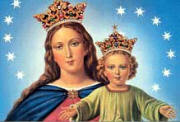
O Mary, Immaculate Virgin,

Again this year, with filial love, we meet at the foot of your image to renew to you the homage of the Christian community and of the city of Rome. Let us pause in prayer here, following the tradition inaugurated by previous Popes, on the solemn day in which the liturgy celebrates your Immaculate Conception, a mystery that is a source of joy and hope for all the redeemed.

We greet you and call upon you with the Angel's words: "full of grace" (Lk 1:28), the most beautiful name that God himself has called you from eternity.

"Full of grace" are you, Mary, full of divine love from the very first moment of your existence, providentially predestined to be Mother of the Redeemer and intimately connected to him in the mystery of salvation.

In your Immaculate Conception shines forth the vocation of Christ's disciples, called to become, with his grace, saints and immaculate through love (cf. Eph 1:4). In you shines the dignity of every human being who is always precious in the Creator's eyes.

Those who look to you, All Holy Mother, never lose their serenity, no matter what the hardships of life.

Although the experience of sin is a sad one since it disfigures the dignity of God's children, anyone who turns to you discovers the beauty of truth and love and finds the path that leads to the Father's house.

"Full of grace", are you, Mary, which, welcoming with your "yes" to the Creator's plan, opened to us the path of salvation. Teach us also at your school to say our "yes" to the Lord's will. Let it be a "yes" that joins with your own "yes", without reservations or shadows, a "yes" that the Heavenly Father willed to have need of in order to beget the new Man, Christ, the one Saviour of the world and of history.

Give us the courage to say "no" to the deceptions of power, money, pleasure; to dishonest earnings, corruption and hypocrisy, to selfishness and violence; "no" to the Evil One, the deceitful prince of this world; to say "yes" to Christ, who destroys the power of evil with the omnipotence of love. We know that only hearts converted to Love, which is God, can build a better future for all.

"Full of grace", are you, Mary! For all generations your name is a pledge of sure hope. Yes! Because as the great poet, Dante, wrote, for us mortals you are "a source of living hope" (Paradise, XXXIII, 12). Let us come once again as trusting pilgrims to draw faith and comfort, joy and love, safety and peace from this source, the wellspring of your Immaculate Heart.

Virgin "full of grace", show yourself to be a tender and caring Mother to those who live in this city of yours, so that the true Gospel spirit may enliven and guide their conduct; show yourself as Mother and watchful keeper of Italy and Europe, so that people may draw from their ancient Christian roots fresh vigour to build their present and their future; show yourself as a provident and merciful Mother to the whole world so that, by respecting human dignity and rejecting every form of violence and exploitation, sound foundations may be laid for the civilization of love.

Show yourself as Mother, especially to those most in need: the defenceless, the marginalized and outcasts, to the victims of a society that all too often sacrifices the human person for other ends and interests.

Show yourself, O Mary, as Mother of all, and give us Christ, the Hope of the world! "Monstra Te esse Matrem", O Virgin Immaculate, full of grace! Amen!

Monday, June 3, 2019

Pope Francis and Benedict XVI

The following comes from Crux:

ABOARD THE PAPAL PLANE - While aboard a return flight to Rome from Romania, Pope Francis said Pope emeritus Benedict XVI gives him strength and reinvigorates him with the roots of tradition, which are legacies he wishes a polarized Europe would keep in mind.
“Every time I go to [Benedict XVI] to visit him, I take his hand and I let him speak,” the pope told reporters aboard the papal plane June 2. “He doesn’t speak a lot, and he speaks slowly, but with the same depth as always, because Benedict’s problem is his knees, not his head.”

Pope Benedict makes me strong

The comments were made in response to a question by Vatican reporters asking whether he still viewed his predecessor as a “grandfather,” especially given the emphasis that Francis put on the family and intergenerational dialogue during his May 31 to June 2 visit to the Eastern European country of Romania.
The pope emeritus, Francis continued, “has a great lucidity. When I hear him, he makes me strong and I feel the sap of our roots come to me so I can go forward.”
The pope added that the tradition of the Catholic Church is not “a museum,” but a heritage that allows people to be mindful of where they come from as they go toward the future.
Ever since Benedict resigned, shocking the Church and the world, some observers have sought to read division between the two pontiffs living inside the Vatican walls.
“Tradition doesn’t carry ashes, or the nostalgia of the integralists,” Francis said, but “the roots that allow the tree to grow and bear fruit.”
Read the rest here.

Sunday, January 20, 2019

Cardinal Joseph Ratzinger on the Church of the Future


“Let me go one step further. From today’s crisis, a Church will emerge tomorrow that will have lost a great deal. She will be small and, to a large extent, will have to start from the beginning. She will no longer be able to fill many of the buildings created in her period of great splendor. Because of the smaller number of her followers, she will lose many of her privileges in society. Contrary to what has happened until now, she will present herself much more as a community of volunteers....

"As a small community, she will demand much more from the initiative of each of her members and she will certainly also acknowledge new forms of ministry and will raise up to the priesthood proven Christians who have other jobs. In many smaller communities, respectively in social groups with some affinity, the normal care of souls will take place in this way....

"There will be an interiorized Church, which neither takes advantage of its political mandate nor flirts with the left or the right. This will be achieved with effort because the process of crystallization and clarification will demand great exertion. It will make her poor and a Church of the little people.... All this will require time. The process will be slow and painful.... 

(J. Ratzinger, Faith and the Future).

Friday, December 14, 2018

Advent's Intention


"Advent is concerned with that very connection between memory and hope which is so necessary to man. Advent’s intention is to awaken the most profound and basic emotional memory within us, namely, the memory of the God who became a child. This is a healing memory; it brings hope. The purpose of the Church’s year is continually to rehearse her great history of memories, to awaken the heart’s memory so that it can discern the star of hope.…
     It is the beautiful task of Advent to awaken in all of us memories of goodness and thus to open doors of hope."

-Cardinal Joseph Ratzinger

Monday, September 5, 2016

Benedict XVI Explains Mother Teresa's Fame


The following comes from Zenit.org:

Why was Mother Teresa so famous? Because she lived for and in the love of God, says Benedict XVI.

The Pope made this reflection during a luncheon that he offered for the poor on Dec. 26 in the Paul VI Hall.

The event was held to mark the 100th anniversary of the birth of Blessed Teresa of Calcutta, founder of the Missionaries of Charity. Several members of the congregation from communities around Rome assisted the Pontiff in the luncheon, which was attended by 350 people and 150 religious.

The Holy Father addressed the participants, stating, "To those who ask why Mother Teresa became as famous as she did, the answer is simple: because she lived humbly and discretely for and in the love of God."

"She herself said that her greatest prize was to love Jesus and serve him in the poor," Benedict XVI continued. "Her diminutive figure, her hands joined in prayer or caressing the sick, a leper, the dying, a child, was the visible sign of an existence transformed by God."

He acknowledged that "in the night of human pain she made the light of divine love shine and helped many hearts to find the peace that only God can give."

The Pope affirmed that "Blessed Teresa of Calcutta showed charity to everyone without distinction, but with a preference for the poor and abandoned: a luminous sign of God's paternity and goodness."

Christ's face

He added: "In all people she was able to recognize the face of Christ, whom she loved with her entire being.

"She continued to encounter the Christ she adored and received in the Eucharist in the streets and lanes of the city, becoming a living 'image' of Jesus who pours the grace of merciful love onto man's wounds."

"In Blessed Teresa of Calcutta we all see how our lives can change when we meet Jesus," the Pontiff affirmed, "how they can become a reflection of the light of God for other people."

"Her mission continues through those who, here as elsewhere in the world, live the charism of being missionaries of charity," he added.

The Holy Father expressed gratitude to the religious for their "humble and discreet presence, hidden to the eyes of mankind but extraordinary and precious to the heart of God."

He continued, "Your life witness shows man -- who often searches for illusory happiness -- where true joy is to be found: in sharing, in giving, in loving with the same gratuitousness as God, which breaks all the logic of human selfishness."

Benedict XVI concluded, "Know that the Pope loves you and carries you in his heart, gathering you all together in a paternal embrace."

Thursday, July 21, 2016

Saint of the day: Lawrence of Brindisi


The following comes from American Catholic:

At first glance perhaps the most remarkable quality of Lawrence of Brindisi is his outstanding gift of languages. In addition to a thorough knowledge of his native Italian, he had complete reading and speaking ability in Latin, Hebrew, Greek, German, Bohemian, Spanish and French.

He was born on July 22, 1559, and died exactly 60 years later on his birthday in 1619. His parents William and Elizabeth Russo gave him the name of Julius Caesar, Caesare in Italian. After the early death of his parents, he was educated by his uncle at the College of St. Mark in Venice.

When he was just 16 he entered the Capuchin Franciscan Order in Venice and received the name of Lawrence. He completed his studies of philosophy and theology at the University of Padua and was ordained a priest at 23.

With his facility for languages he was able to study the Bible in its original texts. At the request of Pope Clement VIII, he spent much time preaching to the Jews in Italy. So excellent was his knowledge of Hebrew, the rabbis felt sure he was a Jew who had become a Christian.

In 1956 the Capuchins completed a 15-volume edition of his writings. Eleven of these 15 contain his sermons, each of which relies chiefly on scriptural quotations to illustrate his teaching.

Lawrence’s sensitivity to the needs of people—a character trait perhaps unexpected in such a talented scholar—began to surface. He was elected major superior of the Capuchin Franciscan province of Tuscany at the age of 31. He had the combination of brilliance, human compassion and administrative skill needed to carry out his duties. In rapid succession he was promoted by his fellow Capuchins and was elected minister general of the Capuchins in 1602. In this position he was responsible for great growth and geographical expansion of the Order.

Lawrence was appointed papal emissary and peacemaker, a job which took him to a number of foreign countries. An effort to achieve peace in his native kingdom of Naples took him on a journey to Lisbon to visit the king of Spain. Serious illness in Lisbon took his life in 1619.

Wednesday, April 27, 2016

Benedict XVI: "It became ever clearer to me that Karol Wojtyla was a saint!"

The following comes from the NCR:


Pope Emeritus Benedict XVI has shared some personal recollections of Blessed John Paul II in a new interview that appears in a book of tributes to the soon-to-be canonized Polish Pontiff.

In extracts of the interview, published today by ZENIT, Benedict XVI says it became “ever clearer” to him that John Paul II was a saint. He recalls his first meeting with Karol Wojtyla, their working relationship, and how – contrary to what some theologians thought at the time – John Paul II firmly backed the former prefect at the Congregation for the Doctrine of the Faith during the blowback that followed publication of the 2000 declaration, Dominus Iesus.
The interview, which runs to 12 pages under the heading “It Became Ever More Clear to Me that John Paul II Was a Saint”, is one of 21 that appear in “Beside John Paul II - Friends and Collaborators Speak”. The book is so far only available in Italian.

Here below is a key extract in answer to a question on John Paul II's sanctity:

BENEDICT XVI: [The idea] that John Paul II was a saint came to me from time to time, in the years of my collaboration with him, ever clearer. Naturally, one must first of all keep in mind his intense relationship with God, his being immersed in communion with the Lord, of which he hardly spoke. From here came his happiness in the midst of the great labors he had to sustain, and the courage with which he fulfilled his task at a truly difficult time.

John Paul II did not ask for applause, nor did he ever look around, concerned about how his decisions were received. He acted from his faith and his convictions and he was ready also to suffer the blows.

The courage of the truth is in my [judgment] the criterion of the first order of sanctity.

Only from his relation with God is it possible to understand his indefatigable pastoral commitment. He gave himself with a radicalism which cannot be explained otherwise.

His commitment was tireless, and not only in the great trips, whose programs were dense with appointments from beginning to end, but also day after day, beginning with the morning Mass until late at night. During his first visit to Germany (1980), for the first time I had a very concrete experience of this enormous commitment. So during his stay in Munich, I decided he should take a longer break at midday. During that interval he called me to his room. I found him reciting the Breviary and I said to him: “Holy Father, you should rest”, and he said: “I can do so in Heaven.”

Only one who is profoundly filled with the urgency of his mission can act like this.

[…] But I must render honor also to his extraordinary kindness and understanding. Often I had sufficient reasons to blame myself or to put an end to my job of Prefect. And yet he supported me with absolutely incomprehensible fidelity and kindness.

Here, too, I would like to give an example. In face of the turmoil that developed around the Declaration Dominus Iesus, he told me that he intended to defend the document unequivocally at the Angelus. He invited me to write a text for the Angelus which should be, so to speak, watertight and not consent to any different interpretation. It should emerge, in an altogether unequivocal way, that he approved the document unconditionally.

Therefore, I prepared a brief address. I did not intend, however, to be too brusque and so I sought to express myself with clarity and without harshness. After having read it, the Pope asked once again: “Is it really sufficiently clear?” I answered yes.

Those who know theologians will not be astonished by the fact that, this notwithstanding, afterwards there were those who held that the Pope had prudently distanced himself from that text.

Monday, February 29, 2016

1969 Prophetic Insights of Fr. Joseph Ratzinger (Pope Benedict XVI)

“The church will become small and will have to start afresh more or less from the beginning.

She will no longer be able to inhabit many of the edifices she built in prosperity. As the number of her adherents diminishes…she will lose many of her social privileges…. As a small society, [the Church] will make much bigger demands on the initiative of her individual members…."

"…But when the trial of this sifting is past, a great power will flow from a more spiritualized and simplified Church. Men in a totally planned world will find themselves unspeakably lonely. If they have completely lost sight of God, they will feel the whole horror of their poverty. Then they will discover the little flock of believers as something wholly new. They will discover it as a hope that is meant for them, an answer for which they have always been searching in secret.

And so it seems certain to me that the Church is facing very hard times. The real crisis has scarcely begun. We will have to count on terrific upheavals. But I am equally certain about what will remain at the end: not the Church of the political cult, which is dead already, but the Church of faith. She may well no longer be the dominant social power to the extent that she was until recently; but she will enjoy a fresh blossoming and be seen as man’s home, where he will find life and hope beyond death.”


Pope Benedict (Faith and the Future, 2009)

Tuesday, December 8, 2015

Opening the Holy Door to Mercy!


Tuesday, November 24, 2015

The Quotable Ratzinger

“The church will become small and will have to start afresh more or less from the beginning. She will no longer be able to inhabit many of the edifices she built in prosperity. As the number of her adherents diminishes . . . she will lose many of her social privileges. . . As a small society, [the Church] will make much bigger demands on the initiative of her individual members.” 

--Joseph Ratzinger (Pope Benedict XVI) in 1970

Wednesday, October 7, 2015

Pray the Rosary, don't just say it!


Don't just say the Rosary, but pray it!

Wednesday, September 2, 2015

Benedict XVI: “The epidemic of the heart leads to corruption”

The following comes from the Vatican Insider:

“The truth, love and goodness that come from God, make man pure and truth, love and goodness come together in the Word which brings liberates a world that no longer thinks of God from ‘forgetfulness’.” This was at the heart of the homily which the Emeritus Pope Benedict XVI pronounced during a mass he presided over this morning in the Teutonic Cemetery church in the Vatican. The mass was attended by members of the Schuelerkreis (Ratzinger’s “student circle”) and the New Schuelerkreis, who gathered at Castel Gandolfo in recent days to reflect on the theme “How to speak to God today”. The priest and philosopher Tomas Halik also participated. The news was posted on the Ratzinger Foundation website.

Does not the evil that afflicts us come from the outside? This was the essence of the question posed by the Emeritus Pope in his German homily. We need to be cleansed of all the impurity that exists out there: “We could respond to the many illnesses and sometimes epidemics that threaten us, by maintaining an external cleanliness,” Benedict XVI said. It is important to care for our exterior in this way so that death does not prevail, the Emeritus Pope said. But this is not enough, he added, because there is also “the epidemic of the heart” to consider, that inner epidemic that “leads to corruption and other filth, the kind of filth that drives man to think only of himself and not of goodness.” So, aside from worship, ethos, “inner hygiene” in other words, also plays a decisive role: “What does a pure man do? What is the real power of purification? How does one come to have a cleansed heart?” Benedict XVI asked.

“In another passage of the Gospel,” he continued, “the Lord says to his people: ‘You are already clean because of the word I have spoken to you’.” So we become pure by means of the Word: “The Word is Jesus Christ himself and we come across the Word even in those who reflect It, those who show us the face of God and reflect his meekness, his humble heart, his simplicity, his lovingness, his sincerity.”

The mass was followed by a ceremony for the inauguration of the “Pope Benedict-Joseph Ratzinger Hall”, which the Pope Emeritus blessed. The ceremony took place in the buildings adjacent to the Teutonic Cemetery. In his introductory speech, Mgr. Hans Peter Fischer, Rector of the Teutonic College, announced that a ceremony will be held on 18 November to mark the opening of the Joseph Ratzinger-Benedict XVI Roman Library. The library is entirely dedicated to the works and life of Joseph Ratzinger as a scholar and a Pope and is housed inside the Library of the Teutonic College and of the Roman Institute of the Gorres Society in the Vatican.

Present at today’s ceremony – amongst others – were cardinals Christoph Schönborn, Archbishop of Vienna and Kurt Koch, President of the Pontifical Council for Promoting Christian Unity and Archbishop Georg Gänswein, Prefect of the Papal Household and personal secretary to Benedict XVI.

Monday, July 20, 2015

Archbishop Georg Gänswein Speaks on the Challenges of the Church Today

The following comes from Zenit:
The Vatican rooms are impressive. As opposed to what happens in television studios, which in reality are smaller than they appear on the screen, here everything is larger: Saint Anne’s Door, the Apostolic Palace, the majestic stairway, Saint Damasus Courtyard. Historic magniloquence: some of its parts in fact are older than 500 years – splendid, but as opposed to what some continue to say, not ostentatious. In fact, I would say the opposite.
Archbishop Georg Gänswein received us in one of those rooms: not very large, red, luminous, ancient and elegant. One does not find in Archbishop Gänswein that haughtiness that one could expect from someone in his position, so close to two of the most influential persons in the world. He began to work with Cardinal Ratzinger in the Congregation for the Doctrine of the Faith in 1996, becoming his personal Secretary in 2003, a position that he kept at the election of the Cardinal to the Papal Seat. In 2012, he was appointed Prefect of the Papal Household and, with the new Pontificate, Francis confirmed him in that post. It was the year 2013, in fact in the month in which the intense heat paralyzed Rome, but not Pope Francis! It was August 31. Hence, Archbishop Gänswein is, to date, the only person in the history of the Church that serves two Popes contemporaneously. He lives with the German Pope: he concelebrates with him in the morning, they pray the Rosary together, and walk together for about a half hour in the Vatican Gardens. In the afternoon, instead, he works with the Argentine Pope.
* * *
Q: How do you manage to collaborate with two Popes? It doesn’t seem easy to adapt oneself to two such different personalities ...
Archbishop Gänswein: They are certainly very different between them: and for me, after a long experience as Secretary of Cardinal Ratzinger, later Benedict XVI, to begin to work also with Pope Francis was not easy. Let’s say that, using media language, I had to “render myself compatible,” because it was quite an intense change. I had already received the office of Prefect, which Francis wished to reconfirm. What my collaborators and I do is to serve. And that is all. How is this done?
It depends much on the way the Pope guides the Church. However, I must say that there is a great advantage in all this: to live and work with two Popes, and to experience this diversity, has helped me and helps me to grow humanly and spiritually.
Q: Beyond the physical differences – the shoes, the cross, etc., it seems sometimes that there is a distance between the two also in what they say ...
Archbishop Gänswein: All the stories that we heard at the beginning of the Pontificate as, for instance, that he uses black shoes, or that the material of his pectoral cross is less than silver, are secondary: they are exterior things, ways of doing things. If one looks more closely at the contents, it will be seen that in exercising the munus petrinum there is continuity with Benedict XVI. And this is right. We are talking of a South American and a German, of two very different personalities. The first is educated and formed by the Jesuit spirituality, and it is logical that his way of thinking, of doing and also of exercising the Petrine service is different from one who had first of all an academic-university formation.
Q: Francis often reminds me of John Paul II ...
Archbishop Gänswein:: Yes, he can be so, even if they arrived at the See of Peter with twenty years of difference. Both had already accumulated enormous pastoral experience, although in a very different political and cultural context. Pope Francis, after having directed a large and not easy diocese such as that of Buenos Aires; Saint John Paul II at the head of the Church of Krakow that, at the time, was the only place where one could express oneself freely. I think we can compare them in this respect, but also in some aspects of their personality.
Q: Which?
Archbishop Gänswein:: Francis, for instance, talks a lot about the “culture of encounter”: to meet persons, and to meet them as much as possible. John Paul II didn’t speak expressly of this culture, but he put it constantly into practice. It is contact with others, including physical contact, which is striking in the two Popes.
Q: Sometimes I’ve heard it said: “John Paul II is the Pope of Hope; Benedict XVI the Pope of Faith; Francis the Pope of Charity.” Although simple, do you think it’s a good analysis of the reality?
Archbishop Gänswein:: It’s difficult to summarize an entire Pontificate in a word. Every time one attempts to enclose something complex in a word one runs a risk. I would say that Pope Francis is the Pope of gestures, the Pope of Mercy. We are still on the way; in any case, after two years, I think that to describe him as “the Pope of gestures” will at least help to give an idea.
Q: Two years after his renunciation, what was Benedict referring to when speaking of his “earthly pilgrimage”?
Archbishop Gänswein:: In his last brief address at Castel Gandolfo, Benedict XVI spoke of the “last stage of the earthly pilgrimage.” And before he had said that he would not come down from the cross, that he would not leave the Lord. He goes up to the mountain to pray for the Church and for his Successor. His role now is spiritual: to pray for Peter’s barque. It’s important to remember that the Church is not governed only with decisions and strategies, but also and above all with prayer. The Church is a “team of prayer,” and we know well that, the more people pray the better it is. In this team the Pope Emeritus has a particular place of “pilgrim.”
Q: Some do not yet understand the renunciation and interpret it as a strategy to block some attempts to cause “great damages” ...
Archbishop Gänswein:: We could write a whole book of hypotheses and theories in this regard! On that February 11, Pope Benedict XVI read a brief and very clear statement explaining his reason. All the rest that has been said and hypothesized is altogether devoid of foundation. That there were individual persons, or even currents against Benedict, was irrelevant in regard to the renunciation. It’s obvious that a person like him had reflected long on a question of such importance. He didn’t allow himself to be intimidated by anyone. He was very clear in his conversation with Peter Seewald, several years before the renunciation: “When there are wolves, when there is danger, the shepherd must not leave his flock.” He didn’t do so then, and he has never done so; his was not a flight. This is the truth and it is the only explanation of the reason for his renunciation.
Q: On some occasions you have spoken of the “fruits” of this renunciation. What are these fruits?
Archbishop Gänswein:: Pope Benedict realized that to guide today’s Church it’s necessary to have spiritual strength but also physical strength. It was an act of very great humility to renounce the Papacy to make way for someone younger and stronger. I believe it’s a great example of love for the Lord and for the Church, an example that not all can or want to understand. Observing Pope Francis’ Pontificate, one can perceive how the image of the Church has changed for the better. Pope Benedict took the first step for the change: he opened the door to follow this path. I believe it could happen also in the future.
Tuesday, June 30, 2015

Pope Francis visits Benedict XVI

Tuesday, June 9, 2015

The Worthy Reception of Holy Communion

The following comes from Msgr. Charles Pope:


I indicated yesterday an intention to expand on the need for the reverent and worthy reception of Holy Communion, to develop an apologetic for the Church’s practice of what some call “closed communion.”  Not everyone who uses this terminology means it pejoratively, though some do. But to some extent it is fair to say that we do have “closed communion.” For the Catholic Church, Holy Communion is not a “come one, come all” event. It is reserved for those who, by grace, preserve union with the Church through adherence to all the Catholic Church believes, teaches, and proclaims to be revealed by God. Our response of “Amen” at Holy Communion signifies our communion with these realities along with our faith in the true presence of Christ in the Eucharist.
But many today have reduced Holy Communion to a mere sign of hospitality, such that if the Church does not extend Holy Communion to all, we are considered unkind. There is often a mistaken notion about the nature of the Last Supper (and the Eucharist that proceeds from it) that lurks behind this misconception. Many years ago, Joseph Cardinal Ratzinger articulated the misunderstanding well. I summarize the description here from his Collected Works, Vol 11, Ignatius Press pp 273-274:
Nowadays [some] New Testament scholars … say that the Eucharist … is the continuation of the meals with sinners that Jesus had held … a notion with far-reaching consequences. It would mean that the Eucharist is the sinners’ banquet, where Jesus sits at the table; [that] the Eucharist is the public gesture by which we invite everyone without exception. The logic of this is expressed in a far-reaching criticism of the Church’s Eucharist, since it implies that the Eucharist cannot be conditional on anything, not depending on denomination or even on baptism. It is necessarily an open table to which all may come to encounter the universal God …
However tempting the idea may be, it contradicts what we find in the Bible. Jesus’ Last Supper was not one of those meals he held with “publicans and sinners”. He made it subject to the basic form of the Passover, which implies that the meal was held in a family setting. Thus he kept it with his new family, with the Twelve; with those whose feet he washed, whom he had prepared by his Word and by this cleansing of absolution (John 13:10) to receive a blood relationship with him, to become one body with him.
The Eucharist is not itself the sacrament of reconciliation, but in fact it presupposes that sacrament. It is the sacrament of the reconciled, to which the Lord invites all those who have become one with him; who certainly still remain weak sinners, but yet have given their hand to him and have become part of his family.
That is why, from the beginning, the Eucharist has been preceded by a discernment … (I Corinthians 11:27 ff). The Teaching of the Twelve Apostles [the Didache] is one of the oldest writings outside the New Testament, from the beginning of the Second Century, it takes up this apostolic tradition and has the priest, just before distributing the sacrament saying:”Whoever is holy, let him approach, whoever is not, let him do penance” (Didache 10).
Thanks to Pope Benedict’s writing prior to his papacy, we can see the root of the problem: the failure to see the Eucharist for what it truly is—a sacred banquet wherein those who enjoy communion with the Lord (by His grace) partake of the sign and sacrament of that communion. Holy Communion serves to celebrate and deepen the communion already operative through the other sacraments of Baptism, Confirmation, and Confession.
If you want to call this communion “closed,” fine, but at its heart it is more positively called a “sacrum convivium,” a  sacred meal of those who share a life together (con = with or together + vivium = life).  This is not a “come one, come all” meal; it is a Holy Banquet for those who wear the wedding garment. The garment is righteousness and those who refuse to wear it are cast out (cf: Matt 22:11-12 & Rev 19:8).
Many moderns surely would prefer a “no questions asked” invitation to all who wish to come. We moderns love this notion of unity. But to a large degree it is a contrived unity that overlooks truth (the opposite of which is falsehood, not just a different viewpoint). Yes, it overlooks the truth necessary for honest, real, and substantive unity. Such a notion of communion is shallow at best and a lie at worst. How can people approach the Eucharist, the sacrament of Holy Communion and unity, and say “Amen” when they differ with the Church over essentials such as that Baptism is necessary; that there are seven Sacraments; that the Pope is the successor of Peter and the Vicar of Christ on Earth; that homosexual acts, fornication, and adultery are gravely sinful; that women cannot be admitted to Holy Orders; that there is in fact a priesthood; that Scripture must be read in the light of the Magisterium; and on and on? Saying that there is communion in such a case is either a contrivance or a lie, but in either case, it does not suffice for the “Amen” that is required at the moment of reception of Holy Communion.
Such divisions do not make for a family meal or a “sacrum convivium.” Hence, to share Holy Communion with Protestants, dissenters, and others who do not live in communion with the Church is incoherent. To paraphrase Cardinal Ratzinger (Pope Benedict), the Eucharist is not a table fellowship with publicans and other “sinners”; it is a family meal that presupposes grace and shared faith.

Wednesday, May 27, 2015

Fr. Longenecker: Is It Time to Hunker Down?

The following comes from Fr. Dwight Lonenecker:
As Ireland votes overwhelmingly for same sex marriage and the rest of the Western world, it seems, can’t wait to follow their example, is it time to throw in the towel in the cultural slugfest?
As radical Islam advances giving us nightmares and as the economic “recovery” looks increasingly shaky is it time to hunker down?
Over at The Week Damon Linker analyzes what Rod Dreher calls “The Benedict Option”.
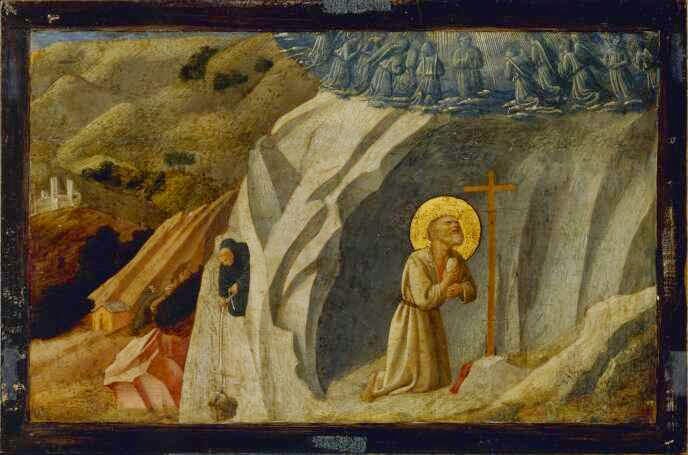
This is the idea that the church will follow the pattern of St Benedict. To understand what this means we have to understand the social conditions in Benedict’s day.
It was the end of the fifth century. The once mighty Roman Empire was collapsing. Economic decline was forcing a retreat of the Roman armies across the empire. Famine and plague decimated the population. Moral decay ate away at the family and robbed the population of energy and ambition. In the vacuum the barbarians were invading from the North and the East.
Benedict headed for the hills.
He established small monastic communities of prayer, work and study to survive the social upheaval.
These Christian communities went on to become little havens of peace and lighthouses in the storm. Before long they became the only centers of education, health care, social justice and learning. They preserved the remnants of the earlier classical civilizations and went on to be the kernels of what would be medieval Christendom.
The Benedict Option is the idea that this is where we are headed. It’s not a new idea. T.S.Eliot predicted the continued decay and disintegration of Western civilization and that a new monastic movement would arise and carry the flame and become the nexus of a new Christendom. Cardinal George’s famous prophecy considered the same.
I expect to die in bed, my successor will die in prison and his successor will die a martyr in the public square. His successor will pick up the shards of a ruined society and slowly help rebuild civilization, as the church has done so often in human history.”
The classic novel, Canticle for Lebowitz is set in a future where this has already happened.
The Benedict Option has a double meaning because it can also connect with the prophecy of Pope Benedict XVI who, as Joseph Ratzinger…