Showing posts with label catholic tradition. Show all posts

Wednesday, February 17, 2021

The Story of Ash Wednesday

The following comes from The Catholic Exchange:


Q: A Protestant friend asked me why Catholics use ashes on Ash Wednesday. What are the origins of Ash Wednesday and the use of ashes?
The liturgical use of ashes originates in Old Testament times. Ashes symbolized mourning, mortality and penance. For instance, in the Book of Esther, Mordecai put on sackcloth and ashes when he heard of the decree of King Ahasuerus (or Xerxes, 485-464BC) of Persia to kill all of the Jewish people in the Persian Empire (Est 4:1). Job (whose story was written between 7th and 5th centuries BC) repented in sackcloth and ashes (Jb 42:6).
Prophesying the Babylonian captivity of Jerusalem, Daniel (c. 550BC) wrote, “I turned to the Lord God, pleading in earnest prayer, with fasting, sackcloth and ashes” (Dn 9:3). In the 5th century BC, after Jonah’s preaching of conversion and repentance, the town of Nineveh proclaimed a fast and put on sackcloth, and the king covered himself with sackcloth and sat in the ashes (Jon 3:5-6). These Old Testament examples evidence both a recognized practice of using ashes and a common understanding of their symbolism.
Jesus Himself also made reference to ashes: Referring to towns that refused to repent of sin although they had witnessed the miracles and heard the good news, our Lord said, “If the miracles worked in you had taken place in Tyre and Sidon, they would have reformed in sackcloth and ashes long ago” (Mt 11:21).
The early Church continued the usage of ashes for the same symbolic reasons. In his book, De Poenitentia, Tertullian (c. 160-220) prescribed that the penitent must “live without joy in the roughness of sackcloth and the squalor of ashes.” Eusebius (260-340), the famous early Church historian, recounted in his The History of the Churchhow an apostate named Natalis came to Pope Zephyrinus clothed in sackcloth and ashes begging forgiveness. Also during this time, for those who were required to do public penance, the priest sprinkled ashes on the head of the person leaving confession.
In the Middle Ages (at least by the time of the 8th century), those who were about to die were laid on the ground on top of sackcloth sprinkled with ashes. The priest would bless the dying person with holy water, saying, “Remember that thou art dust and to dust thou shalt return.” After the sprinkling, the priest asked, “Art thou content with sackcloth and ashes in testimony of thy penance before the Lord in the day of judgment?” To which the dying person replied, “I am content.” In all of these examples, the symbolism of mourning, mortality and penance is clear.
Eventually, the use of ashes was adapted to mark the beginning of Lent, the 40-day preparation period (not including Sundays) for Easter. The ritual for the “Day of Ashes” is found in the earliest editions of the Gregorian Sacramentary which dates at least to the 8th century. About the year 1000, an Anglo-Saxon priest named Aelfric preached, “We read in the books both in the Old Law and in the New that the men who repented of their sins bestrewed themselves with ashes and clothed their bodies with sackcloth. Now let us do this little at the beginning of our Lent that we strew ashes upon our heads to signify that we ought to repent of our sins during the Lenten fast.” As an aside, Aelfric reinforced his point by then telling of a man who refused to go to Church on Ash Wednesday and receive ashes; the man was killed a few days later in a boar hunt. Since the Middle Ages at least, the Church has used ashes to mark the beginning of the penitential season of Lent, when we remember our mortality and mourn for our sins.
In our present Ash Wednesday liturgy, we use ashes made from burned palm branches distributed on the Palm Sunday of the previous year. The priest blesses the ashes and imposes them on the foreheads of the faithful, making the sign of the cross and saying, “Remember, man you are dust and to dust you shall return,” or “Turn away from sin and be faithful to the Gospel.”
As we begin this holy season of Lent in preparation for Easter, we must remember the significance of the ashes we have received: We mourn and do penance for our sins. We again convert our hearts to the Lord, who suffered, died and rose for our salvation. We renew the promises made at our baptism, when we died to an old life and rose to a new life with Christ. Finally, mindful that the kingdom of this world passes away, we strive to live the kingdom of God now and look forward to its fulfillment in heaven. In essence, we die to ourselves, and rise to a new life in Christ.
As we remember the significance of these ashes and strive to live it during this time of Lent, we must allow the Holy Spirit to move us to charity toward our neighbors. Our Holy Father in his Message for Lent, 2003, said, “It is my fervent hope that believers will find this Lent a favorable time for bearing witness to the Gospel of charity in every place, since the vocation to charity is the heart of all true evangelization.”
He also lamented that our “age, regrettably is particularly susceptible to the temptation toward selfishness which always lurks within the human heart…. An excessive desire for possessions prevents human beings from being open to their Creator and to their brothers and sisters.” This Lent, acts of self-giving love shown to those in need must be part of our penance, conversion and renewal, for such acts constitute the solidarity and justice essential for building up the kingdom of God in this world.

Thursday, March 21, 2019

Why Catholics Practice Fasting and Abstinence?

The following comes from the Integrated Catholic Life:
Would you like to know the secret to a better, deeper, more joyful life in Christ?
Of course you would.  We all would.
Our bookstores are filled with books written to help us advance in prayer and the spiritual life. The “secret” we all look for is really no secret at all.  At its heart, the gospel message is one of self-denial and detachment from all things that are obstacles to our growth.  Jesus tells us that if we are to be his disciples, we must deny ourselves, take up our crosses and follow him (cf. Matthew 16:24). That is why Catholics practice fast and abstinence as a form of self-denial intended to lead us to perfection. So stick with me here and learn how self-denial will satisfy your deepest hunger.

The Catholic Disciplinary Laws of Fast and Abstinence

In these modern times, we don’t seem to hear much about fasting and abstinence anymore.  That’s a shame because the doctrine of self-denial is crucial to our becoming fully satisfied. Many of today’s Catholics associate fasting and abstinence only with the season of Lent and that’s a shame too. Let’s review the Church’s disciplinary law regarding Fasting and Abstinence:
  • Fasting During Lent – The Church requires its members to fast on two days each year — Ash Wednesday and Good Friday. The Bishops in the United States have defined the minimum requirement of the fast for U.S. Catholics to be one full (but not excessive) meal plus other food not to exceed the full meal which may be taken in part at breakfast, noon or evening, depending on when one decides to take the “one full meal”. This law applies to Catholics between the age of 18 and 59.
  • Abstinence From Meat on Fridays — The Church requires its members to abstain from eating meat on Fridays as an act of penitence.  In the United States, Catholics are permitted to substitute another form of penance on Fridays outside the season of Lent. This law applies to all Catholics who are over the age of 14.
  • The Holy Communion Fast — Catholics must also fast for a minimum of one hour before receiving Holy Communion.
The entire season of Lent is a penitential time and our attitude and behavior during this season should be marked by some sort of self-denial.  The season of Advent is also a penitential season, but of less severity, and we should also mark this season with some form of self-denial, even if it is less than that practiced during Lent.
That’s it!  And so many of us complain and wait for the clock to tick down to midnight so we can have a ham sandwich. We need to turn our thinking around because uncontrolled appetites only become hungrier and more insatiable. That is why there is a myriad of “miracle” diets and weight loss programs on the market that promise results without effort. Well, there is only one source of miracles and that is God.  He has already provided us the ultimate diet program if we will but listen to him.
Although we often only hear about fast and abstinence associated with Lent, it is really a practice that is important all through the year.

So Let’s Broaden Our Understanding

As you can see, “to fast” generally means to significantly reduce the consumption of food or to forego it altogether for short durations. Abstinence is generally seen as avoiding the eating of meat.  But both acts are forms of self-denial.  More broadly speaking, self-denial is the act of giving up something that is good, be it food or some other “good” for the purpose of deepening our spiritual life and making acts of reparation for our sin or the sin of others. There is a long-history of the Catholic practice of fast and abstinence dating all the way back to the time of Christ. Our culture often incorporates these practices into our everyday language.  For example, the word breakfast is formed from two words, “break” and “fast” meaning simply that the first meal of the day breaks the fast from our last meal of the previous day. Another example, although this has nothing to do with fasting, is our word for the celebration of Christ’s birth which is formed by two words, “Christ’s” and “Mass” or Christmas.

Thursday, December 14, 2017

Charlene Richard: "The Little Cajun Saint" and God's Healing Power

The following comes from the Chicago Tribune:

Mary Lou Swanson’s body was shutting down after battling a rare and debilitating autoimmune disease affecting her brain for nearly a decade.

The 54-year-old North Aurora woman could no longer eat solid food. She had signed legal documents asking medical personnel not to resuscitate her if her heart stopped beating. And after talking through funeral plans with her husband, she relied on her religious beliefs to bring her peace in the face of death, which Swanson felt was closing in.

“I thought this is God’s will, and this is his answer to all my pain and suffering,” Swanson recalled. “At that point, I didn’t have much of a life, and I thought maybe he’s just giving me peace as a gift.”

What happened next is something Swanson herself admits is almost inconceivable.


After seeing a segment on the long-running program “Unsolved Mysteries” about a grave site in Louisiana where hundreds of people flock weekly to pray for healing, Swanson persuaded her husband to take her there.

Within a day after running her fingers over the tombstone of 12-year-old Charlene Richard, “the Little Cajun Saint” who, according to legend, offered up all her suffering to others when she died of leukemia in 1959, Swanson’s symptoms began to disappear. Weeks later, her doctor confirmed Swanson’s disease, limbic encephalitis — which affects about 1 in 100,000 people and can be fatal — had suddenly gone into remission.

She no longer needed the medicine and treatments she had relied on for years.

“We are not sure exactly what happened, and we are not sure why it reversed itself,” said Dr. Ronald Glas, a family physician at Edward Hospital who has overseen Swanson’s care since before she was ever sick. “I’m not sure what to attribute it to.”


Read the rest here.


A PRAYER TO CHARLENE RICHARD

Charlene, when you were only twelve years old, you showed heroic faith, hope, and love; dying of leukemia, you joined yourself to Jesus on His Cross and offered your intense pain for others. You thereby echoed St. Pauls words to his people in Colossians 1, 24: Now I rejoice in my sufferings for your sake, and in my flesh I am filling up what is lacking in the afflictions of Christ on behalf of His Body, the Church.


Charlene, I believe you are with God. Please ask our Heavenly Father, His only Begotten Son, Jesus Christ, and the Holy Spirit to grant me the following favor: (mention favor sought)


Charlene, thank you for helping me. May Jesus Christ always be praised. May Mary, Jesus Ever-Virgin Mother, always be called blessed.  Amen.


Thursday, November 19, 2015

Why Are Some Saints Called Doctors of the Church?

Wednesday, September 23, 2015

The Bible is Catholic

The following comes from Catholic Exchange:
Try explaining to our Fundamentalist brethren about almost any tenet of the Catholic faith and you’re likely to hear in response, “Chapter and verse, please”.  In other words, of course, they want to know exactly where that teaching is found in the Bible because they adhere to what is spelled out and therefore only such teachings are retained by them. However, not every belief in Catholicism is to be found word-for-word in Sacred Scripture.
All teachings of the Church, however, are in harmony with Sacred Scripture.  This essay will look at the trifecta of the Church’s authority: The Bible, Tradition and the Magisterium.
The Holy Trinity is one of the teachings of almost every Fundamentalist community (but not all of them) that is not specifically in the Bible.  Nowhere is the doctrine of the One Godhead as Father, Son and Holy Spirit — co-eternal and co-equal — found in the Bible; but they are “words in harmony with Scripture”, according to the second of the 16 Fundamental Truths of the Assembly of God.  This is important because it is my Assembly of God family and relatives who always love to insist on “chapter and verse”. It seems that they will allow doctrines “not (explicitly) found in the Scriptures” but for Catholics to do this it is perceived as “adding to what is written”. Most of our understanding of the Holy Trinity comes from the extensive writings of the Early Church Fathers such as St. Augustine, St. Athanasius and many others.

The Written Word

Let’s look at where the Bible itself came from.  None of the gospels were written as historical texts or as directives on how to start a church.  Rather, they were written to attest to who Jesus was — “so that you may believe” (Jn. 20:31).  The Acts of the Apostles are a continuation of Luke’s gospel—he tells of the early Church and of Paul’s conversion and missionary travels.  It’s kind of like a journal. Paul’s letters are to those communities where there were issues that needed to be addressed. He wrote personal letters to Timothy, Titus, and Philemon.  Hebrews is a masterful treatise on the eternal sacrifice of Jesus. James wrote  one letter; Peter wrote two letters, John wrote three—plus the Book of Revelation —and Jude wrote one. Other gospels and letters were written but did not make it into the canon of the New Testament.
While many Protestants claim that we “added books” to the Old Testament (The Catholic version has 46 books while the Protestant has 39), all Protestants do agree that we Catholics got it right with the NT because they have the same one we do. The first canon of the NT was promulgated in A.D. 397 at the Council of Orange in Africa. Many Protestants claim that the canon was only put forth at the Council of Trent (held from 1545 -1563); however, this is incorrect.  It was not promulgated then but re-iterated for all time after Martin Luther had decided to take out the Letter to the Hebrews, the Letter of James, the Book of Revelation and the Letter of Jude.  Jude, by the way, makes reference in his letter to the Assumption of Moses and the Book of Enoch—two writings that did not make it into the canon of the New Testament. The New Testament does not come with its own list as to which writings would go into it.
The difference with the Protestant Old Testament and the Catholic one is about which version was used in the time of Jesus.  In his day, Hebrew had fallen out of use as an everyday language; Aramaic had taken its place.  However, with the conquest of Alexander the Great, Greek became the biblical language due to the Hellenistic influence.  The Greek Old Testament (called the Septuagint) contained 46 books but the older Hebrew one (Masoretic text) contained only 39. After the new Christian sect fell out of favor with mainstream Judaism (around A.D. 90) and were driven away, the Jews took the Hebrew version of the Old Testament as their text because the Christians were adept at using the seven “other” books to convert people.
Those seven books, by the way are: Judith, Tobit, Baruch, Sirach (or Ecclesiasticus), the Wisdom of Solomon, First and Second Maccabees, the two Books of Esdras, additions to the Book of Esther, additions to the Book of Daniel, and the Prayer of Manasseh.  Here we have the attestation of the Jews in their own online encyclopedia as to why, ultimately, the Septuagint was rendered “unwelcome”: “it had been adopted as Sacred Scripture by the new faith. A revision in the sense of the canonical Jewish text was necessary”. Further, “The quotations from the Old Testament found in the New are in the main taken from the Septuagint; and even where the citation is indirect the influence of this version is clearly seen”. (http://www.jewishencyclopedia.com/articles/3269-bible-translations). This tells us clearly that Jesus and his apostles used the Greek Septuagint Old Testament and not the Hebrew Masoretic.  I am uncertain as to why Protestants kept to the Hebrew version of the OT and rejected the version clearly used by Jesus.

Oral Transmission of the Word

As for Sacred Tradition (not tradition w/small “t”), it is another way of handing on the faith—the Latin, “Traditio” means “to hand on”.  Almost all of Paul’s letters were composed before any of the gospels were written. Paul tells us in Acts 20:35 when he addresses the people in Aramaic, he states that he was educated “at the feet of Gamaliel” which is quite significant because Gamaliel was a master of the oral law/tradition.
There was no such thing, of course of anyone having his/her own copy of the bible to look things up.  Protestants will cite the passage that “All scripture is inspired by God and is useful for teaching, for refutation, for correction, and for training in righteousness…” (2 Tim 3:16) but it does not say only scripture. In fact, the Scripture Paul was referring to was the Old Testament for the new had not even been formed. In 2 Thes. 2:15 Paul exhorts his readers to “stand firm and hold fast to the traditions that you were taught, either by an oral statement or by a letter of ours” (italics mine) — again, no mention of checking facts in the Bible. In 1 Cor. 11:2 Paul praises the church “because you…hold fast to the traditions, just as I handed them on to you”.
We know that according to Paul’s own testimony, everything he learned about Jesus and the Church was from Jesus himself —see 1 Cor. 11:23. It is the only way he could quote Jesus as saying “It is better to give than to receive” (Acts 20:35) because this quote is nowhere to be found in any of the gospels.  In fact, Paul’s instruction on the celebration of the Eucharist itself (1 Cor. 11:23-26) pre-dates any of the gospels. Paul then goes still further and tells the young bishop Timothy to entrust to faithful people that which he (Timothy) heard from Paul even by way of “many witnesses” (2 Tim. 2:2).
For a good article explaining still more about Tradition, go to this site:http://www.catholic.com/tracts/scripture-and-tradition

The Right to Interpret

As for the Magisterium, it is the teaching office of the Church.  Even though the Church came first, it still serves Sacred Scripture and tradition.  The Magisterium is guided by the Holy Spirit.  All bishops by their ordination have this special gift of the Holy Spirit so long as they are in communion with the Holy Father. For a better understanding of the Magisterium read my article here. The Magisterium is the interpreter of both Sacred Scripture and Sacred Tradition just as the U.S. Supreme Court is the guardian and interpreter of the Constitution. If there were no-one to interpret this great document of ours we would demand that there be an official interpreter of it.
As I stated in my first article on the holy order of bishops, I am glad that my salvation does not rely on my own interpretation of Scripture.  If self-interpretation really were of the Holy Spirit, then 100% of the people would necessarily arrive at the same interpretation 100% of the time for “God is not a god of confusion” (1 Cor. 14:33). But God is one…Truth is one. And as I said then…Thank-you, sweet bishops, for all you do!

Thursday, February 26, 2015

A Catholic Bucket List!


The following comes from Our Sunday Visitor:

You can read the rest of the story at OSV but here is their Catholic Bucket list!

1. Go to Rome.

This is, I suppose, pretty obvious. We’re talking Eternal City. The City. The one they based Minas Tirith on in “The Lord of the Rings.” Older than New York, Los Angeles and Washington, D.C., put together — not to mention London, Paris, Berlin and the concept of the nation-state — this is the place where the civilization called “Europe” looks to when they want to think about what civilized people were doing while the English, French and Germans were painting themselves blue and running around naked in the woods. Yes, while all that we think of as “modern Europe” was drunk on mead, living in mud huts and setting up rows of rocks as their greatest cultural achievements, Rome was already ancient.

Rome is, of course, where the pope lives and St. Peter’s Basilica, the Sistine Chapel and much of the rest of the greatest of pagan and Christian civilization finds a natural home. It is a place that has endured plagues, seen sumptuous festivals both heathen and Catholic, been occupied by everybody from barbarian hordes to the Nazis, and doggedly remained the See of Peter even when the pope was goofing off in Avignon. Plus, you got your Italian food, your easy mileage to places like Assisi, Florence and the resting place of Padre Pio (as well as 50 bazillion other places chockablock with the memory — and bones — of 50 bazillion saints, including Peter and Paul).

2. The Great Cathedrals.

After the pagans of northern Europe were Christianized by the former pagans of southern Europe, they did what people in love do: gave extravagant gifts. The greatest extravagant gifts the northern Europeans gave God and their descendants were the great cathedrals. Words can really not do justice to them. Unlike my still-unrealized dream of visiting the Eternal City, I have actually had a chance to see a medieval cathedral in the form of Yorkminster in England. It is a stunning fulfillment of Christ’s words that the very stones would cry out “Hosanna.” That the whole thing was crafted into being over the course of centuries by human beings with no internal combustion engine is itself a miracle. That a whole civilization across Europe could create not one but many of these splendors in the form of Notre Dame, of the cathedrals at Cologne, Reims, Innsbruck, Salz-burg, Vienna and on and on is breathtaking. To walk through one is to feel yourself be changed by the experience.

3. Go on a pilgrimage.

There are two basic ways of doing this and some Catholics never get around to doing either, which is a shame. The first way is to go on a pilgrimage. This generally means taking a walk — a long one and, if you want the full Catholic meal deal, doing it in the company of a bunch of strangers who have nothing in common with you but the fact that they are also on pilgrimage. A recent portrayal of this is Emilio Estevez’s fine little film “The Way,” which concerns people on the famous Camino de Santiago that takes pilgrims from France to Spain and, more importantly, to an interior encounter with God.

The pilgrimage is actually older than Christianity, and its roots can be found in Old Testament religion as pilgrims went up from the towns of Israel to the great feasts of the Old Testament calendar celebrated in Jerusalem at the Temple. Psalms 120-134 are known as the “Songs of Ascent” because they were sung by pilgrims climbing up to Mount Zion from the lowlands of Israel.

Catholic culture adopted the pilgrimage first in paying visits to the Holy Land and the scenes of Jesus’ ministry, passion, death and resurrection and then to the graves of saints and martyrs such as St. Thomas Becket (whose pilgrimage was the setting for the most famous tale of pilgrims in history, the 14th-century “Canterbury Tales”). When the Holy Land became off limits due to Muslim conquest, this inspired inventive Catholics to create the second form of pilgrimage: the Stations of the Cross. If you can’t make it to Jerusalem due to airfare costs or Saracens, you can still walk with our Lord in the convenience and safety of your own sanctuary.

4. Seek out Catholic literature.

Speaking of the “Canterbury Tales,” there is a vast ocean of great Catholic literature every Catholic should at least take a dip in before they die (though deep-sea diving is perfectly fine to try, too). Most people can’t immerse themselves in all of it, but everybody can bite off and chew on some of it. The primary Catholic book is, of course, The Book: the Holy Bible. Don’t be afraid. It doesn’t bite. If you are not sure where to start, get yourself a handy Ignatius Study Bible, edited by Scott Hahn and Curtis Mitch, and read deeply. Beyond this, the Church Fathers are a delight to read, particularly the eloquent and fascinating Augustine. Mike Aquilina has some great books out, such as “The Fathers of the Church” (OSV, $13.95), which give you a nice introduction to them.

5. See the Bard on stage.

Ha! I’m going to recommend Shakespeare anyway since he is not only the greatest dramatist but the greatest Catholic dramatist in this or any other language. Only I will recommend you see Shakespeare’s plays rather than read them (since that’s what he wrote them for, never envisioning the suffering legions of ninth-graders who would have to analyze “Hamlet”). Great productions abound and, since this a bucket list, I will go ahead and say that you need to hie thee to either the Globe in London or to the Ashland Shakespeare Festival in Oregon (or to some great production in New York) and see it done live. Start with a comedy if you feel intimidated, then move on to a history such as “Henry V” or a tragedy like “King Lear.” If you can’t do the stage, there are some great film adaptations right there on Netflix.

6. Get to know G.K.

I would be remiss if I did not mention great novels, poetry, social criticism, theology, biography, literary criticism, history, philosophy and comic wit. Since I cannot give you a library of authors in this space, I will give you a man who was a library: G.K. Chesterton, perhaps the greatest genius writing in English in the 20th century. Hilariously funny, deeply sympathetic to the common man, a humble lover of God and neighbor, a colossal genius, and one of the deepest thinkers who ever lived, Chesterton wrote about everything and wrote brilliantly. Dive in anywhere, from his Father Brown mysteries to his “Orthodoxy” and “Everlasting Man” to his great poem “Lepanto” — and that is just the tip of the vast iceberg of his work. You can’t go wrong. There’s something hilarious, profound and beautiful on every page.

7. Classical Catholics.

I won’t kid you. I’m no expert in music. But since the point of this list is to point to some of the best there is, not to pretend that I am an expert in the best there is, then no list is complete without noting summits of Catholic music such as Palestrina. Now I am the exact wrong person to guide you through Palestrina, just as I am the exact wrong person to Sherpa guide you up Mount Everest. But even a hairless chimp like me can point to the summit and say, “That’s one big beautiful mountain right there!” Also on the bucket list is Mozart. And I will throw in J.S. Bach as an honorary Catholic for his St. Matthew Passion.

8. In beat with the Faith

In addition to the high-falutin’, there is also the vast quantity of great music created by Catholic culture at the grass roots, such as Cajun music or the wonderful stuff that wafts from the fiddle of Canada’s Natalie MacMaster, or even jazz (so much of it born in the Catholic milieu of New Orleans). Did you know that Dave Brubeck wrote a Mass? The greatest Christmas carol of all time — “Silent Night” — was written by a Catholic. And much of our heritage of folk songs and hymns come down to us from sundry Catholic cultures. Your No. 8 bucket list assignment: Go poke around and see how much Catholic culture has been the matrix for some of the world’s greatest popular music. You’ll be surprised. It’s at the back of everything from the Beatles’ “Let it Be” and “Eleanor Rigby” to the collected works of Bing Crosby. Not all of it is great, but even when it is outright depraved (as with Madonna and Lady Gaga), it is remarkable how inescapable the Catholic influence is. Even as he blasphemes, the devil cannot help but offer his homage to the Church. Every knee shall bow. You can do worse than reflect on the fact that the world cannot escape the Gospel, no matter how hard it tries.

9. Works of mercy

Where to start? Monasteries with whole buildings made from the bones of monks. The Hill of Tara, which is ground zero for the conversion of Ireland by St. Patrick. The Lord of the Rings. The Hound of Heaven. The Summa Theologiae. Dante’s Divine Comedy. Tuscany. The list can go on and on. But if St. Lawrence is to be believed, the real action in terms of the treasures of the Church is the poor, blind, disabled, hungry, sick, alien, orphan and widow. So an absolutely vital part of any Catholic bucket list is to find some way to be part of helping the least of these. This is particularly important since shortly after you kick the bucket there will be a brief interview at the Pearly Gates in which care for the hungry, thirsty, naked, sick and homeless will figure prominently in the discussion. (We know this because Jesus gave us a cheat sheet for the exam known as the Parable of the Sheep and the Goats in Matthew 25:31-46. He’s an “easy A” teacher and always gives us the correct answers ahead of time.) Therefore, I recommend a stint at a soup kitchen, a junket to an impoverished Third World nation to build wells, a trip to Mexico to help build an orphanage or one of the myriad other corporal and spiritual works of mercy with which the Catholic Church abounds.

10. Make peace with God.

It can be argued that the greatest thing about the Catholic faith is that it both teaches us how, and gives us the means, to die really well. Since you are going to kick the bucket, you may as well do it in style, prayed up, forgiven in the Sacrament of Reconciliation, anointed, full of the grace of viaticum, and at peace as you make the Great Change. Heaven is, after all, the ultimate pilgrimage destination!

Sunday, April 14, 2013

Restoring the Sacred


The following comes from the NCR:

Christmas and Easter — those beautiful holy days when regular Mass attendees are squashed by the masses into the middle of the pews. What an annoyance.

Really? More like, what an opportunity!

It’s an opportunity we get to reach out to those masses at the Masses. As Matthew Kelly has pointed out in both Rediscover Catholicism and his latest book, Four Signs of a Dynamic Catholic: Almost all of our "clientele" are in one place at one time. People come to Mass for Christmas and Easter. It's an influx of people who may — or may not — be there for an encounter with Christ. So, how do we keep them coming? What are we doing that could be more appealing? How can we be more relevant to what they need? 

These questions are important ones to ask. However, they can quickly lead down a slope toward sloppy standards and diluted doctrine. When we try new-fangled ideas to be “more” of something, it does not necessarily inspire people or lead them to Christ.

As a matter of fact, it can cause them to assume that, just as they always suspected, we are out of touch with culture. So out of touch that, to reach them, we'll have to soften the "hard edges" of our doctrine and "tone down" our distinctive Catholic heritage. The Church needs to "get with the times," after all, especially if we want Mass attendance to be higher, keep our young people involved, and be part of everyone's weekly regime. Right?

WRONG

When we do any of these things — lower our standards, soften our doctrines, tone down who we are and what we stand for — we replace the sacred with the mundane. We bleed the mystery out of our faith…and there goes our relationship with God.

When we're just like everyone else, the special part of how we live out our faith is, well, nothing special.

Our goal isn't to be like everyone else. Not only would that be boring, but it's watering down something so essential, so critical, so much a part of who we are.

Boring is the real reason people leave the Catholic Church. Want proof? Look at an example of just the opposite being put into play in Omaha, Nebraska. When you're NOT boring — but instead celebrate Catholic traditions out loud —the glory, the mystery and the beauty naturally draw people to them.

How could they not?


This pastor took the sacred and made it the core part of his parish. He wasn't afraid to take hold of the traditions that are time-tested.

And the response of this parish (which had spent 40 years in decline) to the sacred, the beautiful, the mystery of our faith, is unusual, even surprising.

Maybe that's not because we've lost our taste for awe and wonder, but simply because we've settled for less. The sacred mystery of our faith is not old, not out of touch, not boring. May God lead more parishes to explore this beauty to the fullest — and may we see our churches filled to capacity every Sunday, in worship of our Risen Lord who inspires it all.

PS: We interviewed Don Carey, the CEO of Storytel about this documentary today on Register Radio. This documentary is also scheduled to air on EWTN on April 30th, 6:30 Eastern.

Sunday, April 7, 2013

Christian Archaeology, Rome and the Early Church

Thursday, February 7, 2013

Tradition and the Future of the Church


The following comes from The Economist:


SINCE the Second Vatican Council in 1962, the Roman Catholic church has striven to adapt to the modern world. But in the West—where many hoped a contemporary message would go down best—believers have left in droves. Sunday mass attendance in England and Wales has fallen by half from the 1.8m recorded in 1960; the average age of parishioners has risen from 37 in 1980 to 52 now. In America attendance has declined by over a third since 1960. Less than 5% of French Catholics attend regularly, and only 15% in Italy. Yet as the mainstream wanes, traditionalists wax.
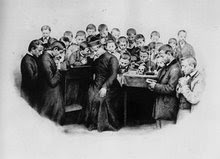
Take the Latin mass, dumped by the Vatican in 1962 for liturgies in vernacular languages. In its most traditional form, the priest consecrates the bread and wine in a whisper with his back to the congregation: anathema to those who think openness is the spirit of the age. But Father John Zuhlsdorf, an American priest and blogger, says it challenges worshippers, unlike the cosy liberalism of the regular services. “It is not just a school assembly,” he says.

Friday, February 1, 2013

EWTN Live: Dr. Scott Hahn - Signs of Life

Wednesday, January 30, 2013

Shattering the Foundation Stones

The following comes from Fr. Ray Blake:

Self-loathing is a worrying thing. When people suddenly find themselves beating their breast, not so much because a past wrong or present regret comes to mind but simply because they are hate themselves then there is problem.
When bishops or priests publicly profess their detestation of the immediate past it is obvious the Church has a problem. One of good things the Holy Father has tried to deal with with Summorum Pontificum was to reconcile today with yesterday so there might be a tomorrow. The words, "what earlier generations held as sacred, remains sacred and great for us too, and it cannot be all of a sudden entirely forbidden or even considered harmful". These words by themelves cut us from the Pol Pot "year zero" mentallity, that seemed to suggest the Church had recreated itself around AD 1970. One of the most damaging things to spirituality and theology of the Church was to cut itself off from its history. By doing so the Church opened itself to all kinds of madness, falsity and novelty for novelty's sake.

The commandment "honour your mother and father" is followed by the statement "and you shall live long in the land" means, presumably, something about fideity to that which has given birth to you so that you may have a secure future. We have experienced the disaster in the Church when that which sustained our parents and their parents has been treated with contempt.

Today in our society we are expereincing the same thing the Church went through in the latter half of the twentieth century, the gay "marriage" issue is just one example. There is an amnesia at best, perhaps something more sinister that seems to want to strip our culture of its Christian rootedness. England has probably not been Christian since the 16th century but it has used Christian metaphors and concepts to express its sense of being and to say something about what it considers "good". It gave a language that we could some how agree giving expression to common aspirations and virtues. We imade God in our own image and likeness and identified him as an Englishman so that we could express metaphysical realities in a narrative form, understandable by all in our society..

Monday, January 21, 2013

Deacon Greg on Communion Rails and Restoring a Sense of the Sacred


Deacon Greg has had a change of heart on altar rails:
Okay. I've changed my mind. It's time to bring back the altar rail.Hey, I'm as surprised as anyone else that I feel this way.Two years ago, I rhapsodized on the Feast of Corpus Christi on the theology behind standing to receive communion, and defended it. And why not? I've received that way for most of my adult life; I even remember the Latin church's experiment with intinction back in the '70s. Standing and in-the-hand always seemed to me sensible, practical and—with proper catechesis—appropriate. 
But now, after several years of standing on the other side of the ciborium—first as an Extraordinary Minister of Holy Communion, now as a deacon—and watching what goes on, I've had about enough.  
I've watched a mother receive communion, her toddler in tow, then take it back to the pew and share it with him like a cookie. 
At least four or five times a year, I have to stop someone who just takes the host and wanders away with it and ask them to consume it on the spot.  
Once or twice a month I encounter the droppers. Many are well-intentioned folks who somewhere, somehow drop the host or it slides out of their hands and Jesus tumbles to the floor.  
A couple times a year I get the take-out crowd. They receive the host properly, and then pull out a hanky and ask if they can take another one home to a sick relative. 
Beyond that, I'm reminded week after week that people have no uniform way to receive in the hand. There's the reverent "hands-as-throne" approach; there's the "Gimme five," 
one-hand-extended style; there are the notorious "body snatchers" who reach up and seize the host to pop into their mouths like an after-dinner mint; and there are the vacillating undecideds who approach with hands slightly cupped and lips parted. Where do you want it and how??  
After experiencing this too often, in too many places, under a variety of circumstances, I've decided: it's got to stop. Catechesis is fruitless. We've tried. You can show people how it's done; you can instruct them; you can post reminders in the bulletin and give talks from the pulpit. It does no good. Again and again, there is a sizable minority of the faithful who are just clueless—or, worse, indifferent.  
The fact is, we fumbling humans need external reminders—whether smells and bells, or postures and gestures—to reinforce what we are doing, direct our attention, and make us get over ourselves. Receiving communion is about something above us, and beyond us. It should transcend what we normally do. But what does it say about the state of our worship and our reception of the Eucharist that it has begun to resemble a trip to the DMV 
Our modern liturgy has become too depleted of reverence and awe, of wonder and mystery. The signs and symbols that underscored the mystery—the windows of stained glass, the chants of Latin, the swirls of incense at the altar—vanished and were replaced by . . . what? Fifty shades of beige? Increasingly churches now resemble warehouses, and the Body of Christ is just one more commodity we stockpile and give out.  
Can kneeling to receive on the tongue help alleviate some of this? Well, it can't hurt. And for this reason: to step up to a communion rail, and kneel, and receive on the tongue, is an act of utter and unabashed humility. In that posture to receive the Body of Christ, you become less so that you can then become more. It requires a submission of will and clear knowledge of what you are doing, why you are doing it, and what is about to happen to you.  
Frankly, we should not only be humbled, but intimidated enough to ask ourselves if we are really spiritually ready to partake of the sacrament. Kneeling means you can't just go up and receive without knowing how it's properly done. It demands not only a sense of focus and purpose, but also something else, something that has eluded our worship for two generations. 
It demands a sense of the sacred. It challenges us to kneel before wonder, and bow before grace. It insists that we not only fully understand what is happening, but that we fully appreciate the breathtaking generosity behind it. It asks us to be mindful of what "Eucharist" really means: thanksgiving. 
I don't see that much today. It's gone. We need to reclaim it. Pope Benedict XVI seems to agree. He has decided he will only give communion at papal Masses to those who kneel and receive on the tongue. He was gently making a liturgical point. Are we paying attention?  
After what I've seen, I agree with him. We need to get off our feet, and on our knees.Bring back the communion rail. It's time. 
He makes a lot of good points.  What are your thoughts in this regard? 

Friday, October 19, 2012

Cardinal Dolan at the Al Smith Dinner

Saturday, April 14, 2012

Traditional Catholicism Is Winning

I found this at The Deacon's Bench:

The authors of a book called “Beyond the Catholic Culture Wars” offer their assessment of the Church today:
In his Holy Thursday homily at St. Peter’s Basilica on April 5, Pope Benedict XVI denounced calls from some Catholics for optional celibacy among priests and for women’s ordination. The pope said that “true renewal” comes only through the “joy of faith” and “radicalism of obedience.”
And renewal is coming. After the 2002 scandal about sexual abuse by clergy, progressive Catholics were predicting the end of the celibate male priesthood in books like “Full Pews and Empty Altars” and “The Death of Priesthood.” Yet today the number of priestly ordinations is steadily increasing.
A new seminary is to be built near Charlotte, N.C., and the archdiocese of Washington, D.C., has expanded its facilities to accommodate the surge in priestly candidates. Boston’s Cardinal Sean Patrick O’Malley recently told the National Catholic Register that when he arrived in 2003 to lead that archdiocese he was advised to close the seminary. Now there are 70 men in Boston studying to be priests, and the seminary has had to turn away candidates for lack of space.
According to the Vatican’s Central Office of Church Statistics, there were more than 5,000 more Catholic priests world-wide in 2009 than there were in 1999. This is welcome news for a growing Catholic population that has suffered through a real shortage of priests.
The situation in the U.S. is still tenuous. The number of American Catholics has grown to 77.7 million, up from 50 million in 1980. But the priest-to-parishioner ratio has changed for the worse. In 1965, there was one priest for every 780 American parishioners. By 1985, there was one priest for every 900 Catholics, and by 2011 there was one for every 2,000. In dioceses where there are few ordinations, such as New York’s Rochester and Albany, people know this shortage well.
Still, the future is encouraging. There were 467 new priestly ordinations in the U.S. last year, according to a survey by the Center for Applied Research in the Apostolate at Georgetown University, up from 442 a decade ago.
While some of the highest numbers of new priests are in the Catholic-majority cities of Newark, N.J., and Philadelphia, ordinations in Washington, D.C. (18 last year) and Chicago (26) also are booming. The biggest gains are not only in traditional Catholic strongholds. In Lincoln, Neb., Catholics constitute only 16% of the population yet have some of the strongest numbers of ordinations. In 2011, there were 10 men ordained as priests in Lincoln.
What explains the trend? Nearly 20 years ago, Archbishop Elden Curtiss, then leader of the Omaha, Neb., diocese, suggested that when dioceses are unambiguous and allow a minimum of dissent about the male, celibate priesthood, more candidates answer the call to the priesthood. Our preliminary research on the correlates of priestly ordinations reveals that the dioceses with the largest numbers of new priests are led by courageous bishops with faithful and inspirational vocations offices.

Sunday, September 18, 2011

Catholicism by Fr. Robert Barron

Saturday, May 14, 2011

ENGLISH BISHOPS BRING BACK MEATLESS FRIDAYS

The following comes from Zenit.org:
The bishops of England and Wales are re-establishing the practice of abstaining from meat on Fridays as a penance to identify with Christ on the cross.
In the resolutions published from their spring plenary assembly, which concluded Thursday, the bishops announced the re-establishment of the practice, to go into effect Sept. 16.
"Every Friday is set aside by the Church as a special day of penance, for it is the day of the death of our Lord," a statement of resolutions from the assembly reminded. "The law of the Church requires Catholics to abstain from meat on Fridays, or some other form of food, or to observe some other form of penance laid down by the Bishops’ Conference."
"The Bishops wish to re-establish the practice of Friday penance in the lives of the faithful as a clear and distinctive mark of their own Catholic identity," the statement announced. 
The prelates added that it is "important that all the faithful be united in a common celebration of Friday penance."
"Respectful of this, and in accordance with the mind of the whole Church, the Bishops’ Conference wishes to remind all Catholics in England and Wales of the obligation of Friday Penance. The Bishops have decided to re-establish the practice that this should be fulfilled by abstaining from meat," the resolution stated.
The prelates said those who do not eat meat normally should abstain from some other food on Fridays.
The date for the re-establishment of meatless Fridays, Sept. 16, marks the anniversary of Benedict XVI's visit to the United Kingdom last year.
"Many may wish to go beyond this simple act of common witness and mark each Friday with a time of prayer and further self-sacrifice," the bishops' statement concluded. "In all these ways we unite our sacrifices to the sacrifice of Christ, who gave up his very life for our salvation."