Showing posts with label Missions. Show all posts

Thursday, July 1, 2021

Saint of the day: Junipero Serra


Today we remember Blessed Junipero Serra. He is the great missionary to California and a great witness of apostolic zeal!
The following comes from the PBS site:

A priest in the Franciscan order of the Catholic Church, Junipero Serra was a driving force in the Spanish conquest and colonization of what is now the state of California.

Serra was born into a humble family on the Spanish island of Mallorca in the Mediterranean Ocean. His parents sent him to a nearby Franciscan school, and his intellectual abilities soon caught the attention of his teachers. At age fifteen he enrolled in a prominent Franciscan school in the nearby city of Palma. The next year he became a novice in the Franciscan order and shortly thereafter was ordained as a priest.

Serra's intellectual acumen and enormous willpower secured his appointment as a professor of theology at the tender age of twenty-four. Six years later, in 1743, he moved on to a professorship at the prestigious Lullian University.

Despite his success as a pulpit orator and professor, Serra hungered for something more. In 1749 he secured permission to travel with some fellow Franciscans who intended to devote themselves to work at a mission near Mexico City. Serra took the long sea voyage to Spain's colonies. Despite ill health from the voyage, upon his arrival in Vera Cruz he insisted on walking all the way to Mexico City, a distance of over two hundred miles. This was the first of many feats of physical stamina and willpower which were to make the Franciscan a legend in his own time.

For some fifteen years, Serra worked in Mexico at much the same tasks as he had in Spain, although he took on missionary work to nearby Indian peoples in addition to preaching, hearing confessions, and helping to administrate Mexico City's College of San Fernando.

In 1767 the Spanish emperor's expulsion of the Jesuits from Spain's colonies led the government to ask the Franciscan Order to replace them as missionaries in Baja (lower) California. Serra was appointed head of these missions. The next year the Spanish governor decided to explore and found missions in Alta (upper) California, the area which is now the state of California. This project was intended both to Christianize the extensive Indian populations and to serve Spain's strategic interest by preventing Russian explorations and possible claims to North America's Pacific coast.

Serra spent the rest of his life as head of the Franciscans in Alta California. Already over fifty years old, dangerously thin, asthmatic, and seriously injured in one of his legs, the undaunted Serra led the founding of the Mission of San Diego in 1769, aided an expedition in locating San Francisco Bay, and personally founded eight other missions, including his lifelong headquarters, the mission San Carlos Borromeo at Carmel. His Herculean efforts subjected him to near-starvation, afflictions of scurvy, and hundreds of miles of walking and horse riding through dangerous terrain. Moreover, he was notorious for his mortifications of the flesh: wearing heavy shirts with sharp wires pointed inward, whipping himself to the point of bleeding, and using a candle to scar the flesh of his chest. His sacrifices bore fruit for the missionaries; by his death in 1784, the nine missions he had founded had a nominally converted Indian population of nearly 5,000.

Serra argued with the Spanish Army over the proper authority of the Franciscans in Alta California, which he thought should subsume that of military commanders. In 1773 he convinced the authorities in Mexico City to increase financial and military support for expansion of his missions, and to expand the authority of the Franciscans over both the army and the baptized mission Indians. He also urged Mexican officials to establish an overland route to Alta California, a suggestion which led to colonizing expeditions from New Mexico which established civilian settlements at San Francisco in 1776 and at Los Angeles in 1781.

Serra wielded this kind of political power because his missions served economic and political purposes as well as religious ends. The number of civilian colonists in Alta California never exceeded 3,200, and the missions with their Indian populations were critical to keeping the region within Spain's political orbit. Economically, the missions produced all of the colony's cattle and grain, and by the 1780's were even producing surpluses sufficient to trade with Mexico for luxury goods.

Despite the frequent conflicts between military and religious authority, for Alta California's Indians the missions and their Franciscan administrators were part and parcel of an enormously destructive colonization process. The Spanish, largely through disease, were responsible for a population decline from about 300,000 Indians in 1769 to about 200,000 by 1821. The strenuous work regime and high population density within the missions themselves also caused high death rates among the mission Indians. By law, all baptized Indians subjected themselves completely to the authority of the Franciscans; they could be whipped, shackled or imprisoned for disobedience, and hunted down if they fled the mission grounds. Indian recruits, who were often forced to convert nearly at gunpoint, could be expected to survive mission life for only about ten years. As one Friar noted, the Indians "live well free but as soon as we reduce them to a Christian and community life... they fatten, sicken, and die."

Junipero Serra is still a well-known figure in California, a virtual icon of the colonial era whose statue stands in San Francisco's Golden Gate Park and in the U.S. Capital. In 1987 Pope John Paul II beatified Serra, the second of three steps necessary for the Church's bestowal of formal sainthood. Many Indians and academics condemned this decision, pointing to the harsh conditions of mission life and Serra's own justification of beatings. (In 1780, Serra wrote: "that spiritual fathers should punish their sons, the Indians, with blows appears to be as old as the conquest of [the Americas]; so general in fact that the saints do not seem to be any exception to the rule.") Defenders of Serra cited the context of his times, his enormous personal sacrifices and religious zeal, and his opposition to punitive military expeditions against the Indians as exonerating factors. More than two centuries after his death, Junipero Serra is still a pivotal figure in California history and the history of the American West, this time as a flashpoint for controversy over European treatment of Indians
.

Friday, July 1, 2016

Junipero Serra and His Witness for Today

The following comes from Archbishop Chaput:


St. Paul once wrote that “If Christ has not been raised, your faith is futile, and you are still in your sins.  Then those also who have fallen asleep in Christ have perished.  If for this life only we have hoped in Christ, [then] we are of all men most to be pitied” (1 Cor 15:17-19).
Those are strong words for a happy gathering like this one, on a beautiful day, on a vacation island like Mallorca, in a year dedicated to the virtue of faith.  But they’re exactly the right words to begin our discussion today.  Francis of Assisi was not a man known for his dissembling about the Gospel.  And Junipero Serra, his spiritual son, had the same burning zeal in all things related to Jesus Christ.  The key question facing every Christian in every age isn’t whether the Christian faith is socially useful, or consoles us when we’re sad, or makes us nicer people.  The key question is whether our faith is true.
If Jesus didn’t rise from the dead – and I don’t mean “metaphorically” rise, as a kind of shared emotional experience of the Apostles; but rise in his crucified body, glorified by his Father – then we’re misleading ourselves with a fairytale.  But if he did rise, then the Gospel is true.  And then all of creation, and the eternity of every living man and woman, depends on Christ’s Good News being preached.  So in the Gospel of Matthew, when Jesus says, “Go therefore and make disciples of all nations, baptizing them in the name of the Father, the Son and the Holy Spirit, teaching them to observe all that I have commanded you” (28:19-20), he’s not merely offering an invitation.  He’s also binding a commission, a mandate, to every one of his disciples.
Francis of Assisi heard the Gospel, and believed, and acted on it.  Junipero Serra heard the Gospel, and believed, and acted on it.  And now for us, the whole point of the Year of Faith boils down to the same questions:  Do we really believe; and if we do, then what are we going to do about it?
This year marks the third centenary of the birth of Father Serra.  He was an extraordinary man.  I don’t think we can properly measure him unless we divide his story into three parts.  So first, I’ll talk about the world he was born into, and what he achieved in it.  Second, I’ll talk about the kind of world we face today.  And finally, I’ll talk about whether and how Serra has any continuing importance for the Church in a very different age.
The context of a person’s life helps to shape its course.  And so it was with Serra.  We know Mallorca today as a very pleasant tourist destination.  Hannibal knew it as a source of warriors; slingers who could kill a man with a stone or a dart at more than 300 yards.
Mallorca was fought over by Carthage, Rome, the Vandals, Byzantines, Arabs and finally Christian Spain.  Serra was born in 1713 into a world without electricity or modern medicine, primitive communications and transportation, and a maximum average lifespan of about 50.  For most people, life was brief and hard.  Death couldn’t be ignored; it was an everyday reality.  The high water mark of Muslim invasion in Europe had been reached and turned back just 30 years before at the Battle of Vienna.  The Great Powers, both Catholic and Protestant, were now locked in a struggle for colonies and souls in Asia and the New World.
At the same time, Europe was experiencing an explosion of wealth, discovery and human knowledge without precedent in history.  The backdrop of Serra’s life thus had the texture of intense religious and political competition, and huge economic expansion.  So he really did live at a pivotal moment in the history of our Church and culture.
Serra’s life story is well known.  But a few details are worth remembering here.  He was born Miguel Joseph Serra in the Mallorcan town of Petra.  He entered the Franciscans as a teenager and took the name “Junipero,” after the early friend and companion of St. Francis.  Serra had a supple, inquisitive, brilliant mind combined with tremendous personal energy.  He became an accomplished theologian and philosopher.  He had a successful career as a university lecturer and scholar until the age of 36, when he felt a calling to the missions and left for Mexico.
Early in his Mexican service Serra suffered a leg wound, probably a snake or insect bite, that pained him for the rest of his life.  But he still walked thousands of miles in his mission work with the native peoples of Baja and Alta California.  He founded Mission San Diego de Alcala – the first mission in the modern state of California – in 1769 at the ripe old age of 56.  He went on to found eight more California missions personally.  He also developed the system that would eventually include 21 California missions spanning hundreds of miles and many thousands of native converts to the Catholic faith.
In his years of mission leadership, he fought many times with military and political leaders in New Spain who sought to abuse or exploit the Indian population.  He could be a demanding father to his native converts, but he was fierce in defending their dignity from the colonial authorities.  He also had remarkable organizational skills.  He was a shrewd manager of the missions’ material resources.  He identified and cultivated his own successor years in advance.  And he introduced products like grapes, lemons, oranges, sheep and cattle that later became key to the state’s agricultural economy.  He died in 1784, at the age of 70, at the Mission San Carlos Borromeo in Carmel.  Today both state and federal authorities in the United States honor his memory for the impact he had on the development of modern California.
Serra’s life can be summed up in the qualities that set him apart.  First, he had humility.  As an adult, Serra was a respected man of learning; a revered and comfortable university professor.  He put all that aside — in a century when 36 was middle aged — for a life of uncertainty and hardship on the other side of the world.  That’s humility.  Second, he was a man of audacity.  I almost said “courage,” and Serra certainly had courage.  But courage is too small a word.  Serra had courage married to imagination, confidence and ambition; an ambition for God, not for personal glory.  That’s audacity.  That’s the kind of courage that transforms lives and history.  He also had foresight in his planning,endurance in making those plans happen, political skill in dealing with authority, and superior leadership ability with a very limited mix of people and resources under brutally difficult conditions.  That’s a kind of genius.
He also had one other quality that animated all the others: a zealous Franciscan faith.  But we’ll come back to that later.  Meanwhile I want to turn to the second part of our task in measuring Serra the man.  And that requires us to understand the pastoral terrain we face as Christians right now, today.  We should probably start by realizing that some of the same civil authorities that once happily honored Father Serra with statues in Golden Gate Park and the U.S. Capitol building now work even harder to restrict the freedom of American religious communities, force the Church out of public debate, and impose same-sex “marriage” as the law.  Father Serra gave his life to the task of bringing the Gospel to the New World.  But the “new world” we actually have in A.D. 2013 is alien to almost anything Serra could have imagined.
Blessed Pope John Paul II saw the outline of our new “new world” more than 30 years ago.  And following his lead, the Church has been calling Catholics to the work of a “new evangelization” ever since.  But there’s a natural human tendency to attach magic powers to slogans, which then replace serious thought and effort — as if saying the slogan, or talking about it, actually makes mission work happen.  In practice, the words “new evangelization” are overused and underthought.  Unless we reconfigure our lives to understanding and acting on it, the “new evangelization” is just another pious intention – well meaning, but ultimately infertile.

Read the rest here!

Wednesday, January 7, 2015

Saint of the day: Raymond of Penyafort


Sunday, January 4, 2015

Salesians Help Fight Ebola in Africa

SALESIANS AGAINST EBOLA from Art.43 TV on Vimeo.
Please help fight Ebola by assisting the Salesian Missions in West Africa!

Thursday, November 7, 2013

Pope Francis: "The sacraments drive us to be missionaries"


Here is a translation of the address Pope Francis gave this morning at the general audience in St. Peter’s Square via Zenit:

Dear Brothers and Sisters, good morning!

Last Wednesday I talked about the communion of saints, understood as communion among holy persons, namely, among us believers. Today I would like to reflect further on the other aspect of this reality: You recall that there were two aspects: one of communion, of unity among us, and the other aspect being the communion of holy things, of spiritual goods. The two aspects are closely connected, in fact the communion among Christians grows through participation in spiritual goods. In particular we consider: the Sacraments, the charisms, and charity. (cf. Catechism of the Catholic Church, Nos. 949-953). We grow in unity, in communion, with the sacraments, the charisms that each one has from the Holy Spirit, and with charity.

First of all communion in the sacraments. The sacraments express and bring about an effective and profound communion among us, because in them we encounter Christ the Savior and, through Him, our brothers in the faith. The sacraments are not appearances, they are not rites, but they are the strength of Christ; it is Jesus Christ present in the sacraments. When we celebrate the Eucharist it is the living Jesus who gathers us, who makes us community, and who makes us adore the Father. Each one of us, in fact, through baptism, confirmation and the Eucharist, is incorporated to Christ and united with the whole community of believers. Therefore, if on one hand it is the Church that “makes” the sacraments, on the other it is the sacraments that “make” the Church, they build her, generating new children, adding them to the Holy People of God, solidifying their membership.

Every encounter with Christ, which in the sacraments gives us salvation, invites us to “go” and to communicate to others a salvation that we have been able to see, to touch, to encounter, to receive, and which is truly credible because it is love. In this way, the sacraments drive us to be missionaries, and the apostolic commitment to take the Gospel to every environment, also in those that are more hostile, constitutes the most authentic fruit of an assiduous sacramental life, in as much as it is participation in God’s salvific initiative, who wills to give salvation to all. The grace of the sacraments nourishes in us a strong and joyous faith, a faith that is able to be amazed by the “wonders” of God and is able to resist the idols of the world. Because of this, it is important to go to Communion, it is important that children be baptized soon, that they be confirmed, because the sacraments are the presence of Jesus Christ in us, a presence that helps us. It is important, when we feel ourselves sinners, to approach the sacrament of reconciliation. Someone might say: “But I’m afraid, because the priest will thrash me.” No, the priest won’t thrash you. Do you know who you will encounter in the sacrament of reconciliation? You will encounter Jesus who forgives you! It is Jesus who awaits you there; and this is a sacrament that makes the whole Church grow.

A second aspect of communion in holy things is that of the communion of charisms. The Holy Spirit dispenses to the faithful a multitude of spiritual gifts and graces; this so to speak “fanciful” richness of gifts of the Holy Spirit is aimed at the building of the Church. The charisms – a somewhat difficult word – are presents that the Holy Spirit gives us, abilities, possibilities … Presents given not for them to be hidden, but to share with others. They are not given for the benefit of the one who receives them, but for the benefit of the People of God. If, instead, a charism, one of these presents, serves to affirm the self, we must doubt that it is a genuine charism or that it is faithfully lived. The charisms are particular graces given to some to do good to many others. They are attitudes, inspirations and interior impulses, which are born in the conscience and in the experience of specific persons, who are called to put them at the service of the community. In particular, these spiritual gifts are for the advantage of the sanctity of the Church and of her mission. We are all called to respect them in ourselves and in others, to receive them as useful stimulants for the presence and fecund work of the Church. Saint Paul admonished: “Do not quench the Spirit” (1 Thessalonians 5:19). Let us not quench the Spirit that gives us these presents, these abilities, these very beautiful virtues that make the Church grow.

What is our attitude in face of these gifts of the Holy Spirit? Are we aware that the Spirit of God is free to give them to whom He wishes? Do we consider them as a spiritual help, through which the Lord sustains our faith and reinforces our mission in the world?

And we come to the third aspect of communion in holy things, namely, the communion of charity, unity among us that charity and love effect. Observing the first Christians, the pagans said: but how they love one another, how they wish good to each other! They do not hate each other, they do not speak ill of one another. This is charity, the love of God that the Holy Spirit puts in our hearts. The charisms are important in the life of the Christian community, but they are always means to grow in charity, in love, which Saint Paul places above the charisms (cf. 1 Corinthians 13:1-13). Without love, in fact, even the most extraordinary gifts are vain; this man heals people, he has this quality, this other virtue … but does he have love and charity in his heart? If he does, that’s good, but if he doesn’t it is of no use to the Church. Without love all these gifts and charisms do not serve the Church, because where there is no love there is a void that is filled with egoism. And I ask myself: are we all egoistic? Can we live in communion and in peace? We cannot; that is why love, which unites, is necessary. The smallest of our gestures of love has good effects for all! Therefore, to live unity in the Church and the communion of charity means not to seek one’s own interest, but to share the sufferings and joys of brothers (cf. 1 Corinthians 12:26), ready to carry the weights of those who are weaker and poorer. This fraternal solidarity is not a rhetorical figure, a way of speaking, but it is an integral part of communion among Christians. If we live it, we are a sign in the world, “sacrament” of the love of God. We are this for one another and we are this for all!” It is not just that little work of charity that we can offer one another, it is something more profound: it is a communion which renders us able to enter in the joy and sorrow of others and to make them sincerely ours.

And often we are too arid, indifferent, detached and, instead of transmitting fraternity, we transmit ill humor, coldness, egoism. And with ill humor, coldness, egoism we cannot make the Church grow; the Church grows only with the love that comes from the Holy Spirit. The Lord invites us to open ourselves to communion with Him, in the sacraments, in the charisms and in charity, to live in a worthy way our Christian vocation!

And now I permit myself to ask you for an act of charity: be at peace there won’t be a collection! Before coming to the Square I went to meet a one-and-a half-year-old girl with a very serious illness. Her father and mother pray, and they ask the Lord for health for this beautiful child. Her name is Noemi. The poor little thing smiled! Let us do an act of love. We do not know her, but she is a baptized child, she is one of us, she is a Christian. Let us do an act of love for her and in silence let us ask that the Lord help her at this moment and give her health. In silence for an instant, and then we will pray the Hail Mary. And now all together we pray to Our Lady for Noemi’s health. Hail Mary  … Thank you for this act of charity.

Monday, October 7, 2013

Pope Francis: Prayer is the Breath of Faith


Vatican City ( AsiaNews) "In this month of October, which is especially dedicated to the missions, we think of many missionaries, men and women, who have overcome obstacles of all kinds to proclaim the Gospel, who have really given their lives; as St. Paul says to Timothy: So do not be ashamed of your testimony to our Lord, nor of me, a prisoner for his sake; but bear your share of hardship for the gospel with the strength that comes from God" ( 2 Tim 1:8 ) " . At the Sunday Angelus , with tens of thousands of pilgrims in St Peter's Square , referring to the liturgy of the day (XVII Sunday during the year , C ) , Pope Francis recalled the tradition of dedicating the month of October to mission and of the universal Churches' solidarity with missionaries. In fact , the month of October begins with the memory of St. Therese of Lisieux , Carmelite patroness of the missions and in one of last Sundays we celebrate World Mission Day , which falls on October 20.

Knowing about the missions is always a way to develop one's own missionary activity. Francis himself added: " However, this affects all of us: each of us , in our daily lives, can bear witness to Christ , by the power of God, the power of faith ."

The Pope continued: "And how do we draw strength? From God in prayer . Prayer is the breath of faith : in a relationship of trust , love , that cannot lack dialogue , and prayer is the dialogue of the soul with God. October is also the month of the Rosary , and on this first Sunday it is traditional to recite the Supplication to our Lady of Pompeii , the Blessed Virgin Mary of the Rosary. We unite ourselves spiritually in this act of faith in our Mother , and receive from her hands the crown of the Rosary: It is a school of prayer, a school of faith . "

Previously, recalling the Gospel of the day, in which the disciples ask, " Increase our faith! '" (Luke 17:5-6 ), the Pope said that this is also our question in the Year of Faith : "Yes, Lord , our faith is small , our faith is weak, fragile , but I offer it as it is, for you to make it grow . Once again all together : Lord, increase our faith! ." And invited all the faithful to repeat this three times.

He adds: "And what does the Lord respond? He responds : " If you have faith the size of a mustard seed, you would say to (this) mulberry tree, 'Be uprooted and planted in the sea,' and it would obey you"(v. 6 ) . The mustard seed is very small , but Jesus says that even such a small, but real, sincere, faith, can do humanly impossible , unthinkable things. And it's true ! We all know simple, humble , people but with a very strong faith , who really can move mountains ! I think about the mothers and fathers who face very hard situations or certain sick people, some even very serious, who convey serenity to those who visit them. These people, because of their faith, do not boast of what do, indeed, as requested by Jesus in the Gospel , they say : " We are useless servants . We did what we had to do" ( Luke 17:10 ) . " " How many people among us have this strong, humble, faith that does so much good ! "

The pontiff began his speech before the Angelus , " thanking God " for his pilgrimage to Assisi . "Just think - he said - it was my first time in Assisi and a great gift to make this pilgrimage on the feast of St. Francis ."

After the Marian prayer , Francis began by noting that " yesterday, Rolando Rivi was beatified in Modena, a seminarian from Emilia , who was killed in 1945 at 14, out of hatred for his faith , guilty only of wearing a cassock in that period of violence unleashed against the clergy, who raised his voice to condemn the massacres in the name of God the immediate postwar period . But faith in Jesus overcomes the spirit of the world ! Let us thank God for this young martyr, for his heroic witness of the Gospel". The Pope added: "Young people under 14 now have an example in him, he knew what was important , full of courage."

 "Together with you all - he added immediately after - I would like to remember the people who have lost their lives in Lampedusa last Thursday. Let us all pray in silence for these our brothers and sisters , men, women , children. Let our hearts cry. Let us pray in silence" . On 3 October, about a mile from the island of Lampedusa a boat carrying about 500 refugees sunk. Many of them, perhaps 300, were trapped and drowned.

Tuesday, July 30, 2013

Missionary Pope: Francis in Brazil

Saturday, April 27, 2013

Archbishop Chaput: "America is mission territory—whether we recognize it yet or not..."

The following comes from the Catholic World Report:

The following is an excerpt from the Foreword to Russell Shaw's book, American Church: The Remarkable Rise, Meteoric Fall, and Uncertain Future of Catholicism in America, written by Archbishop Charles J. Chaput, O.F.M.Cap., of Philadelphia:


What people really believe, they act on. And when they don’t act, they don’t really believe. For all of us as American Catholics, this issue of faith is the heart of the matter. Real faith changes us. It hammers us into a new and different Rshaw_americanchurch_lgshape. We too often confuse faith with theology or ethics or pious practice or compassionate feelings, all of which are important—vitally important. But real faith forces us to face the deeply unsettling command given to each of us in the First Letter of Peter: “As he who called you is holy, be holy yourselves in all your conduct” (1:15).

Holiness means being in the world but not of it. It means being different fromand other than the ways of our time and place, and being conformed to the ways of God, as Isaiah says: “For my thoughts are not your thoughts, neither are your ways my ways, says the Lord. For as the heavens are higher than the earth, so are my ways higher than your ways, and my thoughts than your thoughts” (Is 55:8, 9).

To the degree Catholics have longed to join the mainstream of American life, to become like everyone else, to accommodate and grow comfortable and assimilate, rather than be “other than” and holy, we’ve abandoned who we really are. Clergy and religious face this temptation just as vividly as laypersons. Like the Jews in the days of Jeremiah, too many American Catholics have too often forgotten the covenant. We’ve “burned incense to other gods, and worshiped the works of [our] own hands” (Jer 1:16). We’ve ignored the final command Christ gave to all of us when he said, “Go therefore and make disciples of all nations.” He was speaking to each of us, right here and right now. Catholics are a missionary people led and served by a missionary priesthood.

So I think this, then, is the lesson of the last fifty years for all of us. We need to return to Christ’s call to “repent, and believe in the gospel” (Mk 1:15). We need a Church rooted in holiness. We need parishes on fire with faith. And we will get them only when we ourselves fundamentally change; when we center our lives in God; when we seek to become holy ourselves.

Throughout his long ministry, Blessed Pope John Paul II urged Catholics again and again to take up the task of a “new evangelization” of the world. Seeking an armistice with the spirit of the world, both outside us and within us, is an illusion. The Church in the United States faces an absolutely new and absolutely real kind of mission territory every day now, filled with intractable pastoral challenges. We’re a nation of wealth, sophisticated media, and excellent universities. We’re also a nation of aborted children, the unemployed, migrant workers, undocumented immigrants, the homeless, and the poor.

We live in a nation of great material success and scientific self-assurance but also a nation where the inner life is withering away, where private spiritualities replace communities of real faith, and where loneliness is now the daily routine of millions of people.

America is mission territory—whether we recognize it yet or not; whether we live in New York or Atlanta or Phoenix—and we need a new Pentecost. We need to be people who are men and women of prayer, people of courage, people of service, men and women anchored in the sacramental life of the Church. …

Russell Shaw has lived his own life of Christian witness with uncommon integrity, humility, and keen intelligence. His skill animates every page of [The American Church]. He has captured the story of the Church in the United States with honesty and love, and it’s a privilege to call him my friend.

Visit the Ignatius Press website to learn more about the book.

Friday, June 10, 2011

Salesian Archbishop and the Nobel Prize


Archbishop Thomas Menamparampil of Guwahati is being spoken about as a candidate for the world renowned prize. He would be the second Salesian Bishop to receive this honor joining Bishop Belo of East Timor who was a recipient of the prize in 1996! The following comes from the Salesian News Agency:

In recent days the numbers of voices being raised for the candidature of the Salesian Archbishop Thomas Menamparampil of Guwahati, for the Nobel Peace Prize has been increasing. Official confirmation of this comes from the spokesperson of the Indian Bishops’ Conference (CBCI), Fr Joseph Babu Karakombil, as quoted by the Fides Agency.
“It would be a fitting recognition of his commitment and dedication for over 25 years to the building of peace and harmony” “For decades Archbishop Menamparampil has worked tirelessly for peace, reconciliation and stability in north east India, a region marked by constant territorial conflicts and tribal warfare. His work is recognised by religious and civil leaders at local level and is known and appreciated throughout India and Asia. Peace and reconciliation, in the name of the Gospel, are the mission to which he has dedicated his whole life. For this reason the Indian Bishops support whole-heartedly his candidature for the Nobel Peace Prize.”

At present Archbishop Menamparampil is President of the Conference of Bishops of North East India and of the Commission for Education and Culture of the Indian Bishops’ Conference (CBCI). In addition he works at continental level and in the Federation of the Asian Bishops’ Conferences (FABC) chairing the Commission for Evangelisation. His work is greatly appreciated by all the Bishops of the continent.

The idea of the candidature of Archbishop Menamparampil for the Nobel Peace Prize began from an article in the Italian “Bollettino Salesiano” which in the June issue devoted an article to him entitled “Un vescovo da Premio Nobel”.

There is no doubt about the commitment of the Archbishop of Guwahati to promoting peace in North East India where he has intervened directly in the solution of some conflicts between the Bodo and Adivasi (1996); between Kuki and Paite (1998); between Dimasa and Hmar (2003); between Karbi and Kuki (2003); between Dimasa and Karbi (2004); between Bodo and Muslim groups in Udalguri (2010); and between Rabha and Garo (2011).

His approach as Archbishop Menamparampil himself describes it is: “to let the Word of God find a place in the hearts and lives of the people and the communities which are in conflict. This is how peace flourishes.”

Sunday, May 15, 2011

Pope Benedict: "cast Gospel nets into sea of history!"

Tuesday, April 5, 2011

Ivory Coast – Hundreds of dead around the Salesian mission

The following comes from the Salesian News Agency:

A massacre of civilians took place between 27 and 29 March in the area around the “Saint Teresa of the Child Jesus” mission, coinciding with the advance of the troops faithful to Alassane Ouattara, the President recognised by the international community. In spite of varying estimates, all the sources on the ground are reporting “hundreds of victims.”

There has been a massacre but as yet no one knows the extent of the tragedy. According to “Caritas” and reported in the daily paper “Herald Scotland” the battle for the city of Duékoué left about 1000 dead on the battle field. On Tuesday 29 March alone, the International Red Cross reports there were 800 dead killed by gun-shots or machetes, and on Saturday 2 April, with a multi-religious ceremony there was the funeral of hundreds of people.

From attempts to re-construct events, it would appear that the victims were nearly all young men of the Gueré tribe, supporters of the out-going President Laurent Gbagbo. Those responsible for the attack would have been the New Forces of President Ouattara, composed for the most part by soldiers descendents of Muslim families originally from Burkina Faso, who are spreading across the country.

Before, during and after the violence thousands of civilians sought refuge in the Salesian mission. At present there are only two Salesians there who have to try to respond to the appeals for help from about 20,000 people. The UNO is helping to provide some provisions for the mission but distribution is not easy and the quantity is not sufficient to satisfy all the needs.

The battle for the future of the Ivory Coast is now being fought in the capital, Abidjan. According to international observers the defeat of Gbagbo is imminent, but before being able to declare himself the victor, Ouattara has to succeed in seizing control of the Presidential Palace, of the residence of the President and the national radio-television station. “Without control of these Ouattara will not be able to present himself in the eyes of the people of the Ivory Coast as the legitimate President of the country” local church sources have reported to the Fides Agency.

In the capital water supplies and lighting have been interrupted. National TV, formerly used for propaganda on behalf of Gbagbo, is not longer broadcasting. In the city, especially in the Presidential area, skirmishes continue while President Gbagbo is surrounded by young men used as human shields. A quick solution of the crisis in the Ivory Coast does not look likely.

Ivory Coast – The mission in Duékoué, the last hope


The following comes from the Salesian News Agency:

Confirmation of the bloody events taking place in the Ivory Coast comes from the “Saint Teresa of the Child Jesus” Salesian community, which is the only Catholic mission in Duékoué. Conflicts between the two faction in the field have now reached the level of the rounding up and killing of adversaries.

Almost single-handedly the Salesian house is providing refuge and help but the situation seems to be developing into a humanitarian crisis, following attacks, witnessed by the Salesian missionaries by supporters of Ouattara, who for months has been in contention with Gbagbo for the Presidency of the country.

Yesterday afternoon, 30 March, the “Carrefour” district was completely looted, when attackers forced residents to leave their houses and all their belongings behind. The houses were then ransacked and set on fire.

Many witnesses report that the refugees were told to go to the Salesian mission. These same witnesses also speak about young men being executed on suspicion of taking part in the fighting or of belonging to the local armed militia.

The flow of refugees is extraordinary. The arrival of those from the Carrefour district together with those from other parts of the city means that the courtyard of the parish has quickly become totally occupied. The Salesians are no longer able to offer the least covering and during the night it rained for about 40 minutes. In addition, for three days the mission has been without electricity or running water.

To cope with this tragic situation, the Salesians and the refugees are in urgent need of help from the main humanitarian aid agencies.

More on the tragedy here.

Friday, February 18, 2011

Prayer need: Salesian Missionary Priest Killed in Tunisia


The following comes from the Salesian News Agency:

Fr Marek Rybinski, a young Polish missionary in Manouba, Tunisia, was found killed this morning in the Salesian school there. The motive is not known.


Fr Rybinski had been seen by the confreres of the community yesterday morning about 10.00. Since he wasn’t at evening prayer or at mass this morning Fr Lawrence Essery, Rector of the Salesian community in Manouba, becoming alarmed and not finding him in his room he contacted the local police. They arrived shortly afterwards and began a search for Fr Rybinski. Tragically his body was found in a store room with his throat cut. He is the second religious to be found dead in this recent period of social unrest.


At 9.30 yesterday morning Fr Rybinski had spoken on the ‘phone to Sr Eva Siuda, at the Mission Office in Warsaw, and asked her to send a fax confirming that a sum of morning had been transferred – transferred in fact in December  – for the releasing of which the bank was making difficulties.


On 31 January, the feast of Don Bosco, the Salesians in Manouba had found an anonymous letter pushed under the door threatening them with death unless they paid up. Officially the police have not given their opinion about the motive whether of theft or of religious fundamentalism.
Don Rybinski, only 33 years of age originally from the Warsaw Province in Poland was ordained priest in May 2005. In September 2007 he arrived in Manouba where he became community bursar.


“Marek was extremely efficient and through his contacts with the Polish Missions Office where he had worked previous to his arrival in Tunisia. He was able to help to finance various projects for the good of the school,” Fr Essery told ANS in a message.


He had been appointed chaplain to the Polish community by the archbishop of Tunisia and had spent a lot of time preparing the youngsters for Confirmation.
  
This evening  in the Cathedral Archbishop Maroun Elias Nimeh Lahham of Tunisia will preside at a Mass  for Fr Rybinski.


As soon as he heard the news the Rector Major of the Salesians,  Fr Pascual Chávez Villanueva, expressed his consternation and his sorrow.

Sunday, October 24, 2010

The Immense Spaces of Mission

Saturday, October 9, 2010

Salesian Cardinal Joseph Zen on the Church in China

The following comes from Zenit.org:

The predicament of the Catholic Church in China is one of lights and shadows -- improvements in one area, run-ins with the government in others.

Cardinal Joseph Zen Ze-kiun is perhaps one of the most noteworthy spokesmen of this predicament. The 78-year-old cardinal was appointed the coadjutor bishop of Hong Kong in 1996, taking the reins of the diocese in 2002, until his retirement last year.

Cardinal Zen was in Germany last month for the 8th European Catholic China Colloquium, which brought together representatives of Catholic organizations and initiatives in Europe. The China Center in St. Augustine, near the former German capital Bonn, was charged with the organization this year.

ZENIT spoke with the cardinal at that conference, asking him about the current situation and the future of the Church in China.

ZENIT: What in your opinion is the precondition for true human development in China, including the special administrative regions like Hong Kong? And what is the role of Christians in achieving this?

Cardinal Zen: I think, if the development should be a real one it should be integral and comprehensive, as Archbishop [Reinhard] Marx [of Munich] has said here [at the colloquium] very well. And the Catholic Church can help on the spiritual side. Unfortunately too many people think development means only economic and technological progress. That is not enough. I think on the spiritual level many can contribute, not only Catholics, also for example, Confucianism as a very precious heritage of the Chinese people. But surely we Catholics, or Christians in general, have Jesus Christ as real model of human perfection.

ZENIT: How attractive is Christianity in mainland China nowadays?

Cardinal Zen: There is a little more legal relaxation for Catholic families to baptize their children. Before it was forbidden; you had to reach the age of 18 years. But now you are allowed to baptize your children, which is very good. Concerning the attractiveness for the people from outside, surely it exists. But I do not know how much, I am not informed about the details. But especially the university students, the intellectuals -- they come into contact with Christian doctrine through Western culture. And they are very much interested. I know that there are also academic exchanges between the West and China; that is very promising.

ZENIT: Does the regime try to control this development?

Cardinal Zen: Well, very strange, on the academic level many more freedoms are allowed. The priests are not allowed to preach there, but academic exchange is allowed.

ZENIT: But one day the regime will lose control over the intellectuals, won't it?

Cardinal Zen: It is [already].

ZENIT: Is this maybe the hope for the future?

Cardinal Zen Ze-kiun: Yes, I think so. When Chinese students come for exchange to Hong Kong, to the Hong Kong University, for example, they invite me and I go there and there is no objection because it is on the academic level.

ZENIT: You have recently warned again about the paternalism of the Catholic Patriotic Association. What has been the reason for this?

Cardinal Zen: For me the Patriotic Association, especially on the national level, is very powerful; the bishops have nothing to say and no power at all. This is obviously because the government uses the Patriotic Association to control the Church. Mr. Liu Bainian [vice president of the association] represents the government, to keep the Church and the bishops controlled by him. After so many years they are so powerful and they have so many advantages, so be sure they do not want to change. On the local level it is a very different situation because in some places the bishop has enough power so that the association has not so much power.

But it is obvious that the situation is not for the good of the country because everybody knows that the Church is not really free. They do not respect the Chinese government and they see that there is no freedom there. But unfortunately the association has so many friends in the government, so maybe there is some difficulty for the government to eliminate the Patriotic Association. But we really need a decision because if you keep the association nobody in China or outside will believe [there is] a real religious freedom.

ZENIT: Has the situation improved over all concerning the ordination of bishops and the cooperation between China and the Vatican?

Cardinal Zen: The improvement in these days is that there have been no illegitimate ordinations in the last few months. But is that truly very good? I doubt it, because, what do you mean when you say: "A bishop is accepted by both sides, by the Chinese government and by the Holy See." You can have many different possibilities. One possibility is, what we desire, that the Holy Father chooses bishops and the Chinese government says, "OK, we have no objection." That is the ideal. But is this the case? No. We see that many times the government says, "We want this bishop." Maybe he is not that good but the Holy See says, "In that diocese we want this bishop and if you agree in this case, we say OK in the other case." So it is bargaining and sometimes you get more advantage and sometimes less; sometimes you make more concessions, which is very dangerous. Certainly it is not true that the Chinese government willingly accepts all the candidates of the Holy See.

ZENIT: How long will it take until the Holy See exchanges ambassadors with Beijing?

Cardinal Zen: Actually, all the commentators say it is not very likely because now Beijing and Taiwan are in a better relationship. So, in some way, Beijing allows Taipei to keep diplomatic relations with several small countries and among them the Holy See. If Beijing would accept diplomatic relations with the Vatican, the Vatican would have to abandon Taiwan and so, indirectly Beijing would offend Taiwan. So they may not be in a hurry to have diplomatic relations. But that is not the question. Even without diplomatic relations you must understand that the improvement of the situation, the normalization, is good.

Monday, October 4, 2010

In honour of the new Servant of God Fr Andrej Majcen, SDB

The following comes from the Salesian News Agency:

On Thursday September 30, 2010, on the occasion of the 106th anniversary of the Birthday of Rev. Fr. Andrej Majcen, on the occasion of the 11th year of his death, and shortly after the opening of the diocesan enquiry for his beatification, the Rinaldi Theologate Community, at Xuan Hiep, Thu Duc, Viet Nam organised a “Small Congress” in honour of the “Patriarch of the Salesians in Vietnam.

At the beginning, each one offered incense to him as a mark of homage. Then, Fr. Dominic Uyen, his first novice in 1960-1961, gave a speech about his life, in which he stressed especially: his spirit of joy and working with others, his “being uptodate,” his “spirit of being with Don Bosco and the times”, in particular his charismatic dimension as a founder of the Salesian works in Viet Nam.

Then with a powerpoint presentation, Father Rector gave an account of the life of Fr. Andrej Majcen from his childhood until his final days in Slovenia, with some particular emphasis on the period of his life and work in Viet Nam which he loved so much.
With songs and through their active participation, all the confreres of the Community expressed their love and their desire to follow Don Bosco in the footsteps of the New Servant of God : “Imitate me as I imitate Don Bosco”.

The “Small Congress” ended with a prayer in honour of the Servant of God and on behalf of Lay-Bro. Peter Sang suffering from cancer.

Wednesday, September 22, 2010

141st Salesian Missionary Expedition Ready to Depart

The following comes from the Salesian News Agency:

On Sunday 26 September, from the Basilica of Mary Help of Christians in Turin-Valdocco, the 141st Missionary Expedition will officially depart. The missionary mandate will be given by the Rector Major of the Salesians, Fr Pascual Chávez.

The solemn celebration in one of the most significant places in Salesian history the Basilica of Mary Help of Christians will see new missionaries setting out for the 5 continents, an event which recalls the first missionary expedition sent by Don Bosco himself on 11 November 1875, and re-confirms the global missionary vocation of the Congregation.

This years receiving their cross from the Rector Major will be 42 Sons of Don Bosco 9 more than last year. Many of them, 24, come from Asia, of whom 10 from Vietnam alone. The rest are from Europe (7), America (5) and Africa, which this year for the first time is sending out more missionaries than it is welcoming.

In addition to these there are 3 other Salesians who went to the missions during 2010, two sent to Haiti and one to Fiji, who however will not be present at this ceremony since they are already in their mission lands.

As well as the Salesians on their way to the “missio ad gentes” there will be 8 missionaries of the Daughters of Mary Help of Christians and 22 lay volunteers.

The destinations of the new missionaries are works and communities around the world. Some of them, including 11 Salesians, will be going as missionaries to European countries, a decision in keeping with the guidelines of the GC26 and the commitment undertaken for the Project for Europe. The Salesian charism, with its preferential option for the poor, in fact involves the numerous pockets of material and spiritual poverty often hidden away on the outskirts of modern western cities. In addition, all the Provinces are responsible for sending missionaries and the communion between communities is also seen in the mutual support they provide in various situations.

The Salesian missionaries have been getting ready for this day by attending a preparation course organised by the Department for the Missions and held between Rome and Turin, during which they have had the opportunity to meet the Rector Major and get to know some of the main places of Salesian interest.

The need for a specific formation for the missionaries is based on the knowledge that in the missionary apostolate enthusiasm and the wealth of one’s own faith, fundamental though they may be, are not in themselves sufficient. Missionaries need the appropriate preparation in order to go to a new country and among different people, with respect and trust in them so that their presence may be a welcome effective, humble and beneficial one.

The Mass on this 141st Missionary Expedition can been seen on mondovision, on the Telepace television channel and in streaming on www.missionidonbosco.tv
Transmission starts at 12:20 (GMT+1).

Tuesday, August 31, 2010

Cardinal Zen hopeful situation in China will improve for Catholics

The following comes from the CNA:

The Bishop Emeritus of Hong Kong, Cardinal Joseph Zen, said this week he hopes the situation for Catholics in China will improve despite the religious freedom difficulties that exist in the country. He added that the testimony of the faithful amidst widespread repression is fundamental for the future of the Catholic Church there.

According to L’Osservatore Romano, Cardinal Zen recently accompanied a group of nine Chinese Salesian sisters at Pope Benedict XVI’s general audience at Castel Gandolfo. Regarding the situation for Catholics in China he said, “It is important to follow the guidelines laid out by the Pope in this 2007 letter to Catholics in China,” which still has not been widely read due to government repression.

The future of the Church in China depends on the silent but efficacious testimony of Catholics in country, the cardinal continued.

Referring to the Salesian sisters, Cardinal Zen said, “The fact that they live amidst the people and are committed to ordinary tasks gives particular weight to their testimony.”

Saturday, July 31, 2010

Salesian ministries in Haiti recovering, but much remains to be done

The following comes from the Catholic News Service:

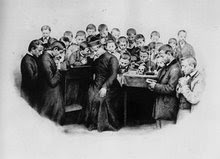
Describing the devastation in Haiti after last January's earthquake, Salesian Father Mark Hyde compared the scene to what he had witnessed a year earlier. Visiting Salesian schools in February 2009 as director of Salesian Missions, based in New Rochelle, Father Hyde saw "thousands of children all over the place, having fun, going to classes." Older students were enrolled in teacher training and other professional programs. Having seen campuses bursting with life last year, he said that when he returned shortly after the quake, it was all the more difficult to look upon "all that rubble, no children around, the desolation."

Salesian Missions has been given responsibility for coordinating all Salesian mission efforts for Haiti worldwide. Father Hyde went back to Haiti in April and again in July, and he's about to return for another visit. There is still an enormous amount of work to do, but the scene is more hopeful. Several Salesians are living in a temporary residence that was under construction in April but is now finished. Temporary classrooms have been completed and painted, and "they're looking very spiffy," Father Hyde said in an interview with Catholic New York, archdiocesan newspaper. They have been equipped with chalkboards, desks, stools and wooden benches, and 3,000 children are attending classes, he said. Those classes are part of the Salesians' Little Schools of Father Bohnen, a network of small, tuition-free schools begun by Salesian Father Lawrence Bohnen in the 1950s.

Before the earthquake, more than 20,000 impoverished children were attending 132 Little Schools -- some not much more than a tent or other temporary shelter with a few seats and a chalkboard. Now there are 20 of the schools, so there's a distance still to go before the Salesians' educational mission is fully restored. But the progress is a solid start, and it reveals the faith, hope and hard work of the Salesians and the Haitian people. Father Hyde remarked that on his April visit, he saw Haitians chipping away at the rubble of a four-story building. "They were breaking down the concrete into little pieces that could be moved," he said. "They had totally demolished the top two floors with little sledgehammers. "They have a tremendous spirit of work and determination, and also of carrying on in the midst of obstacles," he added. "They keep on plugging away."

The Salesians began educating the poor in Haiti at the invitation of the Haitian government -- the Salesian Sisters (the Daughters of Mary Help of Christians) in 1935 and the Salesians of Don Bosco (priests and brothers) in 1936. Salesians in Haiti now number about 85 sisters and 70 priests and brothers. Father Hyde said the Salesians are the largest providers of education in Haiti after the government.

Father Hyde said Salesian Missions and the Salesians in Haiti developed "a three-pronged plan" after the quake; their goals are "saving lives, rebuilding lives and rebuilding the Salesian educational infrastructure in Haiti." Work is continuing on all three. The Father Bohnen schools have a new, temporary plywood office. The schools used to serve bread for breakfast and a lunch of rice and beans. The children now get breakfast only, but new kitchens are being built by Salesian teachers and the students in Salesian professional programs, so that the lunch program can be restored.

In Petionville, the College Dominique Savio, a Salesian high school, sustained only "cosmetic damage," Father Hyde said. It's now in session for 500 boys and girls. A Salesian youth center in Thorland has been turned into a temporary camp for 8,000 refugees whose homes were destroyed in the quake. The youth center had a three-story building that collapsed in the quake; no one was inside. A large, multipurpose building -- used as a gym and auditorium -- lost its front and back walls, but its sidewalls still stand; Father Hyde said that under its roof, children were playing soccer and dancing on the stage. Some of the refugees in the temporary camp are growing corn outside their tents, he added. "Haitians are resilient," he said. "They are going with the flow, and they make the best of the circumstances."

Funding for reconstruction is coming from Salesian nongovernmental organizations worldwide. Salesian Missions in New Rochelle has pledged to fund the rebuilding of the youth center at Fort-Liberte, and will soon launch an appeal for donations. "It is my hope that a new Haiti will rise, much better than the old Haiti," Father Hyde said. "But it's going to take time."
Tuesday, July 13, 2010

Ministering in a Nation Without God

The following comes from the Zenit.org site:

Mosques and churches were forcibly closed in Albania in 1967; religious practice wasn't allowed again for almost a quarter of a century. In fact, Albania is known as the world's first atheist state.

Today in post-Communist Albania, it's hard to estimate how many Catholics are among the nation's 3.6 million people -- perhaps around 10%, with another 20% being Orthodox.

To this scenario journeys Dr. Anna Maria Doro, a member of the Catholic lay Community of Sant'Egidio. She's been helping in Albania for 10 years.

In this interview given to the television program "Where God Weeps" of the Catholic Radio and Television Network (CRTN) in cooperation with Aid to the Church in Need, Doro gives an inside look at Albania and how it's changed and continues changing.

Q: What struck you the most when you first went to Albania? What touched you personally?

Doro: What touched me was the difference between the two countries [Italy and Albania]. It is very near Italy and only 60 kilometers (37 miles) from the Port of Brindisi to the port in Vlore in Albania.

Albania had not changed -- it was something like a hundred years ago: very few cars on the streets, bad streets and shortages of electricity. The life of the people is linked to a very archaic agricultural system and many shepherds. But what touched me was the warmth of the people. The Albanians are very welcoming toward foreigners. Hospitality is highly valued and even if they are in a difficult situation, they share what they have with their guests.

Q: If I read correctly, there was an electric fence that went around the country?

Doro: There was a kind of a fence, for example along the border with Yugoslavia surrounding the lake. There are no trees on the border to this day. The trees were all cut in order to prevent the people from leaving the country. To leave the country was forbidden and the people who were caught were executed and their family prosecuted. I met people who could not finish their studies because a distant cousin tried to escape.

Even movement within the country was forbidden so people in the mountains, who were economically deprived, were forbidden from migrating to the urban areas because it was a privilege to live in the city, which was accorded to the loyal members of the regime. There was a total cultural isolation and the people were forbidden from listening to foreign news and music and as a consequence, the people were unaware of events in the outside world during that period and they were fed with a distorted view of the outside world.

Q: The attack on the Church was terrible; persecution was hard. What examples can you give us of how this attack on the Church occurred?

Doro: They started with the killing of about 60 priests and many nuns and arresting all of the priests. There was a suppression of religious orders and the closure of Catholic schools. I met a Stigmatine sister in Shkoder. Their convent was closed. There were about 90 of them. They went back to their homes and continued to be nuns and people brought children to them to be baptized in secret. Some of these sisters were novices and they waited and could only wear their religious habits again in 1991 when they were in their 70s.

Q: You are a medical doctor. You've been working in Albania since 1995 and you are going as a volunteer that is, you go on your holidays to Albania, you give 15 days and in fact you are going to be leaving very soon? What medical challenges do you see? You are working with children. What challenges do you see in the medical structure and infrastructure in Albania?

Doro: The Sant'Egidio Community helps particularly in the health and educational sectors. The health sector is ill-equipped like most of the public sectors in Albania. So we assist with donations for medicine and health equipment for hospitals. And particularly in the north, which is the poorest part of the country, we are supporting 14 pediatric clinics especially to help in the fight against childhood malnutrition. Since 1991 the economic situation in Albania has improved of course, but there are still plenty of needs in the health sector and people are still suffering. The infrastructure is lacking and there are still shortages in electricity and this is very difficult for the people.

Q: There somehow seems to be silence about the country from the international community. Do you feel this and why?

Doro: For 40 years it was impossible to know anything about Albania. Now, the situation surely is different. From a general point of view, I would say, that Albanians are very interested about other countries and languages but there is no reciprocity among the Western Europeans and the U.S.. The Italians, for example are misinformed about Albania. Their perception is based on the first Albanians they encountered in 1991: poor refugees. Now the situation is different. The Albanian emigrates overseas should assist in changing the perception by the international community and through tourism. There are many wonderful sites in Albania.

Q: How does the Church work in this reconstruction effort?

Doro: The Church has done very important work in Albania. It aided in the reconstruction of the society in terms of human development and in the communication of the Gospel. This started initially in the beginning especially with the aid of the universal Church. Many missionaries -- priest and nuns -- came from Italy, Kosovo, Croatia, India, the Philippines and Germany. They help to rebuild the churches, schools and clinics. In the beginning the Church was forced to become a proxy administrator because the state was non-existent or ineffective. I think that the Church is a very important point of reference not just for Catholics but for everyone including those without a clear religious identity because the Church is a witness of Christian love which is free of charge -- compassion and love, which is uncommon in that society.

Q: Is the Church highly trusted by the people because it lived with the people during their difficult times, perhaps more than the state?

Doro: Yes, it is very trusted and respected not only by the state but by the other religions because the Church helps everyone without distinction and the people recognize this.

Q: How is the relationship between the Muslims and Catholics in Albania? It seems to be quite harmonious?

Doro: Yes it is up to now. Catholics and Muslims co-exist. Catholics would visit the Muslims during their feasts and vice versa. Now there are some signs of fraying in the relationships because of the events internationally that are reflected as well in Albania, but generally the relationship is quite good and there are a lot of intermarriages.

* * *

This interview was conducted by Mark Riedemann for “Where God Weeps," a weekly TV & radio show produced by Catholic Radio & Television Network in conjunction with the international Catholic charity Aid to the Church in Need.