Showing posts with label New Orleans. Show all posts

Wednesday, January 8, 2014

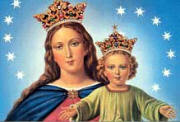
Our Lady of Prompt Succor: Patroness of New Orleans

A new year always brings its hopes, resolutions and challenges. 2013 will no doubt be a year with many blessings... as well as great challenges. Developing a deeper relationship with Our Blessed Mother is something that we might all resolve to do as we begin a new year! She is with us as a mother, protector and help! Especially during difficult times we need the sure guidance of Our Lady! Let's entrust this year to the loving care of Our Lady!

Many of you may not be familiar with the devotion to Our Lady of Prompt Succor. She is the principal patroness of the state of Louisiana, the Archdiocese of New Orleans, and the city of New Orleans. Her feast day is celebrated on January 8. Many miracles have been attributed to the intercession of the Blessed Virgin Mary under the title of Our Lady of Prompt Succor. The first occurred during the eruption of a great fire in New Orleans devastating the Vieux Carré. The Ursuline convent was facing imminent destruction as the winds blew the terrible fire toward Jackson Square. An order was given to evacuate the convent, however at that moment, a nun named Sr. Anthony placed a small statue of Our Lady of Prompt Succor on a window seat and Mother St. Michel began to pray aloud, "Our Lady of Prompt Succor, we are lost unless you hasten to our aid!" Immediately, the wind shifted direction, blowing the flames away from the convent allowing for the fire to be extinguished. The Ursuline convent was one of the only buildings spared from destruction. Upon seeing the inexplicable occurrence, witnesses unanimously cried out, "Our Lady of Prompt Succor has saved us!"

The second major miracle occurred in 1815, three years after the disastrous fire. General Andrew Jackson was facing the British in the Battle of New Orleans. There were 15,000 British Troops against 6,000 American troops. It seemed as though the city of New Orleans was doomed. Knowing the terrible fate of the city of New Orleans the Ursuline nuns along with many faithful people of New Orleans gathered in the Ursuline chapel before the statue of Our Lady. They spent the night before the battle praying and crying before the holy statue, begging for the Virgin Mary's intercession. On the morning of January 8, the Very Rev. William Dubourg, Vicar General offered mass at the altar on which the statue of Our Lady of Prompt Succor had been placed. The Prioress of the Ursuline convent, Mother Ste. Marie Olivier de Vezin, made a vow to have a Mass of Thanksgiving sung annually should the American forces win. At the very moment of communion, a courier ran into the chapel to inform all those present that the British had been defeated. General Jackson went to the convent himself to thank the nuns for their prayers: "By the blessing of heaven, directing the valor of the troops under my command, one of the most brilliant victories in the annals of war was obtained." The vow made by Mother Ste. Marie has been faithfully kept throughout the years.


Our Lady of Prompt Succor, ever Virgin Mother of Jesus Christ our Lord and God, you are most powerful against the enemy of our salvation. The divine promise of a Redeemer was announced right after the sin of our first parents; and you, through your Divine Son, crushed the serpent's head. Hasten, then, to our help and deliver us from the deceits of Satan. Intercede for us with Jesus that we may always accept God's graces and be found faithful to Him in our particular states of life. As you once saved our beloved City (New Orleans) from ravaging flames, and our Country from an invading army, have pity on us and obtain for us protection from hurricanes and all other disasters. (Silent pause for individual petitions.) Assist us in the many trials which beset our path through life. Watch over the Church and the Pope as they uphold with total fidelity the purity of faith and morals against unremitting opposition. Be to us truly Our Lady of Prompt Succor now and especially at the hour of our death, that we may gain everlasting life through the merits of Jesus Christ Who lives and reigns with the Father and the Holy Spirit, one God world without end. Amen. -prayer from the National Shrine of Our Lady of Prompt Succor
To learn more about this devotion please click here!

Saturday, March 16, 2013

Margaret Haughery of New Orleans


The following comes from the Old NOLA Journal:

Where Camp and Prytania Streets meet in New Orleans is a small park called"Margaret Place." On it is a statue of a middle aged woman seated in a chair with a small child nearby. The plaque on the statue has only one word: "Margaret."
When the statue was built, after the death of the woman in the chair, everyone in New Orleans knew who she was. I wonder how many people, sad to say, remember who she was today?

We often forget our history, and this is a tragedy. One of the reasons for this blog is to help us remember the important but often over-looked stories of Old New Orleans.

Margaret Haughery (pronounced as HAW -a- ree) is someone we should remember for all time. In her day she was called the "Bread Woman of New Orleans" because she gave freely to the poor and hungry from her own bakery. In addition to feeding the poor, she helped fund and build many orphanages throughout the city.

When she died in 1882 thousands, including prominent politicians, businessmen, and members of the clergy, attended her funeral. Her obituary was printed on the front page of the Picayune newspaper, the main paper in the city. The citizens of the city, who adored her, raised the funds to build a statue to her. (See the photo I took above pre-Katrina). It is believed by many historians to be the very first -- or certainly among the very first-- public statues ever built to honor a woman in the USA. But many people today do not even know the statue exists.

Margaret Gaffney Haughery was born into poverty possibly in County Cavan, Ireland in 1813. (Note: Most older sources say that Cavan was the place of Margaret's birth. Some sources claim, however, that she was  born elsewhere in Ireland, such as in Tully, Carrigallen, County Leitrim. See the "comments" at the end of this story for more information and discussion on this.) 

When she was five years old, her parents left Ireland --which was a land plagued by destitution, political turmoil, and oppression under British rule -- and came to America. But within a few years, Margaret was left an orphan as both her parents died of disease. She was cared for by a neighbor and later married at 21. Her husband, Charles Haughery, was not a well man. To escape the cold climate up north, the couple moved to New Orleans in 1835. Here, however, they -- like other New Orleanians -- suffered from rampant epidemics of yellow fever and cholera. Soon her husband died as did her newborn child. So, within a period of a few years, she had lost every single person in her life that she loved.

Despite these tragedies, or because of them, Margaret was determined to do something in her life to help the condition of widows and orphans -- something she understood very well. However, now she was destitute, totally uneducated and illiterate, and totally alone in essentially a foreign country.

She found work in the laundry of the St. Charles Hotel, a very fine establishment in the French Quarter which no longer exists. Then she worked for a dairy, selling fresh milk in the Vieux Carre' (French Quarter). She became acquainted with the Sisters of Charity and worked with them, specifically with a nun named Sr. Regis Barrett. It was at this point that her business experience combined with her philanthropic goals. She and the nun would work together for many years helping neglected orphans and widows in the city. Although a Catholic, Margaret made certain that all her charity work was opened to people of all religions and backgrounds.

Eventually, Margaret worked for a bakery and became the owner of businesses. She helped open the St. Teresa's Orphan Asylum on Camp Street. One of her businesses called "Margaret's Steam and Mechanical Bakery" became very popular, and she advertised her products by her first name. (Hence as in the plaque on her statue years later, everybody knew her by her first name). The bakery sold "Margaret's Bread," and she became the "Bread Woman of New Orleans." Eventually, she owned a popular store in the city called the Klotz Cracker Factory.

Some of the orphanages she built were St. Elizabeth Orphan Asylum on Napoleon Ave., the Louise Home on Clio Street for girls, St. Vincent Infant Asylum (at Race and Magazine Streets) , and an asylum and church on Erato Street that became St. Teresa of Avila Church. She donated to the Protestant Episcopal Home as well and gave to Jewish charities in New Orleans. In her will she gave to the Seventh Street Protestant Orphan Asylum, the German Protestant Orphan Asylum, the German Orphan Catholic Asylum, the Widows and Orphans of Jews Asylum, and to the Daughters of Charity of St. Vincent de Paul, and many others.

In her will she left everything to charities, without distinction of religion, for widows, orphans, and the elderly.

I first learned of Margaret Haughery -- as I learned about all the Irish things in this city -- from my mother and my sister. The story of Margaret is truly remarkable, and it is no accident that I chose it as the first historical story on this blog. It is a GREAT story of Old New Orleans.

Monday, March 11, 2013

French Quarter: Eh, là-bas!

French Quarter Fest from blastframe on Vimeo.

Sunday, February 3, 2013

'The Spirit of New Orleans'

The following video essay was prepared for the Super Bowl Pre-game show by  CBS and Wynton Marsalis:

Saturday, February 2, 2013

Mike Lupica: Super Bowl 2018 in New Orleans a great idea for renewal of the city


The following comes from the Daily News site:


The Super Bowl has returned to New Orleans this week and it is an event, for now at least, that is the last act of a magnificent comeback by a truly great American city. New Orleans officially shows the country and the world that is all the way back now from Katrina, which did even worse here than Sandy did in Staten Island and Breezy Point and the Jersey Shore.

So the big game comes back here for the first time since 2002, since Adam Vinatieri kicked a field goal and beat the Rams for a kid named Tom Brady and the Patriots. But no Super Bowl game, not Patriots vs. Rams or even this game between the Ravens and 49ers on Sunday, can ever be the biggest game of football ever played in this city, because that will always be the one the Saints played — and won because of a blocked punt by a Saints player named Steve Gleason, now suffering from ALS — in September of 2006 after Katrina.

That was the night when a national television audience saw New Orleans get up.

“There will never be,” James Carville, the chairman of the host committee for this Super Bowl, was saying on Thursday, “a more important sports event than that in this city or in this state.”

Then James Carville, a New Orleans resident, said, “But this one we got comin’ up on Sunday ain’t bad.”

Ain’t bad, ain’t enough.


Tuesday, January 29, 2013

Super Bowl 2013 represents a journey for New Orleans:


The following comes from NOLA.com

The accolades for New Orleans started flowing as soon as Super Bowl visitors hit town this week. "Just arrived in N.O. NFL can hold the Super Bowl here every year ... No better big event city for sports," Rick Gosselin, a Dallas Morning News columnist, tweeted Sunday night.

Super bowl signs008.jpgMaria Elana Oliva and Rodolfo Oliva work together with others to fold a banner as workers at Crystal Clear Imaging work with oversized printers, making the huge banners and signage at their shop in Elmwood Jan. 29. The banners are going up around New Orleans for Super Bowl XLVII.
Bernie Miklasz, a sports columnist for the St. Louis Post-Dispatch who has covered the Super Bowl for three decades, said New Orleans is his top choice as host city. Ravens offensive tackle Michael Oher tweeted: "Man I have a special love for New Orleans!! I love coming here."

New Orleanians love this city ferociously, and it is a point of pride that so many people elsewhere feel a similar affection. This week, though, the compliments carry greater significance. After what the city and the region have gone through over the past seven years, it is a remarkable achievement to be hosting another Super Bowl.

As Ti Martin, whose Commander's Palace restaurant underwent a $6.5 million renovation post-Katrina, told FoxSports.com: "Every now and then when you've got your nose to the grindstone, and you're just working, working, working, you've got to stop and say, 'Look at what we did.' And this is going to be another one of those moments."

It should be one of those moments for everyone who has worked to bring this community back - every homeowner who returned, every business that reopened, every civic activist who demanded better schools and government, all the volunteers who gave of their time and energy to clean up and rebuild.

And specifically for this event, thank you to Saints owner Tom Benson, the NFL and Commissioner Roger Goodell. Super Bowl XLVII is putting New Orleans on an international stage. For anyone who is unaware, the city's renaissance will be impossible to miss.

This moment was hardly a given. A few weeks after the Saints' triumphant return to the Superdome for the 2006 season, the NFL held its fall owners meeting in New Orleans. Commissioner Goodell started the meeting with a highlight video from the Saints' victory over the Atlanta Falcons in the renovated Dome. The video featured Steve Gleason's blocked punt, Coach Sean Payton's postgame speech, in which he dedicated the game ball to the people of New Orleans, and shots of emotional fans decked out in black and gold.

"It's hard to imagine where we were a year ago," Mr. Goodell told the owners that October day. "And to see where we are now, the progress that has been made is extraordinary." It was extraordinary given that 80 percent of the city was under water after Katrina hit and the levees broke in August 2005.

Not all of the owners were persuaded, though, that New Orleans was going to be a viable city for the long-term. Pittsburgh Steelers owner Dan Rooney said, "The thing that has to be determined is the business (in the city). Is that going to come back?" There also were concerns about whether the Saints could consistently sell tickets, something that had been a problem in the past.

The doubts weren't without cause. There were still blue tarps on rooftops, still thousands of houses that had been gutted but not rebuilt. And we are still rebuilding and still bear some scars.

The difference between October 2006 and today, though, is dramatic. The Saints not only have been able to sell tickets, the Superdome is sold out every year and the team has a long waiting list. And the Black and Gold's 2009 Super Bowl season was nothing short of magical.

As for New Orleans, there are more restaurants open than ever, and the city just finished upgrades to the airport and opened a new spur on the streetcar line. In 2012, tourism officials said that the city received more than a dozen national accolades. It also was recognized for its brain gain and its entrepreneurial energy.

The Super Bowl is arguably the biggest of big events. New Orleans has for years been one of the NFL's favorite sites, as evidenced by the previous nine times the city was chosen to host the game. It has been more than a decade since the game was played here, though. And, given the trauma to our region since then, it seems like longer ago than that.

This week has been more than three years in the making. The host committee, led by co-chairs James Carville and Mary Matalin, have worked countless hours and lined up a dizzying array of events. Thousands of volunteers signed up to help make our guests this week feel welcome.

Good luck to the Ravens and to the 49ers. Have a great week and a super game. We know you've worked hard to get to this moment. And so have we.

Monday, September 3, 2012

In Hurricane Isaac's wake, prayers and help for victims

The following comes from the CNA:

Archbishop Gregory M. Aymond of New Orleans prayed for victims of Hurricane Isaac, as the archdiocese's Catholic Charities affiliate assesses damage and helps those affected. 

 “We consciously place ourselves in God’s presence and ask him to give us his protection,” Archbishop Aymond said. “God has always promised to protect us in challenging times, and we ask that God does that now, especially with those who are struggling. Bless us and help us reach those in need.” 

 His prayer came in an Aug. 29 conference call with the leadership of New Orleans' Catholic Charities, according to the archdiocesan newspaper The Clarion Herald. 

 In another prayer published by Catholic Charities, he asked God to bless those awaiting rescue, the elderly, and the emergency crews. Hurricane Isaac made landfall in the U.S. on Aug. 28. It dropped more than 15 inches of rain and flooded parts of Louisiana and Mississippi, killing at least six. 

Although the storm knocked out power to hundreds of thousands of people, New Orleans did not suffer major damage, the Associated Press reported. However, Catholic Charities said damage assessments are underway and many residents in the Archdiocese of New Orleans will need assistance. The agency’s leaders and Archbishop Aymond are finalizing their response plan. The agency’s crisis counselors and case managers are working with evacuees while other teams will spread into the affected areas. 

 “Residents of Plaquemines Parish, the towns of Slidell, LaPlace, Madisonville and Mandeville have suffered the most damage, but the situation remains fluid and assessments continue to identify damage,” the local agency said Aug. 30. 

 Archbishop Aymond has feared that Assumption of Our Lady Mission in Braithwaite, La. to New Orleans’ southwest sustained heavy flooding. He visited first responders in the affected area on Thursday afternoon, The Clarion Herald reported. 

 Before the storm made landfall, Fr. Larry Snyder, president of Catholic Charities USA, said the national organization is “ready to meet the needs of those who will be most affected by this storm.” Experience and investment, he said, will make relief efforts “more effective and better prepared” than they were in the aftermath of Hurricane Katrina. 

 The archdiocese plans to provide direct financial assistance to those most affected by the storm. Catholic Charities of the Archdiocese of New Orleans is seeking donations on its website www.ccano.org.

Saturday, April 14, 2012

John Paul II exhibit to launch US tour in New Orleans

The following comes from the CNA:

A museum exhibit on the legacy of Blessed John Paul II will begin its U.S. tour at New Orleans’ Notre Dame Seminary in February 2013.

Archbishop Gregory Aymond of New Orleans made the announcement “with great joy and excitement” at an April 13 press conference.

“Receiving this exhibit is not only a great honor for our archdiocese, but an opportunity for us to enter more deeply into our work of evangelization, carrying on the legacy of Bl. John Paul II,” the archbishop said. “Pope Benedict XVI has named the upcoming year a ‘Year of Faith’ and by hosting this exhibit, we are attempting to answer his call.”

The new exhibit, titled “I Have Come To You Again,” has over 100 items from the personal possessions of Bl. John Paul II. The items come from the Pope John Paul II Center in Krakow, Poland and from the Vatican Collections.

The Lubbock, Texas-based National Exhibits Association is running the exhibit tour under the leadership of Father Malcolm Neyland, its president and executive director.

“Never before has a collection of the personal belongings of a Roman Catholic Pope been on display in the United States,” the association said April 13, noting that during his pontificate, Bl. John Paul II visited the U.S. seven times.

His “immense faith and great courage were inspirational and admired by Christians and non-Christians alike throughout the world,” the organizers said.

The exhibit will be open on the Notre Dame Seminary Campus from February through April 2013. Its contents are divided into four sections: Karol Wojtyla’s childhood and adolescence, from 1920-1938; Karol Wojtyla’s years in Poland as a laborer, priest, bishop, archbishop and cardinal from 1939 -1978; his years as Pope from 1978 until his death in 2005; and the wake of his papacy up through his beatification.

The curator of the exhibit is Prof. Francesco Buranelli, Secretary of the Pontifical Commission of the Cultural Patrimony of the Church. He has previously served as the general director of the Vatican Museum.

Many close advisors of the late pontiff have contributed essays for the exhibition catalogue, including Cardinal Angelo Comastri, vicar general for Vatican City; Cardinal Angelo Sodano, Dean of the College of Cardinals; Cardinal Stanislaw Rylko, president of the Pontifical Council for Laity; and Msgr. Stanislaw Oder, the postulator for John Paul II’s canonization.

The National Exhibits Association is working with Louisiana Gov. Bobby Jindal, New Orleans Mayor Mitch Landrieu and the New Orleans Chamber of Commerce to bring the exhibit to New Orleans. Stops are also planned for Seattle, Wash. and Washington, D.C.

Archbishop Aymond urged the local community to visit the exhibit to “experience and witness Bl. John Paul II’s life and ministry.” He also asked for prayers for the exhibit’s success.

The National Exhibits Association is seeking donations to meet the expenses of the exhibit. More information about the exhibit is available at the association’s website http://www.nationalexhibits.org.

Monday, April 2, 2012

Faithful say image of Jesus draws them to Ursuline chapel


The following comes from WWLTV in New Orleans:

The Ursuline chapel in Uptown New Orleans is home to the National Shrine of Our Lady of Prompt Succor, but for the past 12 days, it has also been home to hundreds of faithful who are coming in to see what they say is a vision of Jesus on a pillar.

“I think this is so extraordinary,” said Charles Davis . “You can see the crown of thorns on Jesus. You can see his face. It’s just very extraordinary.”

Word of the image has spread and people are coming from near and far to see it. The Davis family came in from Geismar, driven by a deep faith.

“It touched my heart very good and it felt like the whole world needed this,” said young Melissa Davis. “It felt very good.

The Ursuline sisters who run the chapel say the image is explainable to a point. They say it’s a shadow cast by light filtering through the chandelier above. If you turn on the chandelier, the image disappears. But, they say what isn’t explainable is why no one had seen the image before.
Sister Carla Dolce, who has been a regular at the chapel since 1944, said she had never seen the image, until now.

A current Ursuline student was said to be the first to see the image, on March 22. The student was in the chapel alone praying and according to Sr. Carla, at the end of the prayer, she asked God to give her a sign, which is when she opened her eyes and saw the vision.

The stunned student then notified her teacher, according to Sr. Carla, and word spread, especially thanks to cell phone pictures.

Now, the secret is out and the faithful and the curious are coming to see for themselves. Some say they don’t see anything remarkable, but others say they are in awe.

“I do (see the face of Christ),” said one woman, “not only that, I’m moved by it.”

On a recent visit there was a young child who was on her knees, an elderly woman who struggled for every breath, people from other religious orders and many Catholic faithful – all drawn under one common roof during the holiest week of the year for Christians.

Archbishop Gregory Aymond issued a statement Monday afternoon.

"While this is not an apparition, it is important that we remember that God can use things as simple as the sunlight and shadows to bring hope to people in their daily lives."

The chapel, on the Ursuline Academy campus at 2635 State St., is open weekdays from 9 a.m. to 6 p.m. and on Saturdays until the 12:30 p.m. Mass.

Saturday, January 14, 2012

A Testimony of Faith from Drew Brees

Saturday, November 19, 2011

Monstrance connected to Blessed Francis Xavier Seelos to be returned to New Orleans

st_alphonsus_monstrance_sunburst.jpgTHe following comes from the NOLA site:


Days before it was to be auctioned off in New York City, a 19th-century altarpiece associated with Blessed Francis Xavier Seelos has been removed from the sale and will be returned to New Orleans. "We are in final negotiations to bring the monstrance back," archdiocesan spokeswoman Sarah McDonald said Tuesday.
The monstrance, which is made of gold-plated silver, stands 4 feet high and weighs 13 pounds. It used to be in St. Alphonsus Church in the Irish Channel, where Seelos occasionally heard confessions, and it is depicted in the church's ceiling fresco.Among the topics of negotiation, she said, is the price to be paid to Sotheby's, the New York auction house that had planned to sell the monstrance today along with other examples of 19th-century furniture and decorative arts.
For the purposes of the auction, Sotheby's had said the monstrance is worth between $40,000 and $80,000.
Archbishop Gregory Aymond said last month that that amount was more than the archdiocese could afford. But after people learned of the impending sale, "we received many calls ... offering assistance," McDonald said.
She declined to say whether a donor or group of donors was buying the vessel. Darrell Rocha, a Sotheby's spokesman, said he could offer no information beyond the fact that the monstrance has been withdrawn from today's sale.
Aymond is "directly involved" in the negotiations, McDonald said.
He is attending a bishops conference in Baltimore and was unavailable for comment Tuesday.
25nw.miracle2Blessed Francis Xavier Seelos, C.SS.R, a Redemptorist priest in New Orleans in the late 1860s.
The monstrance, a bejeweled vessel shaped like a cross surrounded by a sunburst, contains a glass case, called a luna, in which the consecrated host is displayed for the adoration of the faithful. Catholics believe that, upon consecration, the host becomes the body of Jesus Christ.
The piece's name derives from the Latin word monstrare, meaning "to show."
Although it is definite that the monstrance will return to New Orleans, no one knows yet when it will return or where it will go, McDonald said.
Charles "Jerry" Rosato, a longtime antiques dealer who collects religious artifacts, said he bought it in the late 1990s from the Rev. Alton Carr, St. Mary's pastor, for $5,000 because the parish needed money.
The sale was approved by Monsignor Earl Woods, a friend of Rosato's who was archdiocesan archivist at the time. Woods has since died, and Carr has not returned calls seeking comment.
Rosato consigned the monstrance to Sotheby's because he needed money to pay off a $30,000 Hurricane Katrina-related loan and, he said, the monstrance was the only thing he could use as collateral.
Aymond said last month that the sale violated church law, which forbids the sale of a sacred object to anyone not affiliated with a church.
"Besides being a relic of someone who could be canonized with local ties, a monstrance holds the body of Christ and should never be auctioned off for money," Aymond said then.
The prospect of the monstrance's return is "fantastic," Rosato said, adding, "That's exactly what I wanted."
st_alphonsus_monstrance_vertical.jpgView full sizeThe bejeweled altarpiece once seen at St. Alphonsus Church was scheduled to be sold at Sotheby's auction house.
The monstrance was made in France in 1857. It was in St. Alphonsus Church when Seelos, a native of Bavaria, was in New Orleans. He was assigned to St. Mary's Assumption Church, across Constance Street from St. Alphonsus, because many German-speaking Catholics worshipped there.
However, he occasionally crossed the street to celebrate sacraments for English-speaking worshippers at St. Alphonsus, said the Rev. Byron Miller, the chief advocate for Seelos' canonization.
He was "a tireless sacramental priest," Miller said.
Seelos, who arrived in September 1866 and died of yellow fever 13 months later, has been beatified because a miraculous cure was attributed to his intervention. As a result, "Blessed" precedes his name.
He is one miracle away from sainthood.
More important than the monstrance's connection to Seelos is its iconic importance to the Irish Channel community, said Bill Murphy, who was an altar boy at St. Alphonsus.
The church was closed in 1979 and has since been used as an art and cultural center.
Miller, who called the altarpiece "the prodigal monstrance," said he was "ecstatic" about its impending return.
"It never should have left the city," he said.

Thursday, October 6, 2011

Remebering Archbishop Hannan


Monday, October 3, 2011

Archbishop Philip Hannan has plenty of company beneath St. Louis Cathedral

Hat tip to the Deacon's Bench for this one! The following comes from NOLA.com:


To walk up the marble tile center aisle of St. Louis Cathedral is to step over and past the bones of people. Lots of people.
diagram-hannan-100211.jpgGraphic: Where, how Archbishop Philip Hannan will be buried (click to enlarge)
The triple-spired cathedral that is the international symbol for New Orleans is more than a church. It’s a working cemetery as well.
The mortal remains of 11 bishops and archbishops, as well as the unmarked graves of scores of early residents of the French and Spanish colony lie under the cathedral’s floor.
On Thursday, the cathedral will receive another body when hundreds of priests, bishops, and members of the general public gather celebrate a funeral Mass for Archbishop Philip Hannan.
Hannan died early Thursday at age 98, having spent 23 years as archbishop and another 23 years in an active public retirement in and around New Orleans. By long tradition, Catholic bishops and archbishops are buried in or near their cathedrals.
After his funeral Mass, Hannan’s remains will be lowered into a crypt below the crimson carpet in the sanctuary in front of the altar, where he will lie alongside eight predecessors.
An ancient tradition
Burying the honored dead within churches — or more accurately, building churches atop the remains of honored dead -- is an ancient tradition, dating to the earliest days of Christianity, said Monsignor Crosby Kern, the cathedral’s rector.
The temporal center of Roman Catholicism, St. Peter’s Basilica, is the most recent of several churches built over the site that tradition holds is the grave of Simon Peter, the fisherman Jesus picked to lead the church.
Recent archeology seems to have confirmed that St. Peter’s is, in fact, atop the grave of the apostle.
Later, Christians celebrated the Eucharist on the very tombs of the martyred dead, partly in the belief that those dead heroes were “friends of God” who would help carry forward their prayers in heaven, according to Ken Woodward, author of “Making Saints,” an account of the Catholic church’s sanctification process.
Saints' relics entombed in altars
For centuries, Catholic altars worldwide were required to keep the link between worship and tombs by containing a tiny relic of a saint — perhaps a sliver of bone — making each altar a symbolic tomb, said Monsignor Ken Hedrick of the archdiocese’s Office of Worship. The practice is no longer required, but strongly encouraged, he said.
For tens of millions of Christians, the Protestant Reformation eliminated the role of intercessory saints, and dismissed any inclination to draw near to their remains in prayer, in church or elsewhere.
But even so, the custom of burial in church is not restricted to Catholicism.
The Episcopal Church’s Washington National Cathedral, technically the Cathedral Church of St. Peter and Paul, houses the remains of more than a dozen people, including writer Helen Keller and President Woodrow Wilson.

Thursday, September 29, 2011

Archbishop Philip Hannan, Rest in Peace


The following comes from the NOLA site:

Philip Matthew Hannan, the archbishop who built an ever-widening network of services for the poor during nearly a quarter-century as the pastor of nearly a half-million New Orleans’ Catholics, died Thursday at 3 a.m. at Chateau de Notre Dame, the Archdiocese of New Orleans said. He was 98.


Archbishop Hannan died on the 46th anniversary of his appointment to New Orleans.


Archbishop Hannan "truly made New Orleans his home. This was his parish and his archdiocese, and it had no boundaries,' Archbishop Gregory Aymond said in a statement.


At his death, Archbishop Hannan was the senior archbishop or bishop in the American hierarchy, and the third oldest, behind retired Archbishop Peter Gerety of Newark, 99, and retired Bishop Joseph McLaughlin of Buffalo, 98.


Archbishop Hannan enjoyed a long and robust public retirement well into his 90s. But though free of major chronic illness, he became more frail year by year.

Monday, September 26, 2011

Prayer Need: Archbishop Philip Hannan Weakens

philip-hannan-ted-jackson.jpgThe following comes from the NOLA site:
Retired Archbishop Philip Hannan, 98, appeared to be failing over the weekend, and the Archdiocese of New Orleans solicited prayers on his behalf. "Archbishop Hannan is not doing well, and his doctors are not optimistic. He is at Chateau de Notre Dame under a doctor's care,"Archbishop Gregory Aymond advised pastors in a brief email on Saturday.
Aymond urged pastors to solicit parishioners' prayers as well.
Hannan's brother, Jerry, flew to New Orleans to spend the weekend at Hannan's bedside.
However, Hannan reportedly rallied somewhat on Sunday and was able to take a little nourishment and communicate with visitors.
Chateau de Notre Dame is an archdiocesan health care facility for the elderly behind Notre Dame Seminary.  Hannan moved there in June from his home in Covington to receive stepped up care.
Hannan led the archiodese for 23 years, from 1965 to 1988.

Friday, June 17, 2011

Andrew Jackson and Our Lady of Prompt Succor

The following comes from the American Catholic site:

When one thinks of Andrew Jackson, Our Lady of Prompt Succor and the Ursuline nuns do not spring to mind, but they should.


In 1814 the War of 1812 was going badly for the United States. With the abdication of Napoleon, hordes of British veteran troops were sent across the Atlantic to teach the Yankees a lesson. The burning of Washington in August 1814 was part of the lesson, and the American government had intelligence that a mighty British fleet and army were on their way to seize New Orleans. In August 1814 a British fleet established a base, with the consent of the Spanish government, at Pensacola, Florida, and used it to supply Indians hostile to the US. On November 7, 1814, Jackson seized Pensacola, chased the British troops out and destroyed the fortifications. The British fleet sailed off and Jackson marched to New Orleans. Jackson arrived at New Orleans with his rough frontier army of militia and regulars on December 2, 1814. Space in a blog post does not allow me to detail the very interesting moves and counter-moves of the British commander General Edward Pakenham, brother in law of the Duke of Wellington and a peninsular war veteran, and Jackson. Suffice it to say that at the Battle of New Orleans on January 8, 1815, Jackson and his men, heavily out-numbered, handed the British the most lopsided defeat in their history, inflicting a little over 2000 casualties, including the slain General Pakenham, in exchange for 71 American casualties.


The Battle of New Orleans is sometimes called a useless battle because it was fought before news of the treaty of Ghent ending the war, which had been signed on December 24, 1814, reached America. This view is erroneous. The battle was a shot in the arm to American morale after a lack-lustre war, ensured that the British would abide by the terms of the treaty and not attempt to retain a captured New Orleans, and gave the British something to ponder on the few occasions during the nineteenth century when America and Britain again came close to war.


That a force of around 4,000, most of them relatively untrained militia, could hand a British army of 11,000 well-trained veteran regulars such a defeat has long been thought to be a military miracle. Perhaps the term “miracle” is the correct one to use. The night before the battle, at the Ursuline Chapel in the Ursuline Convent in New Orleans, the nuns, joined by many of the faithful in New Orleans, prayed throughout the night for an American victory.
On the morning of January 8, 1815, Mass was said at the altar on which a statue of Our Lady of Succor had been placed. The Prioress of the Convent, Mother Marie Olivier de Vezin made a vow to have an annual Mass of Thanksgiving said if victory was granted to the Americans. At the moment of communion, a courier ran into the chapel announcing the American victory. After the battle Old Hickory came to the convent to thank the nuns for their prayers. “By the blessing of heaven, directing the valor of the troops under my command, one of the most brilliant victories in the annals of war was obtained.” In after years, whenever Jackson visited New Orleans, he always made a point of also visiting the Ursuline Covent. The Mass of Thanksgiving has been faithfully observed each year since 1815 by the Ursulines.