Monday, October 31, 2011

Pie Jesu by The Priests

Pope Benedict: Catholics must live the faith we profess


The following comes from the CNA:

Pope Benedict XVI has urged Catholics to practice what they preach.

“Christ urges us to combine humility with our charitable service towards our brothers and sisters. Indeed, may we always imitate his perfect example of service in our daily lives,” said the Pope to pilgrims in St. Peter’s Square for his Sunday Angelus address Oct. 30.

The Pope reflected upon the gospel passage of the day in which Jesus tells the apostles to “do everything” the Pharisees teach as they “sit in Moses’ seat,” but not “to do what they do, for they do not practice what they preach.”

“In today’s passage,” he said, Jesus “reproaches the scribes and Pharisees” who were teachers of the community “because their conduct was clearly contrary to the teaching which they rigorously offered to others.”

Hence “good teaching must be accepted, but may be contradicted by inconsistent conduct,” said the Pope.

“Jesus’ attitude is exactly the opposite,” Benedict XVI noted. “He practices the first commandment of love that teaches all, and can say that it is light and gentle because he helps us to carry it along with him.”

The Pope then warned against “masters who oppress the freedom of others in the name of their authority,” quoting the 13th century Italian theologian St. Bonaventure who said that no true teacher, “can teach or even work, or reach knowable truth without seeing the Son of God.” Thus it is Jesus who is our “one true and only teacher.”

“We, therefore, are called to follow the Son of God, the Incarnate Word, who expresses the truth of his teaching through fidelity to the will of the Father, through the gift of himself.”

The Pope also noted that Jesus “strongly condemns” vanity, as work that is “placed at the mercy of human approval,” can undermine “the values that underpin the authenticity of the person.”

“Dear friends,” the Pope concluded, “the Lord Jesus has been presented to the world as a servant” even to the point of being “giving himself totally on the cross,” which is our “most eloquent lesson in humility and love.”

After the Angelus Pope Benedict prayed for the victims of recent flooding in Thailand and Italy.

“Dear brothers and sisters,” said the Pope, “I express my closeness to the people of Thailand hit by serious flooding, as well as in Italy, to those of Liguria and Tuscany, recently damaged by the consequences of heavy rains.”

The floods in Thailand have already claimed almost 400 lives while in Italy nine people were killed last week in the northwest regions of Liguria and Tuscany.

Sunday, October 30, 2011

Oh Lord You´re Beautiful by Jesus Culture

Saint of the day: Alphonsus Rodriguez

The following comes from the Catholic Online site:

Confessor and Jesuit brother, also called Alonso. He was born in Segovia, Spain, on July 25, 1532, the son of a wealthy merchant, and was prepared for First Communion by Blessed Peter Favre, a friend of Alphonsus' father. While studying with the Jesuits at Alcala, Alphonsus had to return home when his father died. In Segovia he took over the family business, was married, and had a son. That son died, as did two other children and then his wife. Alphonsus sold his business and applied to the Jesuits. His lack of education and his poor health, undermined by his austerities, made him less than desirable as a candidate for the religious life, but he was accepted as a lay brother by the Jesuits on January 31, 1571. He underwent novitiate training and was sent to Montesion College on the island of Majorca. There he labored as a hall porter for twenty-four years. Overlooked by some of the Jesuits in the house, Alphonsus exerted a wondrous influence on many. Not only the young students, such as St. Peter Claver, but local civic tad and social leaders came to his porter's lodge for advice tad and direction. Obedience and penance were the hallmarks of his life, as well as his devotion to the Immaculate Conception. He experienced many spiritual consolations, and he wrote religious treatises, very simple in style but sound in doctrine. Alphonsus died after a long illness on October 31, 1617, and his funeral was attended by Church and government leaders. He was declared Venerable in 1626, and was named a patron of Majorca in 1633. Alphonsus was beatified in 1825 and canonized in September 1888 with St. Peter Claver.

Saturday, October 29, 2011

How He Loves Us by Kim Walker

Salesian Holiness: Blessed Michael Rua!

Today in the Church we recall Blessed Michael Rua! He was the first successor of St. John Bosco and led the Salesian Family toward tremendous growth. The following comes from the Salesian website in Rome:

Going halves in everything

Born in Turin on June 9, 1837, the youngest of nine children, Michael came to the Oratory in 1852. One day Don Bosco told him: "We will go halves in everything". He was among the first group to whom Don Bosco suggested the formation of the Salesian Society.

His many roles

For 36 years he was his closest collaborator in all stages of the development of the Congregation. He was professed in 1855, was first spiritual director of the Congregation at 22 (1859) and was ordained in 1860. He became the first director of the Mirabello College at 26 (1863-1865) and, later, was Vicar of Valdocco, with its 700 pupils and of the Society. He was administrator of the Letture Cattoliche (Catholic Readings), responsible for formation (1869) and for personnel. In 1875 he became Director General of the Salesian Sisters and he accompanied Don Bosco on his journeys.

Don Bosco's first successor

At the explicit request of the Founder, in 1884, Pope Leo XIII named him to succeed Don Bosco and he confirmed him as Rector Major in 1888. Fr. Rua was seen as the 'living Rule' because of his austere fidelity, yet he also displayed a fatherly spirit that was capable of great thoughtfulness, so much so that he was known as 'a king of kindness'.

Oversaw extraordinary growth

With the growth in the numbers of confrere and the development of the works, he sent Salesians all over the world, giving special attention to missionary expeditions.
In his long journeys in Europe and the Middle East, he consoled and encouraged, always looking to the Founder: "Don Bosco said…Don Bosco did… Don Bosco wanted…". When he died, on April 6 1910, at 73, the Society had grown from 773 Salesians to 4000, from 57 houses to 345, from 6 provinces to 34, in 33 countries.

Faithful continuation of Don Bosco's spirit

When beatifying him, Pope Paul VI stated: "The Salesian Family owes its origin to Don Bosco, to Fr. Rua its continuation… he developed the Saint's example into a school, his Rule into a spirit, his holiness into a model. He turned the spring into a river". His remains are venerated in the crypt of the Basilica of Mary Our Help.
Beatified on 29 October 1972 by Paul VI. 29th October is the day his memorial is kept liturgically


Friday, October 28, 2011

Nothing is Written by Mumford and Sons

Saint of the day: Jude Thaddeus


Today we remember St. Jude, the patron of hopeless cases! The following comes from the Catholic Online site:

St. Jude, known as Thaddaeus, was a brother of St. James the Less, and a relative of Our Saviour. St. Jude was one of the 12 Apostles of Jesus.

Ancient writers tell us that he preached the Gospel in Judea, Samaria, Idumaea, Syria, Mesopotamia, and Lybia. According to Eusebius, he returned to Jerusalem in the year 62, and assisted at the election of his brother, St. Simeon, as Bishop of Jerusalem.

He is an author of an epistle (letter) to the Churches of the East, particularly the Jewish converts, directed against the heresies of the Simonians, Nicolaites, and Gnostics. This Apostle is said to have suffered martyrdom in Armenia, which was then subject to Persia. The final conversion of the Armenian nation to Christianity did not take place until the third century of our era.

Jude was the one who asked Jesus at the Last Supper why He would not manifest Himself to the whole world after His resurrection. Little else is known of his life. Legend claims that he visited Beirut and Edessa; possibly martyred with St. Simon in Persia.

Jude is invoked in desperate situations because his New Testament letter stresses that the faithful should persevere in the environment of harsh, difficult circumstances, just as their forefathers had done before them. Therefore, he is the patron saint of desperate cases and his feast day is October 28. Saint Jude is not the same person as Judas Iscariot who betrayed Our Lord and despaired because of his great sin and lack of trust in God's mercy.

Eucharist by Fr. Robert Barron

Saints of the Day: Simon and Jude


Today we remember two great apostles: Simon and Jude

O God, we thank you for the glorious company of the apostles,
and especially on this day for Simon and Jude; and we pray
that, as they were faithful and zealous in their mission, so we
may with ardent devotion make known the love and mercy of our
Lord and Savior Jesus Christ, who lives and reigns with you and
the Holy Spirit, one God, for ever and ever.

Thursday, October 27, 2011

The Man I Want to Be by Chris Young

Catholicism on The Real Dark Night

A Quote from St. John Bosco

My sons, in my long experience very often I had to be convinced of this great truth. It is easier to become angry than to restrain oneself, and to threaten a boy than to persuade him. Yes, indeed, it is more fitting to be persistent in punishing our own impatience and pride than to correct the boys. We must be firm but kind, and be patient with them. 


See that no one finds you motivated by impetuosity or willfulness. It is difficult to keep calm when administering punishment, but this must be done if we are to keep ourselves from showing off our authority or spilling out our anger. 

Let us regard those boys over whom we have some authority as our own sons. Let us place ourselves in their service. Let us be ashamed to assume an attitude of superiority. Let us not rule over them except for the purpose of serving them better. 

This was the method that Jesus used with the apostles. He put up with their ignorance and roughness and even their infidelity. He treated sinners with a kindness and affection that caused some to be shocked, others to be scandalized and still others to hope for God's mercy. And so he bade us to be gentle and humble of heart.  

St. John Bosco

Wednesday, October 26, 2011

I Saw God Today by George Strait

Mountain Psalms and Music


Summer Lapses from Tyler Malay on Vimeo.
PSALMS 11:1

In the Lord put I my trust; how say ye to my soul,
Flee as a bird to your mountain?

PSALMS 36:6

Thy righteousness is like the great mountain;
thy judgments are a great deep:
O Lord, thou preservest man and beast.

PSALMS 65:6

Which by his strength setteth fast the mountains;
being girded with power.

PSALMS 76:4

Thou art more glorious and excellent
than mountains of prey.

PSALMS 87:1

His foundation is in the holy mountains.

PSALMS 90:2

Before the mountains were brought forth,
or ever thou hadst formed the earth and the world,
even from everlasting to everlasting,
thou art God.

PSALMS 104:6 & 8

Thou coveredst it with the deep as with a garment;
the waters stood above the mountains.
They go up by the mountains;
they go down by the valleys unto the place which
thou hast founded for them.

PSALMS 125:1 & 2

They that trust in the Lord shall be as mount Zion,
which cannot be removed, but abideth for ever.
As the mountains are round about Jerusalem,
so the Lord is round about his people from
henceforth even for ever.

PSALMS 133:3

As the dew of Hermon,
and as the dew that descended upon
the mountains of Zion;
for there the Lord commanded the blessing,
even life for evermore.

Tuesday, October 25, 2011

Sun to Shine


SUN TO SHINE from Anson Fogel on Vimeo.

Remembering the Forty Martyrs of England and Wales

Today in the Church we remember the Forty Martyrs of England and Wales.

When I was in London a couple of years ago I was able to visit Tyburn Convent. The Convent is situated just down the street from the location of Tyburn Tree (the site of many English Martyrs).

You can feel the presence of these holy martyrs. In 1571, the "Tyburn Tree" was erected near the modern Marble Arch. The "Tree" or "Triple Tree" was a novel form of gallows, comprising a horizontal wooden triangle supported by three legs (an arrangement known as a "three legged mare" or "three legged stool"). Several felons could thus be hanged at once, and so the gallows was occasionally used for mass executions. The "Tyburn Tree" was the site of many of the Roman Catholic Martyrs of England. The most famous among them being St. Edmund Campion.

To learn more about these holy Martyrs please click here.

Monday, October 24, 2011

If Heaven Wasn't So Far Away by Justin Moore

Catholicism: Amazed and Afraid

Pope John Paul II: Everyone has a personal vocation


The following comes from the Paths of Love:

For Pope John Paul II, vocation is fundamentally something personal that takes place between a person and God. Yet there is still a certain "objectivity" to vocation; for being a human person means being oriented to the truth, and truth is objective.

In the first place, then, a vocation is that which God uses to direct each and every one uf us to his task in life. "Jesus has a specific task in life for each and every one of us. Each one of us is hand-picked, called by name by Jesus! There is no one among us who does not have a divine vocation!"  Some are called audibly by God, but the usual kind of call is internal, through the inner working of the Spirit. "What is a vocation? It is an interior call of grace, which falls into the soul like a seed, to mature within it."

We cannot give an everywhere valid account of how a vocation takes place, since "apart from the universal elements that are found in every vocation, each call takes place concretely in ways that are always new and always different—and let us add, always beautiful and wonderful, because God is always wonderful in all that he does." But we can give a general picture, as the Pope does in several places.
Do not be slow to answer the Lord’s call! From the passage of the Book of Exodus read to us in this Mass we can learn how the Lord acts in every vocation (cf. Ex 3:1–6, 9–12). First, he provokes a new awareness of his presence—the burning bush. When we begin to show an interest he calls us by name. When our answer becomes more specific and like Moses we say: "Here I am" (cf. v. 4), then he reveals more clearly both himself and his compassionate love for his people in need. Gradually he leads us to discover the practical way in which we should serve him: "I will send you." And usually it is then that fears and doubts come to disturb us and make it more difficult to decide. It is then that we need to hear the Lord’s assurance: "I am with you" (Ex 3:12). Every vocation is a deep personal experience of the truth of these words: "I am with you."

Saint of the day: Anthony Mary Claret


The following comes from St. Patrick's Church:

Today we remember St. Anthony Mary Caret. Born in Sallent, Spain, December 23, 1807; died in Narbonne, France, October 24, 1870; canonized 1950.

"When I see the need there is for divine teaching and how hungry people are to hear it, I am atremble to be off and running throughout the world, preaching the Word of God. I have no rest. My soul finds no other relief than to rush about and preach."

"If God's Word is spoken by a priest who is filled with the fire of charity--the fire of love of God and neighbor--it will wound vices, kill sins, convert sinners, and work wonders."

"When I am before the Blessed Sacrament I feel such a lively faith that I cannot describe it. Christ in the Eucharist is almost tangible to me. . . . When it is time for me to leave, I have to tear myself away from His sacred presence."

--St. Antony Claret

As the son of a weaver, Antony became a weaver himself and in his free time he learned Latin and printing. At the age of 22 he entered the seminary at Vich, Catalonia, Spain, and was ordained in 1835. After a few years he began to entertain the idea of a Barthusian vocation but it seemed beyond his strength, so he travelled to Rome to join the Jesuits with the idea of becoming a foreign missionary. Ill health, however, caused him to leave the Jesuit novitiate and he returned to pastoral work at Sallent in 1837. He spent the next decade preaching parochial missions and retreats throughout Catalonia. During this time he helped Blessed Joachima de Mas to establish the Carmelites of Charity.

He went to the Canary Islands and after 15 months there (1848-49) with Bishop Codina, Anthony returned to Vich. His evangelical zeal inspired other priests to join in the same work, so in 1849 he founded the Missionary Sons of the Immaculate Heart of Mary (the Claretians), dedicated to preaching missions. The Claretians have spread far beyond Spain to the Americas and beyond.

In 1850, Queen Isabella II, appointed him archbishop of Santiago, Cuba. The people of this diocese were in a shocking state, and Claret made bitter enemies in his efforts to reform the see--some of whom made threats on his life. In fact, he was wounded in an assassination attempt against his life at Holguin in 1856, by a man angered that his mistress was won back to an honest life.

At the request of Queen Isabella, he returned to Spain in 1857 to become her confessor. He resigned his Cuban see in 1858, but spent as little time at the court as his official duties required. Throughout this period he was also deeply occupied with the missionary activities of his congregation and with the diffusion of good literature, especially in his native Catalan. He was also appointed rector of the Escorial, where he established a science laboratory, a natural history museum, and schools of music and languages. He also founded a religious library in Barcelona.

He followed Isabella to France when a revolution drove her from the throne in 1868. He attended Vatican Council I (1869-70) where he influenced the definition of papal infallibility. An attempt was made to lure him back to Spain, but it failed. Antony retired to Prades, France, but was forced to flee to a Cistercian monastery at Fontfroide near Narbonne when the Spanish ambassador demanded his arrest.

Anthony Claret was a leading figure in the revival of Catholicism in Spain, preached over 25,000 sermons, and published some 144 books and pamphlets during his lifetime. His continual union with God was rewarded by many supernatural graces. He was reputed to have performed miraculous cures and to have had gifts of prophecy. Both in Cuba and in Spain he encountered the hostility of the Spanish anti-clerical politicians.

Sunday, October 23, 2011

Voyage


Voyage from Marco Aslan on Vimeo.

CATHOLICISM: Pope John Paul II

Saint of the day: John of Capistrano


Today is the memorial of St. John of Capistrano.

Saint Luigi Guanella


The following comes from Wikipedia:

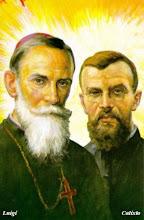
Luigi Guanella (1842–1915), or Blessed Luigi Guanella, was a Catholic priest from Northern Italy. He is the founder of several religious institutes: Daughters of St Mary of Providence, 1890, Servants of Charity in Como on March 24, 1908, with his friends David Albertario and Giuseppe Tonioloand the Pious Union of St Joseph in 1914 with his supporter and first member Pope Pius X. He was sensitive to the needs of the poor and this gave birth to his religious communities who provide for their needs throughout the world. The Servants of Charity motto reads "In Omnibus Charitas." In all things Love. Blessed Guanella was beatified in 1964 by Pope Paul VI.


Blessed Father Luigi Guanella will be canonized as a saint October 23, 2011 by Pope Benedict XVI.

Saturday, October 22, 2011

The Great John Paul on his Vocation

Catholicism on The Church

Saint of the day: Blessed John Paul II


The following comes from the Patron Saints Index:

For many years Karol believed God was calling him to the priesthood, and after two near fatal accidents, he responded to God's call. He studied secretly during the German occupation of Poland, and was ordained on 1 November 1946. In these years he came to know and practice the teachings of Saint Louis Marie Montfort and Saint John of the Cross. Earned his Doctorate in theology in 1948 at the Angelicum in Rome, Italy.

Parish priest in the Krakow diocese from 1948 to 1951. Studied philosophy at the Jagiellonian University at Krakow. Taught social ethics at the Krakow Seminary from 1952 to 1958. In 1956 he became a professor at the University of Lublin. Venerable Pope Pius XII appointed Wojtyla an auxiliary bishop in Krakow on 4 July 1958. Servant of God, Pope Paul VI appointed him Archbishop of Krakow on 30 December 1963.

Wojtyla proved himself a noble and trustworthy pastor in the face of Communist persecution. A member of the prepatory commission, he attended all four sessions of Vatican II; is said to have written Gaudium et spes, the document on the Church in the Modern World. He also played a prominent role in the formulation of the Declaration on Religious Freedom. Following the Council, Pope Paul VI, appointed Karol Wojtyla cardinal on 26 June 1967.

In 1960 he published his most famous written work, Love and Responsibility. Pope Paul VI, delighted with its apologetical defense of the traditional catholic teaching of marraige, relied extensively on Archbishop Wojytla's counsel in writing Humanae Vitae. In 1976 he was invited by Pope Paul VI to preach the lenten sermons to the members of the Papal Household.

Archbishop Wojtyla became the first non-Italian pope since Adrian VI. He took the name of his predecessors (John, Paul, John Paul) to emphasize his desire to continue the reforms of the Council.

John Paul II is the most traveled pope in history, having visited nearly every country in the world which would receive him. As the Vicar of Christ he has consecrated each place that he has visited to the Blessed Virgin Mary. On 13 May 1983 he went to Fatima to consecrate the world to the Immaculate Heart of Mary. He later repeated the consecration of the world to Mary in union with all the Bishops of the Catholic Church, in fulfillment of Our Lady's promises at Fatima.

In the summer of 1995, Pope John Paul II began a lengthy catechisis on the Blessed Virgin Mary during his weekly Angelus addresses, culminating on 25 October 1995, with his instruction on Our Lady's active participation in the Sacrifice of Calvary. This active participation of Our Lady at Calvary is called the corredemption. Already in 1982 and 1985 Pope John Paul II used the term "corredemptrix" in reference to Our Lady in public addresses. This is significant, for he is the first Pope to do so since Pope Benedict XV at whose prayer Our Lady came to Fatima to reveal Her Immaculate Heart. Since the time of Pope Benedict XV, this terminology was under review by the Holy See; the present Pope's usage is a confirmation of this traditional view of Mary's role in salvation history.

Friday, October 21, 2011

I and Love and You by The Avett Brothers

Preview of Fr. Robert Barron's Catholicism

Silence and the Radical Christian Life


Here is a great reflection for Lent. The following comes from the Sinners Guide:

Silence should be part of every Christian’s life. Unfortunately silence is becoming more and more scarce in our society. It doesn’t come without Cultivation.
Why is silence so important? Every baptized Catholic has the threefold vocation of Priest, Prophet and King. We cannot fully take up the role of Prophet without first cultivating silence in our everyday life. Why? Being a prophet is more than proclaiming the Truths handed to us from the Church. God speaks to us all individually and we each have a part in His plan and a unique message for the world. We will never hear that message that is deep inside us without cultivating silence in our every day life.
Its not easy to find times when we can be in solitude to try and work towards that special silence where we can really communicate on a deeper level with God. Solitude and Silence certainly never came easy for me. Before I was married it was pretty common for me to have the television or radio on all day. As soon as I got home I would turn one of them one for some “background” noise. Once I got married I really learned from my wife to cherish silence she hates background noise and rarely ever wants the television or radio on. Now with my busy life (like most everyone else) I have to wake up early to find time for silence. It has to be a priority for me or it won‘t happen.
Some tips to help cultivate silence in your daily life:
  1. Make it a priority. Set aside time each day to not only pray but listen to God
  2. Make it the same time each day. This builds a habit and shows how important it is to us
  3. Turn off EVERYTHING. (TV, Radio, Cell Phone, Laptop Etc.)
  4. Write down things that are distracting you. For example things you need to accomplish
  5. Work hard to keep your mind on the conversation with God
  6. Use the little times to practice. (In the car, the shower, as you are falling asleep)
  7. Most of all: Ask God for his help. He wants to speak to each one of us. His message is personal.
“Solitude enables you to make contact with yourself, a necessity if you want to realize yourself- not to repeat like a parrot a few acquired formulas, but to be the prophet of God within you who speaks a unique language to each man”
A. G. Sertillanges, O.P.
Oh that my people would listen to me…
Psalm 81:13

The New Roman Missal

Thursday, October 20, 2011

More Landscapes


Landscapes: Volume One from Dustin Farrell on Vimeo.

Fr. Robert Barron on Religious Drifters

Saint of the day: Paul of the Cross


St. Paul of the Cross was born in Ovada in northern Italy as Paolo Francesco Danei in 1694. As a young man, he helped his father who was a merchant. Paul received his early education from a priest and was a very virtuous and pious young man, who spent much time in prayer, attended daily Mass, and spent much time before the Blessed Sacrament without neglecting his duties.

At the age of 19, Paul had a vivid experience of the depth of God's love. As a result of this experience, he aspired to live a life of perfection. While still a layman, he left everything behind and founded the Congregation of Discalced Clerks of the Most Holy Cross and Passion (Passionists) in 1721.

While contemplation and prayer were at the very heart of Paul's life and the life of his new institute, Paul himself soon became a very famous popular preacher, spiritual guide, writer and mystic. For Paul the Passion of Christ was the most vivid witness to God's love for us and he constantly called upon his followers to remember the sufferings of Jesus.

During his lifetime Paul founded thirteen monasteries of Priests and Brothers throughout Italy as well as a monastery of Passionist Nuns. Today the Passionists live and serve in 59 countries of the world and are enhanced by other religious and lay groups who find inspiration in the Charism of St. Paul of the Cross.

Paul died in Rome on October 18, 1775. He was canonized on June 29, 1867 by Pope Pius IX.


Hat tip to Catholic Fire on this one.

Wednesday, October 19, 2011

Lover of the Light by Mumford and Sons

Fr. Robert Barron on Protestantism and Authority

Today's Feast: North American Martyrs

Today is the Feast of the North American Martyrs. We should all pray through their intercession for the needs of our nation:

Holy Martyrs and patrons, protect this land which you have blessed by the shedding of your blood. Renew in these days our Catholic faith which you helped to establish in this new land. Bring all our fellow citizens to a knowledge and love of the truth. Make us zealous in the profession of our faith so that we may continue and perfect the work which you have begun with so much labour and suffering. Pray for our homes, our schools, our missions, for vocations, for the conversion of sinners, the return of those who have wandered from the fold, and the perseverance of all the Faithful. And foster a deeper and increasing unity among all Christians. Amen.

For more information on these courageous men please click here.

Tuesday, October 18, 2011

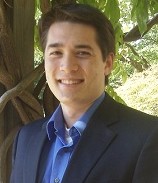
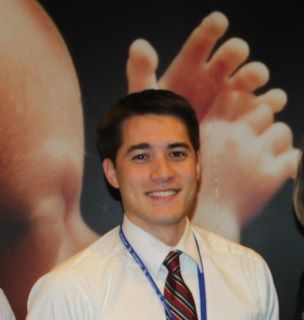
Pro-Life Student Advocate Jon Scharfenberger Passes Away

The following comes from Lifenews.com:

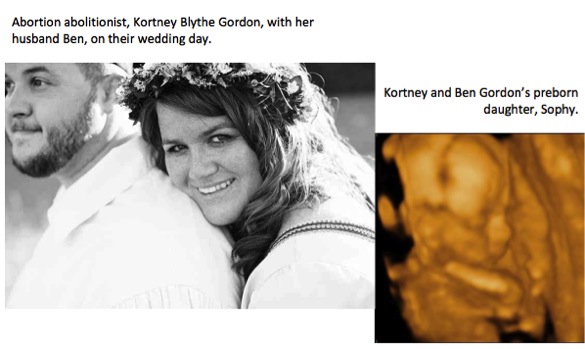
Jon Scharfenberger, a staff member for Students for Life of America, passed away Tuesday morning from complications suffered after a tragic automobile accident that also claimed the lives of Kortney Blythe Gordon and her unborn baby Sophy.
Gordon, Scharfenberger and two pro-life students were driving back from the Students for Life of America Georgia conference when their vehicle was struck by another head on in a massive collision. The driver of the other vehicle was reportedly speeding and passing cars on a two-lane road. Gordon and her unborn child, Sophy, were immediately killed upon impact and Scharfenberger was in critical condition following the accident.
“The team at SFLA is beyond saddened by the news that Jon Scharfenberger, Pregnant on Campus Coordinator and Campus Support Coordinator for Students for Life of America, passed away this morning due to complications from injuries he sustained from the same car accident that claimed the life of SFLA leader Kortney Blythe Gordon and her pre-born daughter, Sophy, on October 8th,” SFLA said in a statement.
“Jon had many successes in his short time with us at SFLA, including establishing a pro-life campus group at Florida International University that was successful in saving the life of a pre-born baby, a mere one week after its creation,” SFLA said. “We continue to offer prayers of support for Jon’s family and friends and grieve during this incredibly difficult time for our organization and mission.”
“Because of your outpouring, the team at SFLA was able to pay Kortney and Sophy’s burial costs 100%. We encourage all of our supporters to donate to help pay for Jon’s burial costs as well.  All proceeds are tax-deductible and 100% of gifts received through this page or otherwise noted will be donated to the Scharfenberger family,” SFLA said. “All of our love and prayers to Jon, Kortney, Sophy, and the Scharfenberger, Blythe, and Gordon families.”
On Monday of last week, SFLA executive director Kristan Hawkins he was not doing well and she had flown to Georgia to be with Jon and his family.
After the accident, Gerard Nadal, the director of Medical Students for Life and a LifeNews blogger, kept the pro-life community informed of Jon’s condition. Yesterday, Nadal reported that Scharfenberger was facing significant medical difficulties.
“Late yesterday I received word that the physicians have induced a 72-hour coma in Jon. In the meantime, we wait, and hope, and pray,” he wrote Monday morning. Later in the day, he added, “Jon has spiked a fever of 108 degrees F, which can be lethal. Urgent prayers are needed as this battle has taken a terrible turn for him.”
Scharfenberger was the Campus Support Coordinator and Pregnant on Campus Coordinator for Students for Life of America and he traveled to college campuses working with pro-life groups to create and obtain tangible goals that impact both their campus and local community. He worked to provide a vision and plan to the over 600 campus pro-life groups across the nation by creating guides and projects that pro-life groups can use in order to provide timely and essential resources to students facing unplanned, crisis pregnancies.
A native of Warwick, New York, Jon graduated with a BA in Philosophy from Ave Maria University in the spring of 2011. He served as President of AMU Students for Life where he led many successful pro-life initiatives. In his years as President, he helped fundraise over $30,000 for the club and committed membership soared from 30 members to over 150 by his final year. In September, 2009 he organized a successful overnight prayer vigil to protest the opening of a new Planned Parenthood, which gained widespread media coverage.
He interned for SFLA in the summer of 2010 and also gained experience on Capitol Hill as an intern for Senator Sam Brownback (R-KS.) Jon joined SFLA in the summer of 2011 to continue to train and equip the next generation of pro-life leaders. Jon also interned at the National Right to Life Committee.

Murder in the City by The Avett Brothers

Confession by Archbishop Sheen


Pope Benedict's letter explains urgent need for 'Year of Faith'


The following comes from the CNA:

Pope XVI Benedict says the Church's “Year of Faith,” starting October 2012, comes in response to a “profound crisis of faith that has affected many people” and left them searching for answers.

“Ever since the start of my ministry as Successor of Peter, I have spoken of the need to rediscover the journey of faith so as to shed ever clearer light on the joy and renewed enthusiasm of the encounter with Christ,” the Pope wrote in his letter, "Porta Fidei" (Door of Faith), announcing the yearlong initiative.

“The 'door of faith' is always open for us, ushering us into the life of communion with God and offering entry into His Church,” he reflected. “It is possible to cross that threshold when the word of God is proclaimed and the heart allows itself to be shaped by transforming grace.”

The Year of Faith will begin Oct. 11, 2012, the 50th anniversary of the opening of the Second Vatican Council. That same date is the 20th anniversary of Blessed John Paul II's publication of the Catechism of the Catholic Church, a text Pope Benedict said was meant to show “the power and beauty of the faith.”

It will conclude on Nov. 24, 2013, the Solemnity of Christ the King.

October 2012 will also be the occasion of the Church's next General Assembly of the Synod of Bishops, on the theme of “The New Evangelization for the Transmission of the Christian Faith.” This event, the Pope noted, “will be a good opportunity to usher the whole Church into a time of particular reflection and rediscovery of the faith.”

Next year's celebration is not the Church's first “Year of Faith.” In 1967, Pope Paul VI presided over an observance on the same theme, which that Pope described as a response to the “disturbance” and “perplexity” surrounding the faith after the Second Vatican Council.

Pope Benedict explained that the new Year of Faith gives an opportunity to show how that council's documents support the historic traditions of the Church, when properly understood. He encouraged believers to study the Catechism of the Catholic Church during the upcoming year, saying the text was “one of the most important fruits of the Second Vatican Council.”

By studying their faith, believers can learn to explain it in light of new circumstances driving others to doubt or disbelieve.

“To a greater extent than in the past, faith is now being subjected to a series of questions arising from a changed mentality which, especially today, limits the field of rational certainties to that of scientific and
technological discoveries,” Pope Benedict observed.


“Nevertheless, the Church has never been afraid of demonstrating that there cannot be any conflict between faith and genuine science, because both, albeit via different routes, tend towards the truth.”

The Pope said it would be a matter “of decisive importance” for Catholics to look back on the history of their faith during the 2012-2013 year, to gain an understanding of how the Church continues Christ's mission of redemption.

“In him who died and rose again for our salvation,” he said, “the examples of faith that have marked these two thousand years of our salvation history are brought into the fullness of light.”

Pope Benedict has asked the Congregation for the Doctrine of the Faith to draw up more specific guidelines on how to “live this Year of Faith in the most effective and appropriate ways, at the service of belief and evangelization.”

He cited the words of the Virgin Mary's cousin Elizabeth, on the occasion of their visitation before Christ's birth, as he asked Catholics to “entrust this time of grace to the Mother of God, proclaimed 'blessed because she believed.'”

Fr. Barron and Dr. Scott Hahn discuss God and Human Freedom

Saint of the day: Luke


The following comes from the Catholic.org site:


Luke, the writer of the Gospel and the Acts of the Apostles, has been identified with St. Paul's "Luke, the beloved physician" (Colossians 4:14). We know few other facts about Luke's life from Scripture and from early Church historians.
It is believed that Luke was born a Greek and a Gentile. In Colossians 10-14 speaks of those friends who are with him. He first mentions all those "of the circumcision" -- in other words, Jews -- and he does not include Luke in this group. Luke's gospel shows special sensitivity to evangelizing Gentiles. It is only in his gospel that we hear the parable of the Good Samaritan, that we hear Jesus praising the faith of Gentiles such as the widow of Zarephath and Naaman the Syrian (Lk.4:25-27), and that we hear the story of the one grateful leper who is a Samaritan (Lk.17:11-19). According to the early Church historian Eusebius Lukewas born at Antioch in Syria.
In our day, it would be easy to assume that someone who was a doctor was rich, but scholars have argued that Luke might have been born a slave. It was not uncommon for families to educate slaves in medicine so that they would have a resident family physician. Not only do we have Paul's word, but Eusebius, SaintJerome, Saint Irenaeus and Caius, a second-century writer, all refer to Luke as a physician.
We have to go to Acts to follow the trail of Luke'sChristian ministry. We know nothing about hisconversion but looking at the language of Acts we can see where he joined Saint Paul. The story of the Acts is written in the third person, as an historian recording facts, up until the sixteenth chapter. In Acts 16:8-9 we hear of Paul's company "So, passing by Mysia, they went down to Troas. During the night Paul had a vision: there stood a man of Macedonia pleading with him and saying, 'Come over to Macedonia and help us.' " Then suddenly in 16:10 "they" becomes "we": "When he had seen the vision, we immediately tried to cross over to Macedonia, being convinced that God had called us to proclaim the good news to them."
So Luke first joined Paul's company at Troas at about the year 51 and accompanied him into Macedonia where they traveled first to Samothrace, Neapolis, and finally Philippi. Luke then switches back to the third person which seems to indicate he was not thrown into prison with Paul and that when Paul left Philippi Luke stayed behind to encourage the Church there. Seven years passed before Paul returned to the area on his third missionary journey. In Acts 20:5, the switch to "we" tells us thatLuke has left Philippi to rejoin Paul in Troas in 58 where they first met up. They traveled together through Miletus, Tyre, Caesarea, to Jerusalem.
Luke is the loyal comrade who stays with Paul when he is imprisoned in Rome about the year 61: "Epaphras, my fellow prisoner in Christ Jesus, sends greetings to you, and so do Mark, Aristarchus, Demas, and Luke, my fellow workers" (Philemon 24). And after everyone else deserts Paul in his final imprisonment and sufferings, it is Luke who remains with Paul to the end: "Only Luke is with me" (2 Timothy 4:11).
Luke's inspiration and information for his Gospel and Acts came from his close association with Paul and his companions as he explains in his introduction to the Gospel: "Since many have undertaken to set down an orderly account of the events that have been fulfilled among us, just as they were handed on to us by those who from the beginning were eyewitnesses and servants of the word, I too decided, after investigating everything carefully from the very first, to write an orderly account for you, most excellent Theophilus" (Luke 1:1-3).
Luke's unique perspective on Jesus can be seen in the six miracles and eighteen parables not found in the other gospels. Luke's is the gospel of the poor and of social justice. He is the one who tells the story of Lazarus and the Rich Man who ignored him. Luke is the one who uses "Blessed are the poor" instead of "Blessed are the poor in spirit" in the beatitudes. Only in Luke's gospel do we hear Mary 's Magnificat where she proclaims that God "has brought down the powerful from their thrones, and lifted up the lowly; he has filled the hungry with good things, and sent the rich away empty" (Luke 1:52-53).
Luke also has a special connection with the women in Jesus' life, especially Mary. It is only in Luke's gospel that we hear the story of the Annunciation, Mary's visit to Elizabeth including the Magnificat, the Presentation, and the story of Jesus' disappearance in Jerusalem. It is Luke that we have to thank for the Scriptural parts of the Hail Mary: "Hail Mary full of grace" spoken at the Annunciation and "Blessed are you and blessed is the fruit of your womb Jesus" spoken by her cousin Elizabeth.
Forgiveness and God's mercy to sinners is also of first importance to Luke. Only in Luke do we hear the story of the Prodigal Son welcomed back by the overjoyed father. Only in Luke do we hear the story of the forgiven woman disrupting the feast by washing Jesus' feet with her tears. Throughout Luke's gospel, Jesus takes the side of the sinner who wants to return to God's mercy.
Reading Luke's gospel gives a good idea of his character as one who loved the poor, who wanted the door to God's kingdom opened to all, who respected women, and who saw hope in God's mercy for everyone.
The reports of Luke's life after Paul's death are conflicting. Some early writers claim he was martyred, others say he lived a long life. Some say he preached in Greece, others in Gaul. The earliest tradition we have says that he died at 84 Boeotia after settling in Greece to write his Gospel.
A tradition that Luke was a painter seems to have no basis in fact. Several images of Mary appeared in later centuries claiming him as a painter but these claims were proved false. Because of this tradition, however, he is considered a patron of painters of pictures and is often portrayed as painting pictures of Mary.
He is often shown with an ox or a calf because these are the symbols of sacrifice -- the sacrifice Jesusmade for all the world.
Luke is the patron of physicians and surgeons.

Monday, October 17, 2011

Give Me Your Eyes by Brandon Heath

Archbishop Sheen on the Mass


"The greatest love story of all time is contained in a tiny white Host."
- Archbishop Fulton J. Sheen

Pope Benedict stood strong in the face of the storm

The following comes from the CNA:


As thunder, lightning and wind whipped through the World Youth Day prayer vigil this past August, Pope Benedict XVI was advised to leave the event three times. But he insisted that if the young people stayed, then he would too.

The revelation comes from a young Honduran woman was who stood next to the Pope throughout the event.

“The masters of ceremony were asking him if the wanted to leave because it was raining, it was pouring and the wind was really strong and he kept on saying that he would not leave. In fact, he twice waved his finger saying ‘no, no, no’,” 27-year-old Erika Rivera told CNA.

The advisers then asked a third time if the Pope wanted to leave. But this time he responded even more firmly, pointing to the 2 million drenched young pilgrims and saying, “If they are staying, then I am staying too.”

“And when he said that, we, the young people who were there next to him, were just so happy to have him as the Holy Father. So it was a fantastic, unique experience,” Rivera said.

Rivera was a senior press officer at August’s World Youth Day, but she also served as the host at a number of the week’s papal events, including the Saturday night vigil at Madrid’s Cuatro Vientos airbase.

While the rain lashed and lighting flashed, Pope Benedict seemed to remain prayerfully composed beneath two white umbrellas. Meanwhile, the 2-million strong congregation youthfully sang, danced and prayed in the soaking rain.

We were not afraid at all because we could see that the first one who was serene was the Holy Father,” said Rivera.

“He transmitted a lot of serenity, a lot of calmness and therefore, you know, we thought what else could happen to us?”


After approximately 15 minutes, the rain abated, allowing Pope Benedict to thank the crowd for their “joy and resistance” in enduring the storm. “Your strength is bigger than the rain,” he told them, adding that “the Lord sends you lots of blessings with the rain.”

He then proceeded to lead the young people in Eucharistic adoration.

“It was just fantastic, amazing; it was like a masterpiece,” she said. “The Eucharist was there, the Holy Father was there and the future of the Church was there too - the young people - it was just amazing.”

Two months later Rivera believes there is a deeper lesson to be learned from Pope Benedict’s fortitude in the face of a Spanish storm.

While modern society often opts to “take the easy exit,” she said, to “see Pope Benedict willing to stay there, to make the sacrifice for him who died on the cross for us -- it was truly inspiring for me.”